
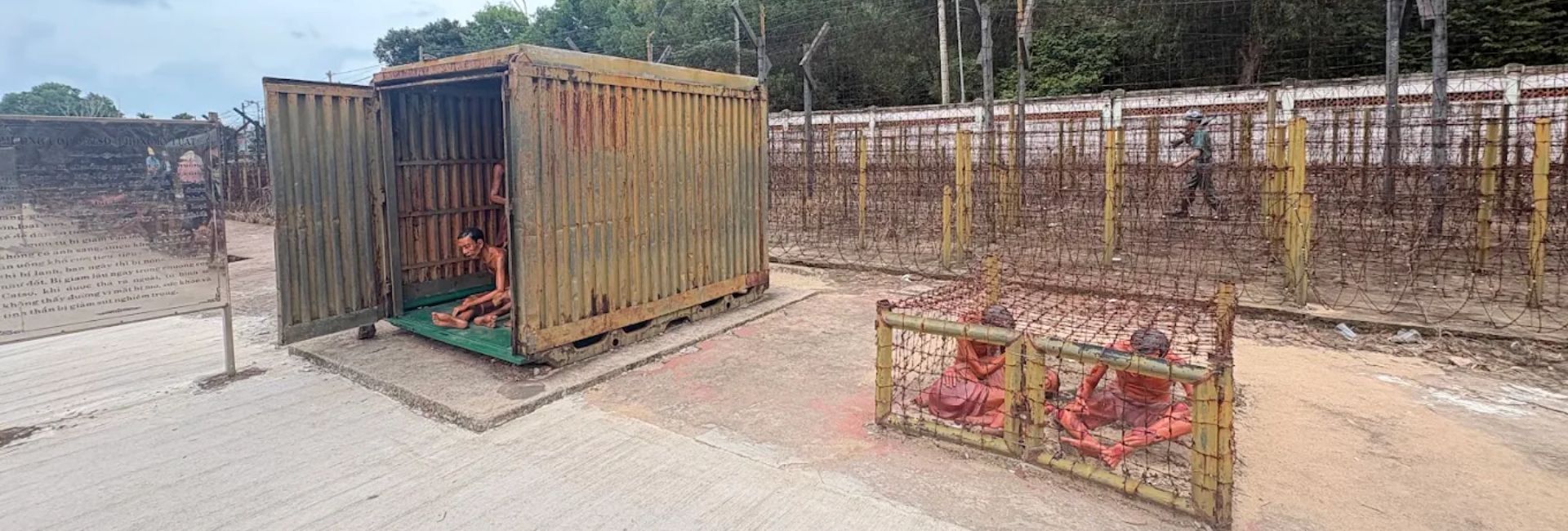
Phu Quoc is famous for its white sand beaches, warm turquoise water, and fresh seafood. But the island holds another side that most travelers only discover once they arrive. Just south of the resorts and beach clubs sits Phu Quoc Prison, also known as Cay Dua Prison or Coconut Tree Prison. It ranks among the most significant historical sites in the country. The past feels close enough to touch here, and a visit adds real depth to a trip that might otherwise be all sunshine and cocktails.
This guide walks through everything worth knowing before heading there. It covers the site’s layered history, what you’ll actually see inside, and practical details on getting there and pairing it with the rest of southern Phu Quoc. Still finalizing your route around the island? This quick instruction for traveling to Phu Quoc Island makes a handy companion to this one.
What Is Phu Quoc Prison?
Phu Quoc Prison tells two stories, not one. It stretches across two different wars and two different regimes. That layered history is exactly what makes a visit here so rich for anyone curious about Vietnam’s past.
Why Is It Also Called Cay Dua Prison (Coconut Tree Prison)?
The name Cay Dua comes from Cay Dua Village, the original site of the French colonial camp. English-speaking visitors later started calling it Coconut Tree Prison, a direct translation that stuck in guidebooks and travel blogs. The museum has used the official name, Phu Quoc Prison or Phu Quoc Prison History Museum, since 1996. Don’t be surprised to see all three names used interchangeably depending on the source.
A Brief History, From French Colony To The Vietnam War
The story begins in 1946. French colonial forces built the camp to detain Vietnamese independence fighters during the First Indochina War. By 1954, the site held around 14,000 prisoners. Harsh conditions led to frequent deaths from mistreatment and poor medical care. After the French withdrew, authorities expanded and reused the site between 1967 and 1973 as South Vietnam’s national prisoner of war camp. It became the largest wartime prison in the south, holding tens of thousands of detainees across a dozen zones. Everything changed after the 1973 Paris Peace Accords, when officials released the prisoners and decommissioned the camp for good. Vietnam recognized its importance in 1996 as a National Historical Monument, then upgraded it in 2014 to Special National Relic status, the country’s highest heritage classification.
Why It Stands As A Special National Relic Today
Thousands of visitors make their way here every year, and their reasons vary. Some come purely out of curiosity about the war. Others visit specifically to pay respects. Many simply want a deeper understanding of the island beyond its beaches. Either way, the site now serves as a museum, a memorial, and a genuine education stop for Vietnamese and international travelers alike.
What Can You See Inside The Relic?
Walking through the grounds feels less like touring a museum and more like stepping into a preserved chapter of history. Each section tells a different part of the story. Take them one at a time, and the visit means more.
The Exhibition House
The exhibition house is a modest two-room building, though it packs in real context. Room one covers the prison’s formation and expansion through documents and artifacts. Room two holds photographs documenting how prisoners were treated during their time here. Read through both rooms before heading outside, and the rest of the visit will make far more sense.
Zone B2: Reconstructed Barracks and Life-Size Scenes
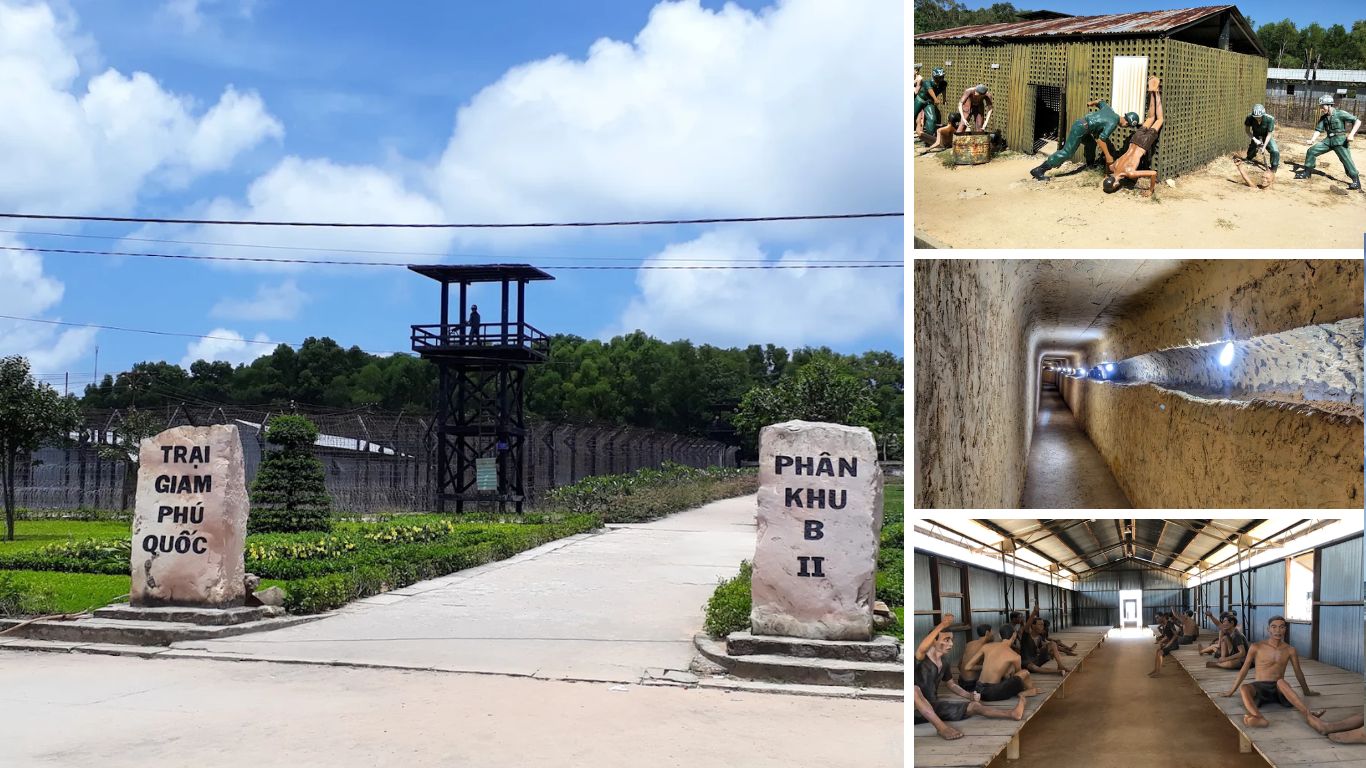
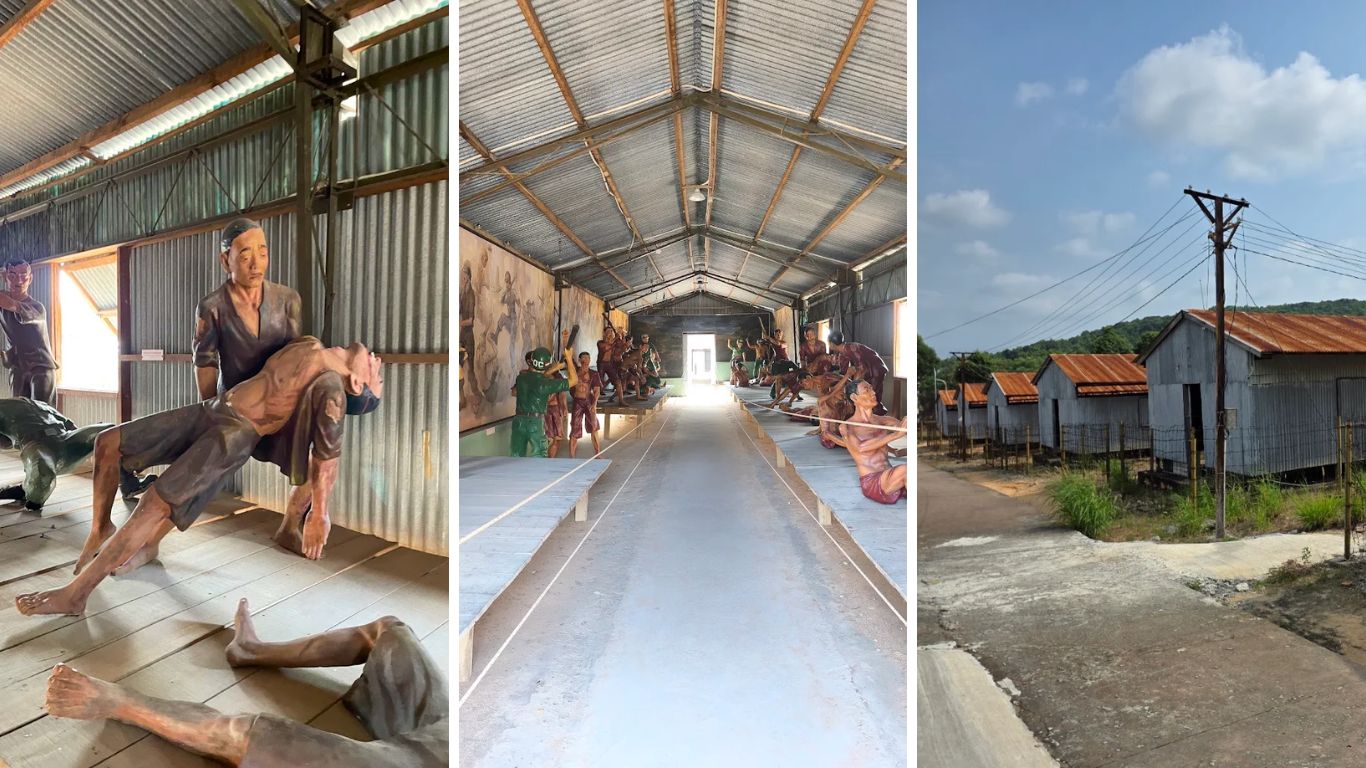
Zone B2 forms the emotional heart of the site, covering more than 17,000 square meters of restored barracks and reconstructed scenes. Life-size figures recreate daily prison life, interrogation rooms, and confinement cells, including the well-known tiger cages. You get a vivid sense of what prisoners endured day to day. The scenes hit hard by design, though most travelers describe the experience as sobering rather than shocking, since the site presents everything with historical context rather than for pure spectacle.
The Escape Tunnels
Tunnels dug by prisoners still remain scattered throughout the grounds, quiet reminders of just how badly some men wanted to be free. Prisoners used little more than spoons and repurposed food containers to carve their way out, inch by inch, often at night. These tunnels played a key role during the 1968 Tet Offensive, when a large-scale breakout sent thousands of prisoners through the camp’s fence line at once. Sources give different figures for tunnel length, so check the on-site signage for the most accurate numbers during your visit.
The POW Cemetery
About a kilometer from the main site sits the POW cemetery, a quieter and more reflective stop built around a raised fist monument that symbolizes prisoner resilience. Thousands of prisoners who died in custody rest here, beneath grounds that feel almost too peaceful for what they hold. The short walk over makes a natural place to pause and take everything in before continuing the day.
Other Notable Structures
A few smaller sites sit just off the main path, easy to miss but worth the short detour for anyone who wants the fuller picture.
- Kien Van Church ruins, built by prisoners in 1968 and now reduced to concrete foundations
- The Martyrs’ Monument at Sim Hill, a five-meter memorial with elevated views and fewer crowds
- The original gates of the 7th and 8th Military Police Battalions, marking the historic entry points into the camp
Planning a trip that blends history with comfort makes all the difference on an island like this. Browse private cruise and tour options ahead of time to line up a smoother, more personal itinerary around stops like this one.
The History Behind The Struggle
The buildings and reconstructions only tell part of the story. The real weight of this place comes from the people who lived through it. Understanding who was held here, and what daily life looked like, brings the exhibits to life in a way that walking through them alone cannot.
Who Was Imprisoned Here
Between 1967 and 1973, the camp primarily held Viet Cong fighters, North Vietnamese soldiers, and other political prisoners tied to the resistance movement. Many arrived as young men captured on the battlefield. Some left years later. Others never left at all.
Daily Life Inside The Camp
Life inside meant overcrowded barracks, forced labor, and food and medical care that rarely met basic standards. International Red Cross teams visited in both 1969 and 1972 and documented conditions that fell well short of humane treatment. Those findings still form part of the historical record referenced throughout the museum today.
Resistance And Resilience
Suffering defines part of this place, but resistance runs through it just as strongly. Prisoners organized repeated escape attempts throughout the camp’s operation, plans passed quietly between barracks and carried out under constant risk. That effort culminated in the dramatic 1968 breakout during the Tet Offensive, when thousands pushed past the fence line in a single coordinated push. The cemetery’s raised fist monument and the exhibits in Zone B2 exist to honor exactly that spirit of defiance.
Is Phu Quoc Prison Worth Visiting?
The subject matter runs heavy, so it’s fair to wonder whether this belongs on a beach vacation itinerary at all. For most travelers, it does. It just helps to know what to expect going in.
Who Should Visit
History lovers, culturally curious travelers, and families with older kids or teenagers tend to get the most out of a visit here. Anyone wanting a fuller picture of Phu Quoc, one that goes beyond its beaches and resorts, will find this stop genuinely worthwhile.
Managing Expectations Emotionally
The exhibits stay realistic and, at times, graphic. That’s exactly why many visitors describe the experience as haunting or confronting rather than simply informative. Very young children may find it too intense, and that’s worth planning around rather than discovering on the spot. Modest dress and respectful behavior matter throughout, since this remains an active memorial rather than a typical tourist attraction.
How Long To Spend
Most visitors need one to two hours to take in the main site without feeling rushed through it. Add another thirty to forty five minutes if the walk out to the POW cemetery is part of the plan, since that stretch rewards a slower pace.
Essential Visitor Information
Sort out the practical details ahead of time, and the whole visit runs more smoothly. A few things changed recently, so keep these in mind.
Location
The site sits at 350 Nguyen Van Cu Street, An Thoi Ward, Phu Quoc. One update matters for 2026: following Vietnam’s provincial merger in July 2025, the area formerly under Kien Giang province now falls under An Giang province. Older maps and articles may still reference Kien Giang. That simply reflects outdated administrative boundaries, not an error.
Opening Hours
The site generally opens from around 7:30 to 11:00 in the morning and again from 1:30 to 5:00 in the afternoon daily. Hours can shift slightly around holidays, so confirm locally before heading out.
Entrance Fee
Walking through this piece of history doesn’t cost a thing. Admission stays completely free for all visitors regardless of nationality, a small detail that makes it easy to build into any island itinerary without a second thought. For those who want a guide to bring the exhibits to life, hiring one typically costs between 100,000 and 200,000 VND, roughly 4 to 8 US dollars, a modest price for a much richer visit.
Facilities
Getting settled here takes no effort at all. Free parking is available both on-site and along the street, alongside wheelchair accessible parking and restrooms for those who need them. Informational panels are posted throughout the grounds in both Vietnamese and English, so following along independently feels natural rather than confusing.
How To Get To Phu Quoc Prison
Reaching the site from anywhere on the island stays simple, and the route itself becomes part of the experience.
From Duong Dong
The prison sits roughly 28 to 29 kilometers south of Duong Dong, a 30 to 40 minute drive that traces the island’s southern coastline nearly the whole way. The road drifts past fishing villages and quiet stretches of shore, making the journey itself feel like a small preview of what southern Phu Quoc has to offer.
By Motorbike
For travelers who like to set their own pace, a rented motorbike remains the most popular way to go. It trades a bit of comfort for freedom, letting you slow down at a viewpoint or duck off toward a beach on a whim, with the coastal scenery unfolding the entire way there.
By Taxi, Private Car, Or Organized Tour
For a smoother, more comfortable day, arrange private transport or a guided tour ahead of time. It takes the guesswork out of logistics, especially when combining this stop with other spots across southern Phu Quoc in a single day.
Nearby Attractions To Combine With Your Visit
Pair the prison with a few nearby highlights, and a short history stop turns into a full and satisfying day out.
- Bai Sao and Bai Khem beaches, both just a few kilometers away and perfect for unwinding afterward
- Hon Thom Cable Car and Sunset Town, ideal for wrapping up the day
- Truc Lam Ho Quoc Zen Monastery, a peaceful optional add-on for those with extra time
Love island hopping? This list of the top 5 beautiful islands to visit around Phu Quoc and this closer look at Hon Mot’s mystery island charm are both worth bookmarking for another day on the water.
Suggested Half-Day South Phu Quoc Itinerary
Put it all together, and a half day itinerary lets you experience both the history and the beauty of southern Phu Quoc without feeling rushed.
- Morning: Phu Quoc Prison, allowing one and a half to two hours, including the cemetery walk
- Late morning: Seafood lunch nearby
- Early afternoon: Beach time at Bai Khem or Bai Sao
- Late afternoon: Hon Thom Cable Car
- Evening: Sunset Town
Want diving or snorkeling in the mix too? This guide to diving and snorkeling boat trips around Phu Quoc pairs nicely with a day like this.
Helpful Tips Before You Go
A few small preparations go a long way toward making the visit comfortable and respectful.
- Dress modestly, covering shoulders and knees, since this is a memorial site rather than a casual attraction
- Bring water, a hat, and sun protection, since much of the grounds sit exposed to direct sun
- Prepare emotionally for graphic and realistic exhibits
- Follow posted signage near sensitive areas; photography is generally allowed elsewhere
- Take time to read the informational panels, since they add context that the reconstructions alone can’t fully convey
Not sure when to schedule all of this around the rest of your trip? This breakdown of the best time to visit Phu Quoc helps map out weather and crowd patterns for the whole island.
Ready to build a smoother trip around stops like this one? Get in touch or reach out directly at resa@luxurycruisemekong.com, and arrange a private itinerary combining history, beaches, and island hopping in no time.
Frequently Asked Questions
What’s the difference between Cay Dua Prison and Phu Quoc Prison?
They refer to the same site. Cay Dua, or Coconut Tree, is the historic and informal name, while Phu Quoc Prison, or Phu Quoc Prison History Museum, is the official name used today.
Is Phu Quoc Prison suitable for children?
It suits teenagers and adults better than young children, since several exhibits stay graphic and realistic. Most sources suggest skipping it for kids under about 12.
How much time do you need to visit?
Plan for one to two hours at the main site, with extra time if you walk out to the POW cemetery.
Is there an entrance fee?
No, admission stays free for everyone regardless of nationality. Optional guide or audio guide services cost a small fee.
Can you visit without a tour?
Yes, independent visits by motorbike, taxi, or private car happen all the time, and the site stays easy to navigate without a guide.
Is photography allowed?
Yes, in most areas. Some sections near sensitive exhibits request no flash, so follow posted signage.
Coming from further afield? This guide on reaching Phu Quoc from Cambodia rounds out the planning nicely, especially for anyone combining a Vietnam and Cambodia route into one longer trip.