
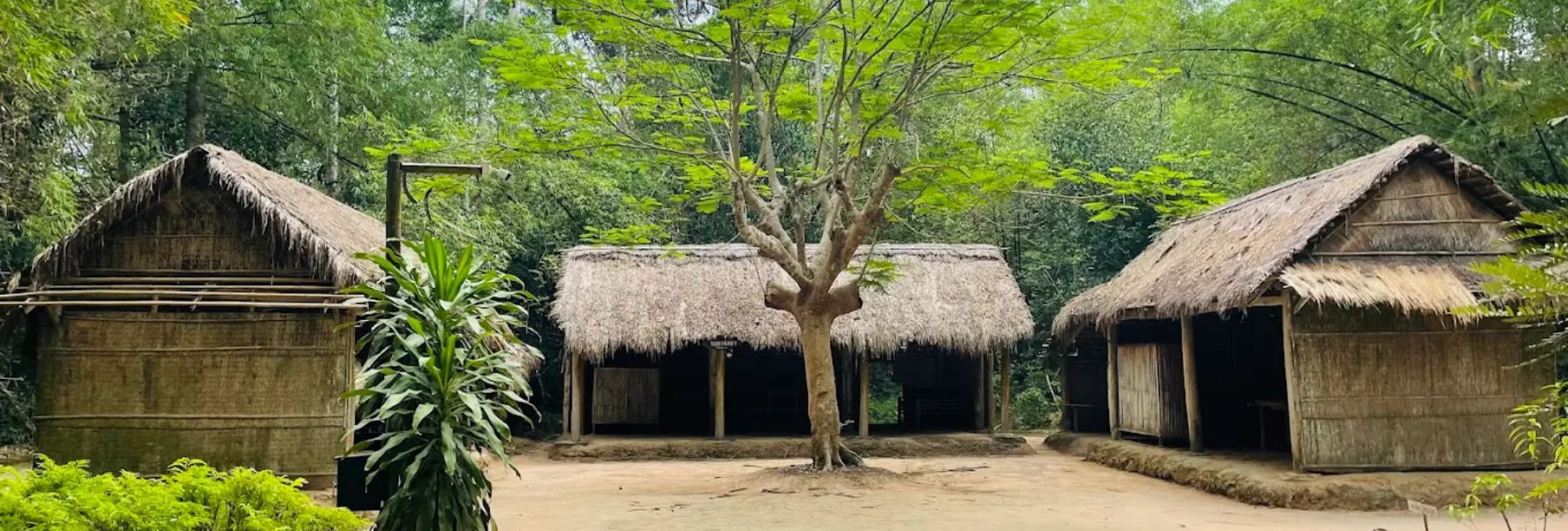
Located about 40 kilometers northwest of Ho Chi Minh City, the Cu Chi Tunnels are one of southern Vietnam’s most important historical sites. This vast underground network once served as a strategic base during the Vietnam War and remains a powerful example of survival, planning, and local resistance. Today, Cu Chi is a popular half-day excursion that allows visitors to understand the war from a ground-level perspective while staying close to the city.
Unlike museums or memorial halls, the Cu Chi Tunnels offer a physical experience. Visitors can walk through the forest, see hidden entrances, and observe how an underground system supported thousands of people during years of conflict.
What You’ll Find in this Blog
ToggleHistory and Development of the Cu Chi Tunnels
How the Tunnel System Began
The earliest sections of the Cu Chi Tunnels were built in the late 1940s during the resistance against French colonial forces. At that time, the tunnels were short, simple, and mainly used for hiding and communication. Over the following decades, especially during the American War, the system expanded significantly in both scale and complexity.
By the 1960s, Cu Chi had become one of the most heavily tunneled areas in Vietnam. The tunnels were continuously extended, reinforced, and adapted to meet changing military needs.
Cu Chi Tunnels During the Vietnam War
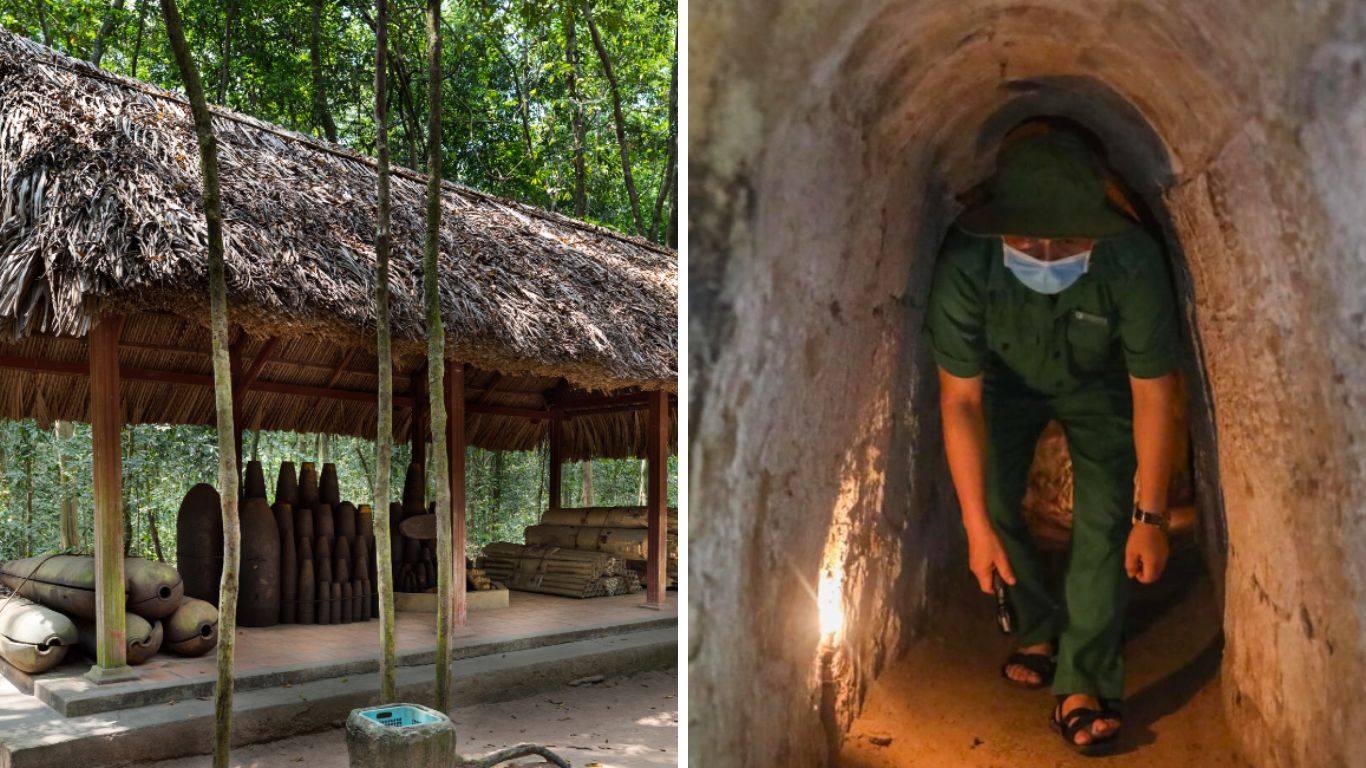
During the Vietnam War, the tunnel network became a vital operational base for Viet Cong forces. It allowed soldiers to move undetected, store supplies, treat the wounded, and launch attacks near Saigon before disappearing underground again.
Life inside the tunnels was extremely demanding. Air circulation was poor, food was limited, and hygiene conditions were basic. Many people spent long periods underground during bombing campaigns, sometimes without seeing daylight for days. Disease, especially malaria, was widespread. Despite these hardships, the tunnel system allowed local communities to survive and continue operating in one of the most heavily bombed regions of the war.
What Makes the Cu Chi Tunnels Unique Today
The Underground System You Can Explore
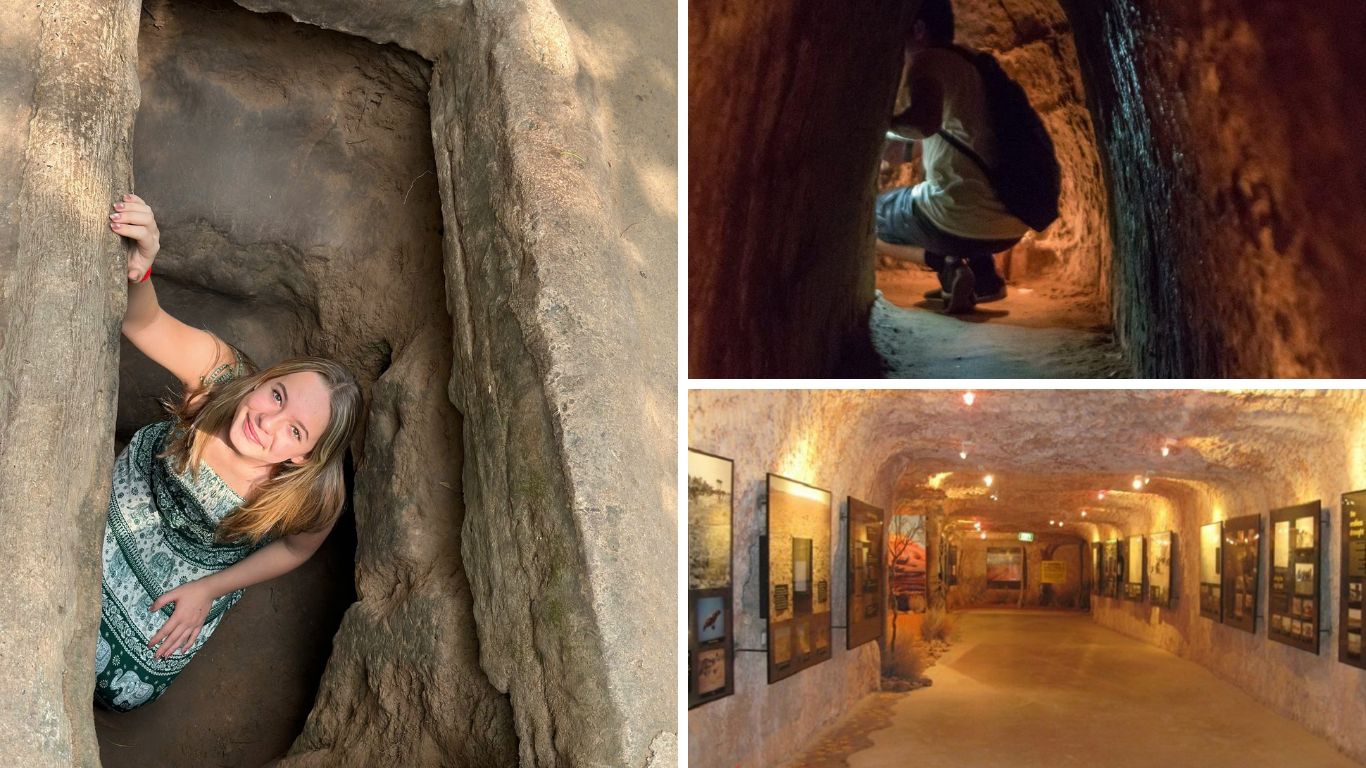
What visitors see today is only a small portion of the original tunnel network, but it still provides valuable insight into how the system functioned. Sections open to visitors have been widened slightly for safety, yet they remain narrow enough to convey the original conditions.
Inside the tunnels, you can see how underground life was organized. Living areas, meeting rooms, kitchens, and medical spaces were carefully positioned to support long-term survival. The tunnels were built in multiple levels, with deeper sections offering protection against heavy bombing.
Daily Life and Survival Underground
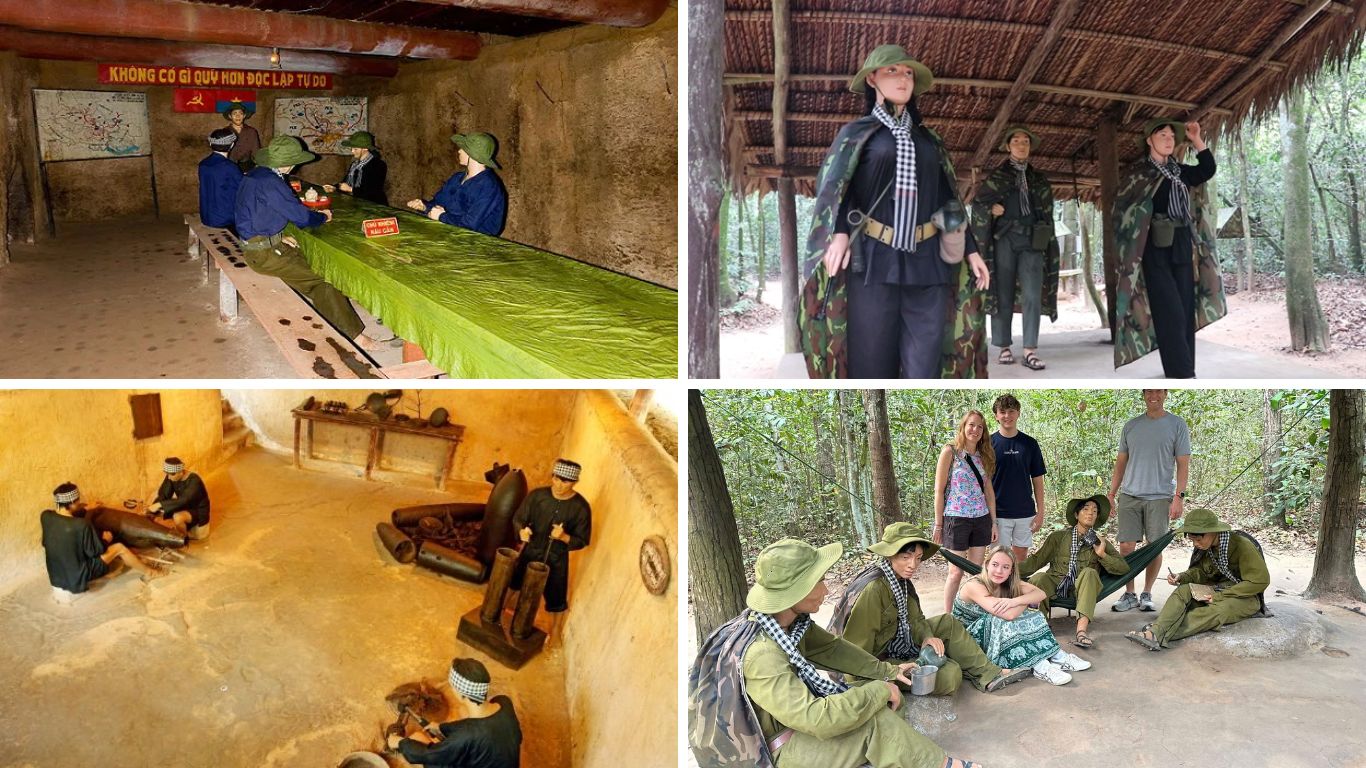
The Cu Chi tunnel system functioned as a hidden underground village. Soldiers and civilians lived, worked, and rested below the surface while normal-looking farmland existed above.
Cooking was done in specially designed Hoang Cam kitchens that dispersed smoke through long underground vents to avoid detection. Medical treatment relied on basic tools and herbal remedies. Escape routes were built to connect the tunnels to forests or rivers in case of sudden attacks. These features highlight the level of planning and adaptation required to survive underground for extended periods.
Visiting the Cu Chi Tunnels Today
How to Get There from Ho Chi Minh City
Cu Chi is easily accessible from Ho Chi Minh City, making it ideal for a half-day trip. Travel time usually ranges from 1.5 to 2 hours.
Public buses are the cheapest option, but take longer and require transfers. Taxis or private cars offer more comfort and flexibility, especially for families. Guided tours are the most convenient choice, as they typically include transportation, entrance tickets, and historical explanations from a guide.
Tickets, Opening Hours, and Visit Duration
The Cu Chi Tunnels are open daily from early morning to late afternoon. Entrance tickets are affordable, though prices may change slightly over time. Most visitors spend around two to three hours on-site, which fits well into a half-day schedule, including travel.
-
Opening hours: Daily from 7:00 AM to 5:00 PM
-
Entrance ticket: Around 110,000 VND per person (prices may change)
-
Recommended visit time: 2 to 3 hours on site
-
Total time needed: About 4 to 5 hours, including round-trip travel from Ho Chi Minh City
-
Payment method: Cash in VND is recommended; some counters accept credit cards
-
Extra costs: Firing range activities and souvenirs are not included in the entrance ticket
Cash is recommended for entrance fees, drinks, or souvenirs, although some counters accept cards.
Is Visiting the Cu Chi Tunnels Worth It?
For travelers interested in Vietnam’s modern history, the Cu Chi Tunnels are absolutely worth visiting. The experience offers context that books and documentaries cannot fully provide. Walking through the area and seeing how people lived underground adds depth to any visit to southern Vietnam.
The site is suitable for first-time visitors to Ho Chi Minh City, history-focused travelers, and families with older children. Those with limited mobility or strong claustrophobia may prefer to stay above ground, which is completely acceptable. Most of the key information is accessible without entering the tunnels.
Can You Combine the Cu Chi Tunnels With a Mekong Cruise?
Visiting the Cu Chi Tunnels and taking a Mekong cruise is one of the most logical ways to experience southern Vietnam. These two experiences focus on different aspects of the region, yet they complement each other well when planned correctly. Cu Chi offers historical depth and a hands-on look at wartime life, while the Mekong delivers a slower, scenic journey through riverside culture and rural landscapes.
Rather than trying to do both in a single day, most travelers choose to separate them across consecutive days. This approach keeps travel comfortable and allows each experience to stand on its own.

How to Structure the Cu Chi and Mekong Combination
The Cu Chi Tunnels work best as a half-day trip from Ho Chi Minh City, usually visited in the morning. After returning to the city, travelers continue south the following day for a Mekong cruise departing from locations such as My Tho, Cai Be, or Can Tho.
This structure avoids long transfers in one day and helps maintain a relaxed pace. It also allows time to rest before boarding a river cruise, which often includes overnight stays and immersive village visits.
Turn this experience into a seamless southern Vietnam journey
Exploring the Cu Chi Tunnels offers an intense and physical look into Vietnam’s wartime history, while a Mekong cruise provides a slower, more relaxed rhythm through river life and rural culture. Together, they create a balanced journey that suits first-time visitors, couples, and families who want variety without feeling rushed.
With Luxury Mekong Cruises, you can experience the Mekong Delta in comfort, combining private transportation, gentle river cruising, and thoughtfully paced activities designed for cultural depth. For longer and more flexible journeys, Indochina Voyages curates bespoke itineraries that connect Mekong cruising with meaningful land travel across southern Vietnam and wider Indochina.
To plan a journey that flows naturally from Cu Chi’s history to the calm of the Mekong, contact us at [email protected] or visit our website for personalized travel planning.
Essential Tips for Visiting the Cu Chi Tunnels
-
Visit early in the morning to avoid heat, crowds, and tour bus congestion.
-
Choose the dry season (December to April) for more comfortable walking conditions.
-
Wear lightweight, breathable clothing that you do not mind getting dusty.
-
Closed-toe shoes are essential, as paths can be uneven and muddy after rain.
-
Bring sunscreen, a hat, and water, especially during hotter months.
-
Tunnel crawling is optional, so do not feel pressured if you are uncomfortable with tight spaces.
-
Cash is recommended for entrance fees, drinks, and small souvenirs.
-
Those with mobility issues or claustrophobia should remain above ground, where most exhibits are still accessible.
-
Follow your guide’s safety instructions, especially near trap displays and firing range a
FAQs
How long does it take to visit the Cu Chi Tunnels?
Most visitors spend 2 to 3 hours on the site. Including travel time, the visit fits well into a half-day trip.
Are the Cu Chi Tunnels safe to visit?
Yes. Visitor areas are reinforced, clearly marked, and supervised. Entering the tunnels is optional.
Do I have to crawl through the tunnels?
No. Tunnel crawling is optional. You can stay above ground and still understand the site fully.
Are the Cu Chi Tunnels suitable for children?
Yes, for older children around six years old and above. Some areas may feel intense for younger kids.
Is the Cu Chi Tunnels site accessible for people with limited mobility?
Accessibility is limited due to uneven paths and narrow spaces. Above-ground exhibits remain accessible.
What should I wear when visiting the Cu Chi Tunnels?
Wear lightweight clothing, closed-toe shoes, and sun protection. Expect heat and dusty paths.
Can I visit the Cu Chi Tunnels without a tour?
Yes, but guided tours are recommended for better historical context and smoother logistics.