
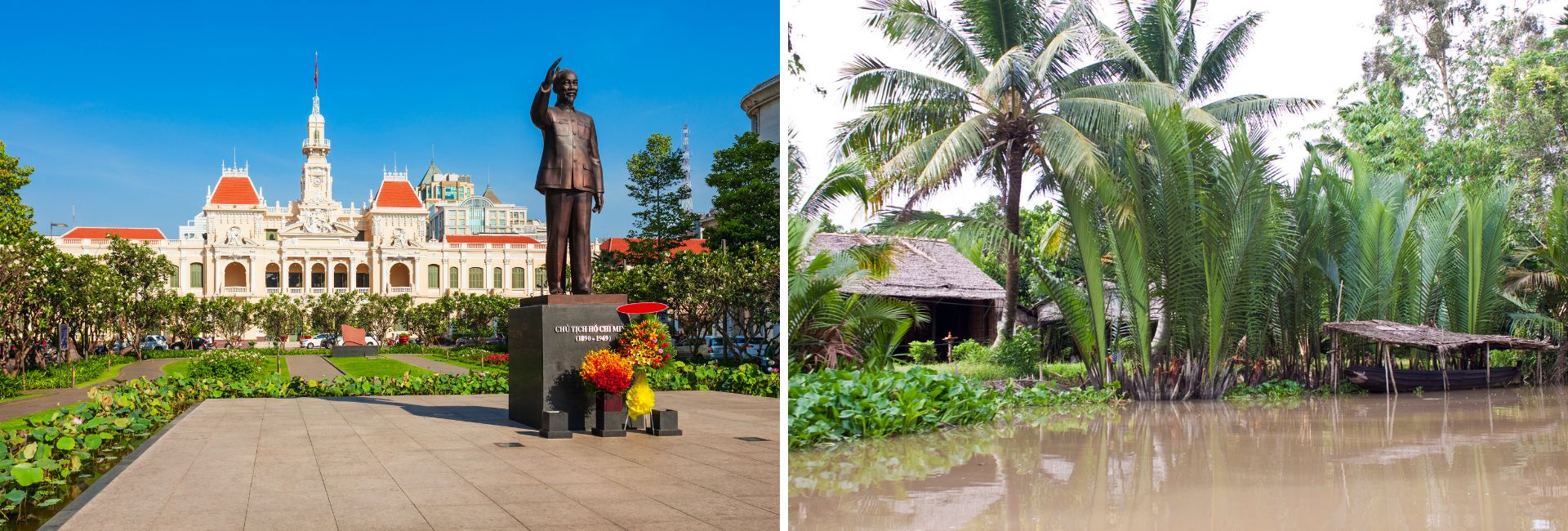
Getting from Ho Chi Minh City to Can Tho already feels like a holiday before you arrive. Can Tho sits about 170 km southwest of Saigon. It is the heart of the Mekong Delta, where life moves to the rhythm of the river. Floating markets have traded here the same way for generations. The pace is slow, the mornings are misty, and the city feels very far away. This guide covers every way to get there so you can pick what suits you best.
Can Tho at a Glance
Can Tho is the largest city in the Mekong Delta. It is also one of the most rewarding stops in southern Vietnam. However, what makes it special is not just one thing. It is a whole combination of experiences you simply cannot find in Ho Chi Minh City.
Some highlights worth knowing before you go:
- Cai Rang Floating Market, best visited well before 7 AM
- Phong Dien Floating Market is quieter and more local in feel
- Ninh Kieu Wharf is beautiful at both sunrise and sunset
- Binh Thuy Ancient House, a colonial-era gem dating back to 1870
- Bang Lang Stork Garden, a hidden gem for nature lovers
- Fruit orchards and rice paper villages along the quieter canals
Whether you are planning a day trip or an overnight stay, Can Tho rewards every kind of traveler. The question is simply how you want to get there.
All the Ways to Get from Ho Chi Minh City to Can Tho
There is no single best way to travel from Ho Chi Minh to Can Tho. In fact, the right choice depends on your budget, your style, and how much comfort matters to you. Here is a quick overview before we dive in.
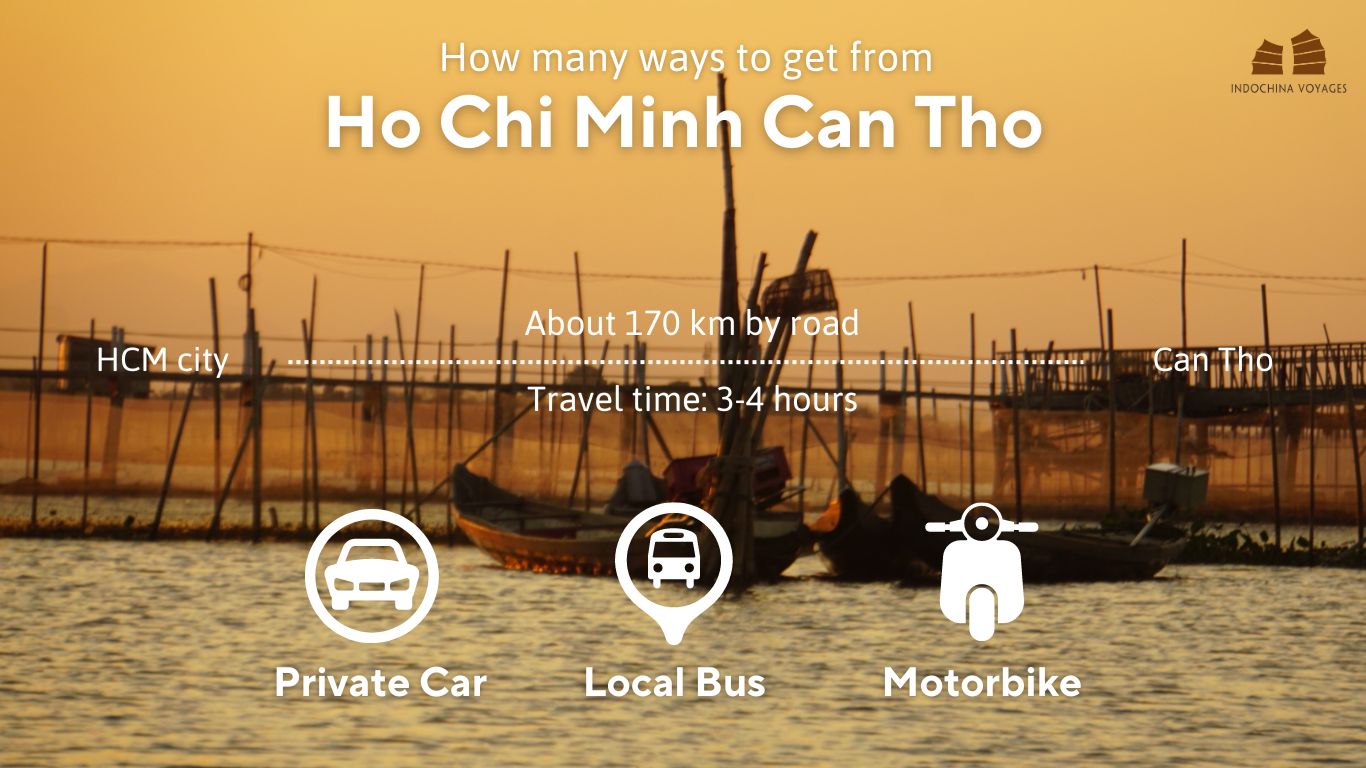
Worth knowing upfront: there are no direct flights between Ho Chi Minh City and Can Tho. So, land or water are your only options here.
By Bus: The Most Affordable Way from Ho Chi Minh to Can Tho
The bus is the most popular choice and for good reason. It is affordable, frequent, and straightforward. Tickets cost between $4 and $10. The journey takes around 3.5 to 5 hours, depending on traffic.
All buses depart from Mien Tay Bus Station. You can reach it from the city centre by Grab in around 30 to 45 minutes. Additionally, buses run every 30 to 60 minutes throughout the day. So there is no need to stress about a specific departure. The three operators worth knowing are:
- Phuong Trang (FUTA) is the most well-known with reliable schedules throughout the day
- Thanh Buoi is a solid mid-range option with regular departures
- Son Nguyen Limousine, a premium service with reclining seats and fewer stops
Booking is easy. You can compare schedules and grab your ticket directly through Vexere, one of the most trusted bus booking platforms in Vietnam. Your e-ticket works fine when shown on your phone at the counter. That said, if you want more legroom and a quieter ride, the limousine option is worth the small upgrade in price.
By Private Car: The Comfortable Road from Ho Chi Minh to Can Tho
For comfort and flexibility, a private car transfer is honestly the smartest move. The journey takes around 2.5 to 3 hours door to door. Moreover, you skip the bus station entirely and get picked up from your hotel.
This option is particularly good for families or small groups. Your driver can stop along the way. For example, the Can Tho Bridge is the longest cable-stayed bridge in Southeast Asia. It is genuinely worth stepping out for a photo before continuing into the city.
If you would like to combine your transfer with a proper Mekong experience, the team at Luxury Cruise Mekong knows this river inside out. Just send them a message, and they will sort everything out. No pressure, just good advice.
By Motorbike: For the Adventurous Traveler
Riding from Ho Chi Minh City to Can Tho by motorbike is an experience in itself. The road follows National Route 1A through flat delta landscape. Along the way, you pass rice paddies, coconut stalls, and small rural towns. The journey takes around 3.5 to 4 hours, depending on your pace.
Rentals range from $8 to $15 per day. Most shops accept a foreign driving licence. However, there is an important note here. Most international licences are not officially valid in Vietnam without a local endorsement. As a result, your insurance may not cover you in an accident. It is worth checking this in advance. Alternatively, a guided motorbike tour is a great option since logistics and insurance are handled for you.
| Transport | Duration | Approx. Cost | Best For |
|---|---|---|---|
| Bus | 3.5 to 5 hrs | $4 to $10 | Budget travelers |
| Private car | 2.5 to 3 hrs | $100 to $150 | Families, comfort seekers |
| Motorbike | 3.5 to 4 hrs | $8 to $15/day | Adventure travelers |
| Private boat/cruise | Half-day to multi-day | Varies | Scenic, experiential travel |
By Private Boat or Mekong Cruise: The Most Memorable Way to Arrive
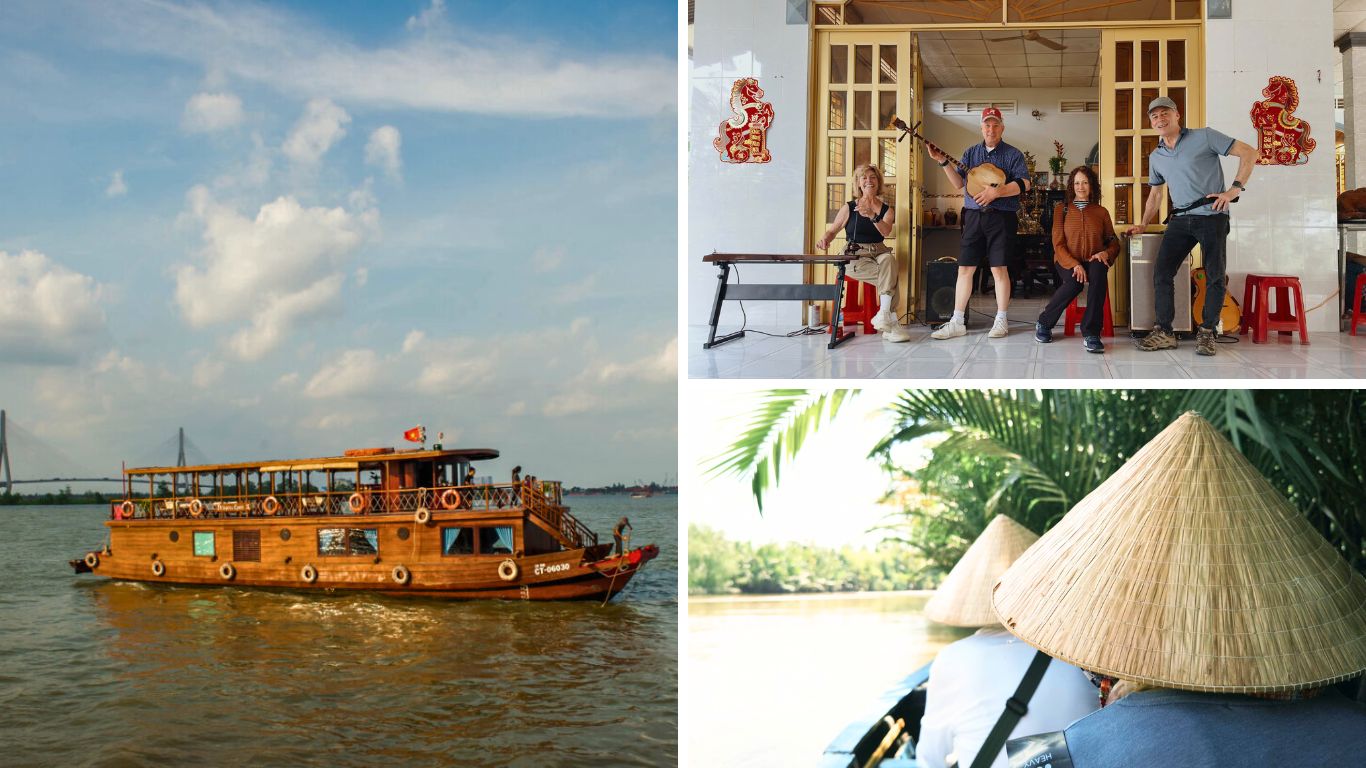
If there is one way to arrive in Can Tho you will never forget, it is by boat. Travelling along the Mekong means seeing the delta the way it was meant to be seen. Green rice fields stretch out on both sides. Wooden stilt houses line the banks. Fishing boats drift quietly past.
This is not just transport. It is the beginning of the experience itself.
Depending on your cruise, you can travel as part of a half-day excursion, an overnight journey, or a longer multi-day itinerary. Two options that first-time visitors particularly love:
- Mekong at a Glance, a 2-day private cruise, is great if your time is short, but you still want the real thing
- Authentic Mekong Delta Tour, a 4-day journey for those who want to slow right down and truly live the river
Both are worth a look. You might find it harder than expected to choose just one.
What to Do in Can Tho After the Journey
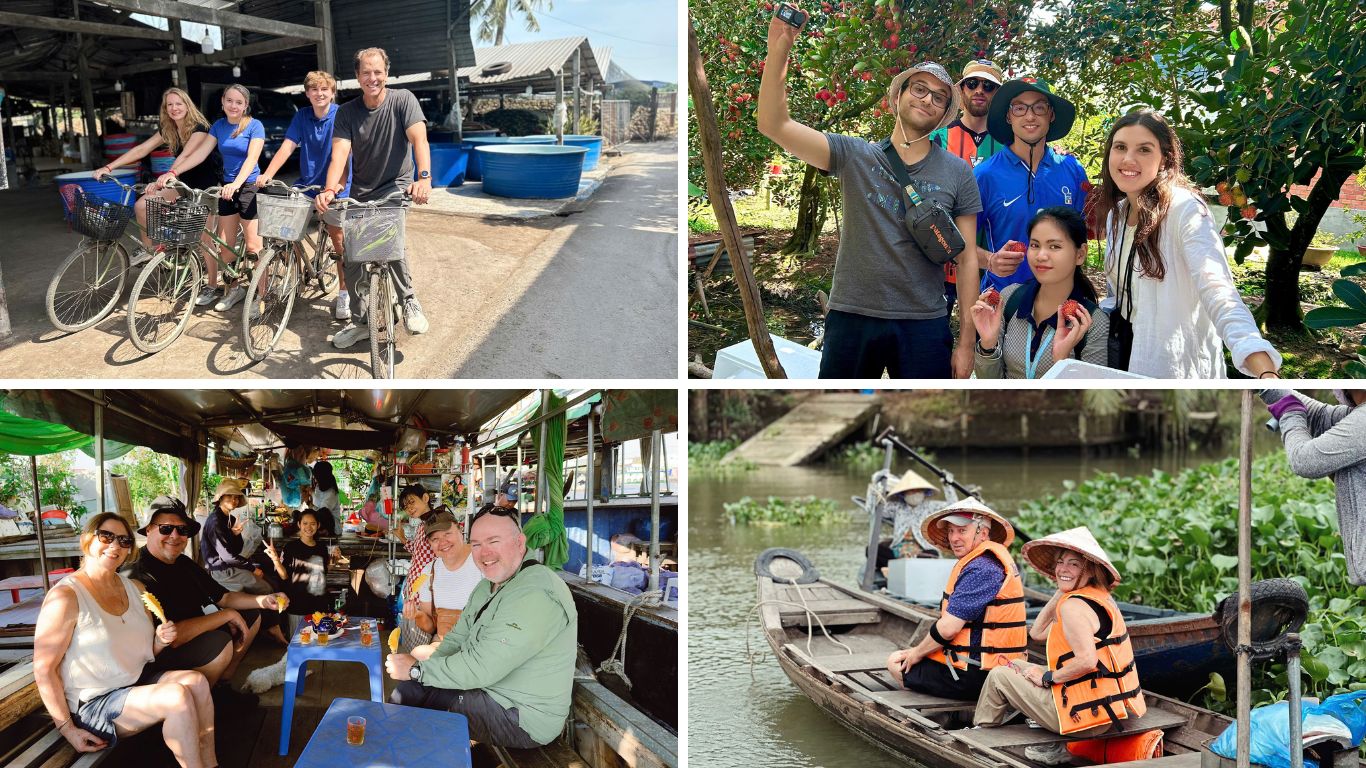
You have made it to the delta. Now comes the best part. Can Tho is compact enough to explore in a day. However, it is rich enough to keep you busy for several. The experiences here are unlike anything you will find back in the city.
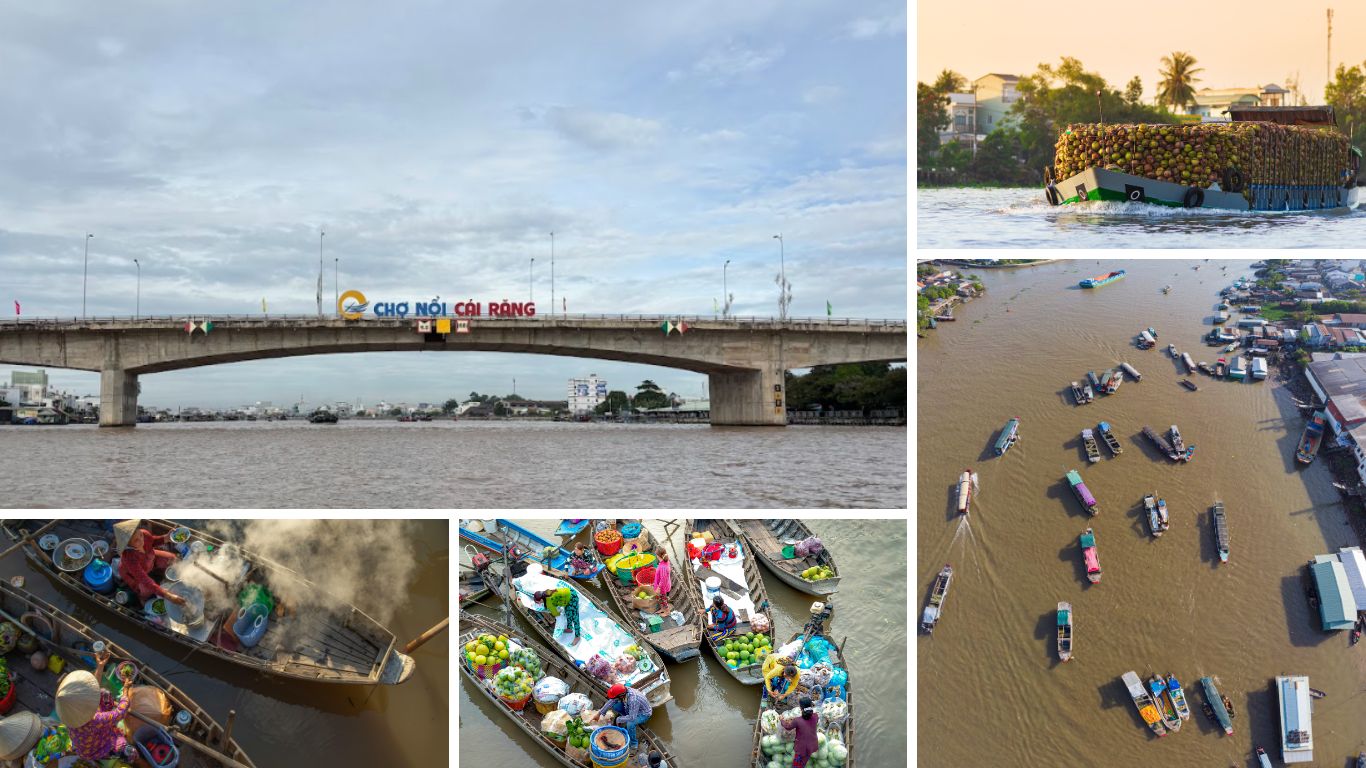
The Floating Markets: Go Early, or You Will Miss the Magic
This is the detail most travel guides gloss over. The floating markets are a wholesale trading tradition. They run on the schedule of the people who depend on them, not tourists.
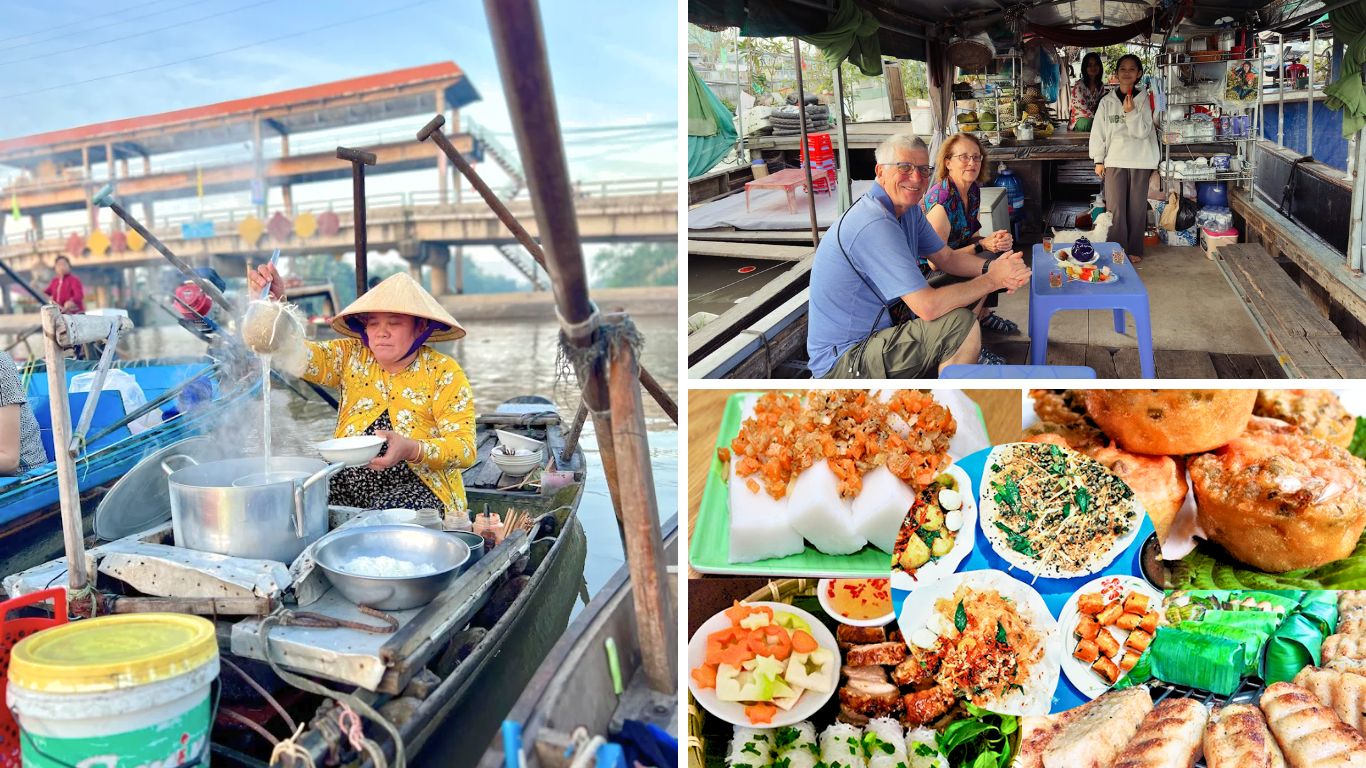
At Cai Rang, the real action starts as early as 5 AM. If you get on the water by 5:30 to 6 AM, you will see dozens of boats trading in full swing. Vendors call across the water. Morning mist sits low on the river. By 9 AM, however, most trading is done. What you are left with is a handful of vendors selling snacks to tourists. That is a very different experience.
Phong Dien is smaller and more intimate. It is better if you want a local feel without the crowds. That said, it winds down even earlier, around 8 AM. Whichever market you visit, book a private boat in advance. Peak season boats fill up fast, and you do not want to be negotiating on the dock at 5 in the morning. Want to understand the story behind these markets before you go? This is a good read that gives you the full picture.
History, Nature, and Local Life
Beyond the markets, Can Tho has surprising depth. Binh Thuy Ancient House blends French and Chinese architectural styles beautifully. It has been carefully preserved across generations. Meanwhile, Bang Lang Stork Garden is a completely different kind of visit. Thousands of herons and storks gather at dusk in a scene that feels almost dreamlike. Additionally, a visit to a fruit orchard or rice paper village makes for a genuinely memorable afternoon, especially with children.
Food You Should Not Leave Without Trying
Can Tho’s food scene is one of the most underrated in southern Vietnam. So give yourself time to eat properly here. Banh Xeo is a crispy pancake stuffed with shrimp and bean sprouts. You wrap it in fresh greens and dip it in light fish sauce. Similarly, Bun Rieu is a tangy crab noodle soup. It goes down beautifully after an early market visit. Lau Mam, the local fish sauce hot pot, is bold and rich. Locals swear by it. For breakfast, hu tieu noodle soup is what most people in Can Tho start their day with. Once you try it, you will understand why.
If you want the full guide to eating your way through Can Tho, check out Can Tho: The Awesome Food Pot of the Mekong Delta before your trip.
Day Trip or Overnight Stay: Which One Is Right for You?
This is one of the most common questions before visiting Can Tho. Honestly, it depends on what you want to get out of the visit.
The Day Trip: A Taste of the Delta
A day trip from Ho Chi Minh City is possible, but it is a tight schedule. By the time you arrive, visit the floating market, have lunch, and head back, you will have seen the highlights without really feeling the place. It works best for travelers with very limited time who simply want a first taste of what the Mekong Delta has to offer, knowing they will come back for longer another time.
The Overnight Stay: Where It Starts to Feel Real
An overnight stay opens the experience up entirely. You get to see the floating market at its best in the early morning before the day visitors arrive, explore the canals at your own pace through the afternoon, and enjoy the riverside at Ninh Kieu Wharf in the evening when the city lights come on and the local food stalls fill up. For most travelers, one or two nights is genuinely the sweet spot.
The Cruise: For Those Who Want to Go Deeper
If you want to go deeper still, a private Mekong cruise lets you experience the delta properly, stopping at villages, markets, and river communities that most visitors never get to see. A few cruises worth looking at that take you right through the heart of the delta:
- Bassac Mekong River Cruise, sailing from Cai Be to Sa Dec to Can Tho, a beautifully intimate river journey from $208 per person
- Mekong Dragon Eyes Cruise, covering Cai Be, Can Tho, Phu Quoc, and Phnom Penh for those who want to keep going further
- Mekong Princess Cruise, a full luxury journey from Ho Chi Minh City through Ben Tre and Can Tho, all the way to Siem Reap
Not sure which one fits your trip? The Luxury Cruise Mekong team is always happy to help you figure it out. Browse the full range at Luxury Cruise Mekong and find the one that feels right.
Best Time to Visit Can Tho
Can Tho is a year-round destination. However, the two seasons offer quite different experiences.
Dry Season: December to April
This is the most popular time to visit. The weather is warm and sunny. Humidity is lower. The floating markets are at their most active. That said, it is peak season, so book accommodation and private boats well in advance.
Wet Season: May to November
The wet season has its own quiet appeal. The landscape turns vivid green. The canals fill up, and certain river routes open up that are simply not reachable when the water is low. Moreover, there are far fewer tourists around. If you do not mind an occasional afternoon downpour, this can actually be a beautiful time to visit.
Regardless of season, aim to be on the water before 7 AM for the floating markets. That is when the activity peaks and the light is at its most beautiful.
Practical Tips Before You Go
A few things worth knowing so your trip runs smoothly.
Getting around Can Tho:
- Grab works here but responds slower than in Ho Chi Minh City. Arrange early morning transport through your hotel the night before
- Xe om is widely available for short distances around the city centre
- For markets and canal excursions, a private boat is the way to go. Your hotel or tour operator can arrange this
- Bicycle hire near Ninh Kieu Wharf is a lovely way to explore the riverside streets
Where to stay:
- Budget guesthouses near Ninh Kieu Wharf put you right in the heart of things
- Mid-range riverside hotels offer good value and great water views
- Canal homestays give you the most immersive experience of daily delta life
- Private cruise travelers typically have accommodation included or arranged as part of the package
Currency and costs:
- Can Tho runs on Vietnamese Dong. Most market stalls and local transport do not accept cards
- Withdraw cash at a city centre ATM on arrival. Do not count on finding one near the markets
- Daily costs are generally lower than Ho Chi Minh City
Connectivity:
- Most hotels offer reliable WiFi throughout
- Pick up a local SIM card at Tan Son Nhat Airport before you leave. It is affordable and saves hassle on arrival
Frequently Asked Questions
How long does it take to get from Ho Chi Minh City to Can Tho? The bus takes 3.5 to 5 hours. A private car is around 2.5 to 3 hours. A boat or cruise turns the journey into part of the experience.
What is the cheapest way to get from Saigon to Can Tho? The bus. Tickets run from $4 to $10. Phuong Trang and Thanh Buoi both run regular departures from Mien Tay Bus Station.
Is there a flight from Ho Chi Minh City to Can Tho? Unfortunately not. All travel is by road or river, which honestly makes for a much better arrival into the delta anyway.
Can I do Can Tho as a day trip? You can, but you will feel the rush. Getting on the water by 6 AM means staying the night before. That alone makes the overnight stay worth it.
What is the best time to visit Can Tho? December to April for sunny weather and lively markets. May to November for green scenery, fewer crowds, and higher water levels.
Is Can Tho safe for tourists? Very much so. It is relaxed and welcoming. Keep your belongings close in busy market areas, the same as anywhere.
How do I get from Can Tho bus station to the city centre? Grab a Grab or xe om outside the station. You will be at Ninh Kieu Wharf in around 10 to 15 minutes.
Ready to Experience the Mekong Delta Your Way?
Can Tho gets better the slower you go. Nothing compares to arriving by river, waking up on the water, and letting the delta unfold around you at its own pace.
If that sounds like your kind of travel, Luxury Cruise Mekong put together private and small-group cruises that feel made for people who want more than just a tour. Whether you have two days or four, they will help you make it happen. Take a look when you get a chance. You might just end up planning a trip you had not expected to take.
ay to make it happen. Take a look at what they have when you get a chance. You might just end up planning a trip you had not expected to take.