
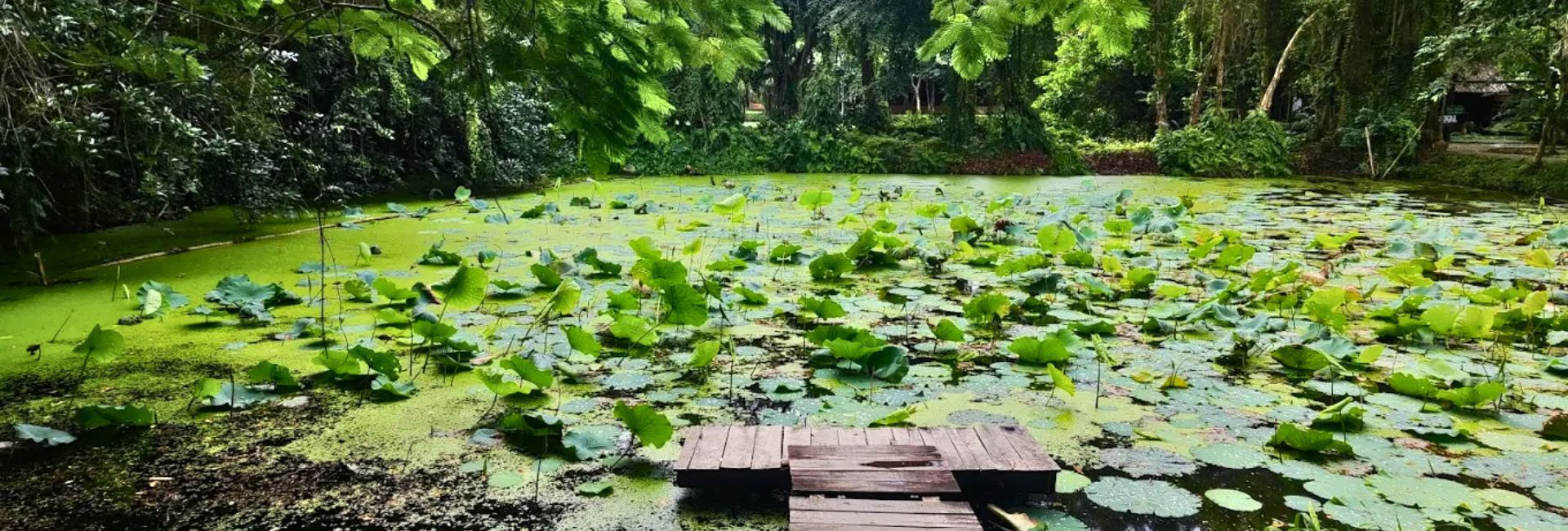
Mainstream tourism often pulls travelers toward the bustling rivers of the lower Mekong Delta. But a quieter, richer world waits just west of the usual route. Dong Thap province stretches across lotus wetlands, colonial river towns, wartime forests, and mango orchards. So it rewards anyone willing to slow down and look closer. This guide covers everything needed to plan a trip here with confidence, from the province’s most iconic wetlands to the historic towns and orchards that round out the full picture, plus the smartest way to pair it all with a Mekong cruise.
What Is Dong Thap?
Before diving into what to do here, it helps to understand what this province actually covers. After all, many travelers only know it for its lotus fields.
Where Is Dong Thap?
Dong Thap sits in the western Mekong Delta, bordering Cambodia to the north and stretching south toward the Tien River. It sits roughly 100 to 150 kilometers southeast of Ho Chi Minh City, depending on which town is the destination. The province takes in the sprawling Dong Thap Muoi wetlands, along with the riverside town of Sa Dec and the provincial capital Cao Lanh. It also holds a scattering of orchards and historic sites that rarely make it into standard Delta itineraries. For a broader sense of how Dong Thap fits into the wider region, this Mekong Delta travel guide is a solid place to start.
Why Is It Famous?
Dong Thap carries several reputations at once, and all of them are well earned. A few things set the province apart:
- The Dong Thap Muoi wetlands, an inland flood basin famous for endless lotus fields and rare birdlife
- Sa Dec town, known for its flower villages and beautifully preserved colonial architecture
- A resilient agricultural culture, where mango orchards, rice paddies, and lotus farms shape daily life
- Deep historical roots, from ancient Oc Eo ruins to sites tied to Vietnam’s revolutionary history
How to Get There
Getting into Dong Thap is part of the adventure. And the route matters more here than in most Delta provinces. From Ho Chi Minh City, the drive takes roughly two and a half to three and a half hours. Most travelers go via National Route 1A or the N2 highway toward Cao Lanh City or Sa Dec. The N2 runs past open rice paddies and small river towns, so it feels scenic the whole way. That said, some stretches narrow to a single lane and can get bumpy. For that reason, a private driver who knows the road is preferable to a self-drive rental.
From Can Tho, the drive is more straightforward at around two hours via regional highways and bridges. Travelers flying into Can Tho airport can also arrange a private transfer straight from arrivals. Coming from Chau Doc or My Tho, Dong Thap sits conveniently along the route back toward Ho Chi Minh City, so a stopover fits in easily.
Reputable bus lines such as Phuong Trang run daily routes from Saigon’s Western Bus Station to Cao Lanh or Sa Dec. Still, for international travelers, a private vehicle paired with a knowledgeable local guide remains the most comfortable option. That’s largely because the roads deep into the wetlands can be confusing, and the best spots are rarely marked.
Best Time to Visit
Sa Dec, Cao Lanh, and the historic sites are pleasant to visit year round. However, the Dong Thap Muoi wetlands shift dramatically by season, so timing matters if lotus fields or birdlife are the priority.
| Season | Months | What to Expect |
|---|---|---|
| Lotus blooming season | May to August | The peak window for photographers, when thousands of hectares burst into vibrant bloom |
| Flood season | September to November | Arguably the most magical stretch, when the Mekong overflows and turns the wetlands into an inland sea |
| Bird watching season | December to March | As floodwaters recede, fish become trapped in shallow pools, drawing thousands of migratory birds |
| Dry season | April | Water levels drop to their lowest, making inner forests easy to explore on foot via wooden boardwalks |
For a closer look at the wetlands specifically, this lotus field guide to Dong Thap Muoi breaks down exactly where to go for the best blooms.
Where to Stay
Skipping standard business hotels in favor of these strategic bases pays off:
- Cao Lanh City: comfortable, mid-range hotels within easy driving distance of the wetlands and historic sites
- Sa Dec: a charming, colonial-era town with ancient houses and flower villages, ideal for boutique stays
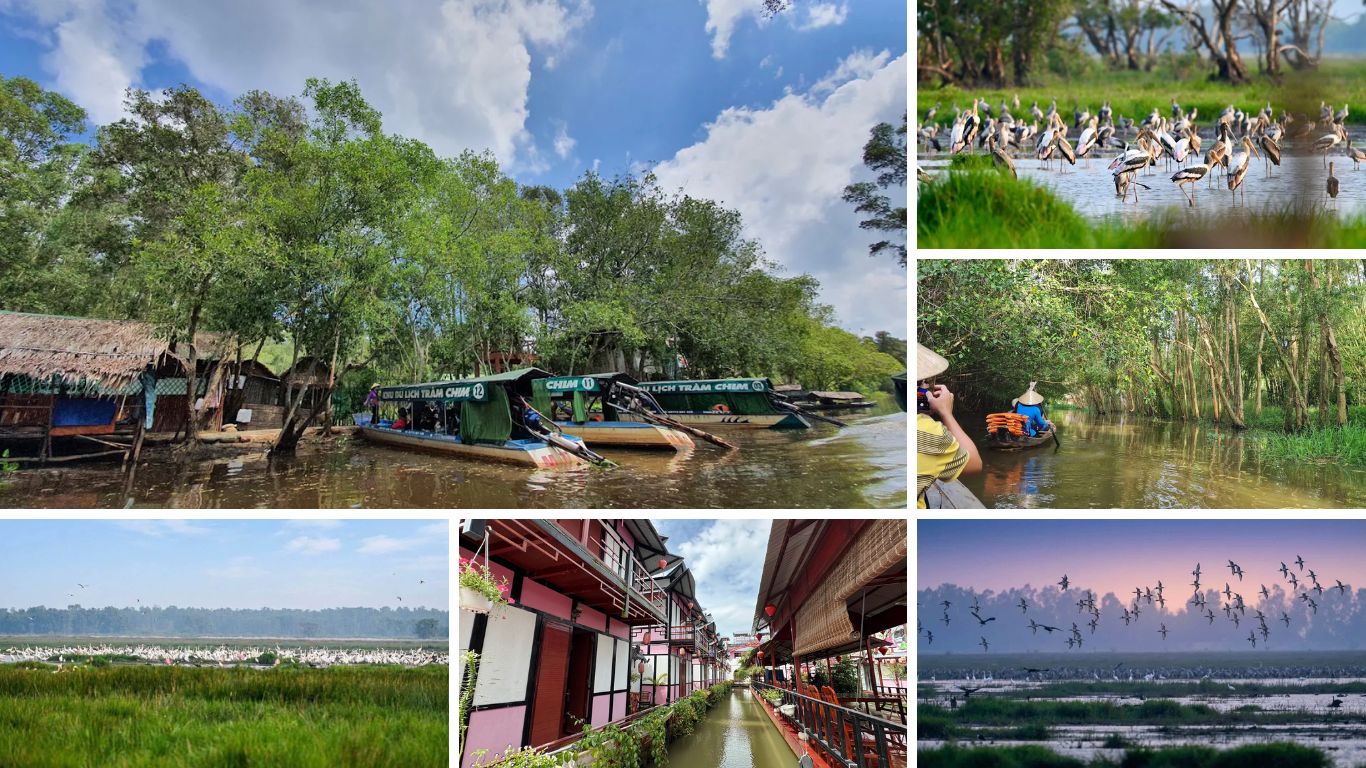
- Tram Chim area: rustic guesthouses right at the park’s edge, best for early morning wildlife trips
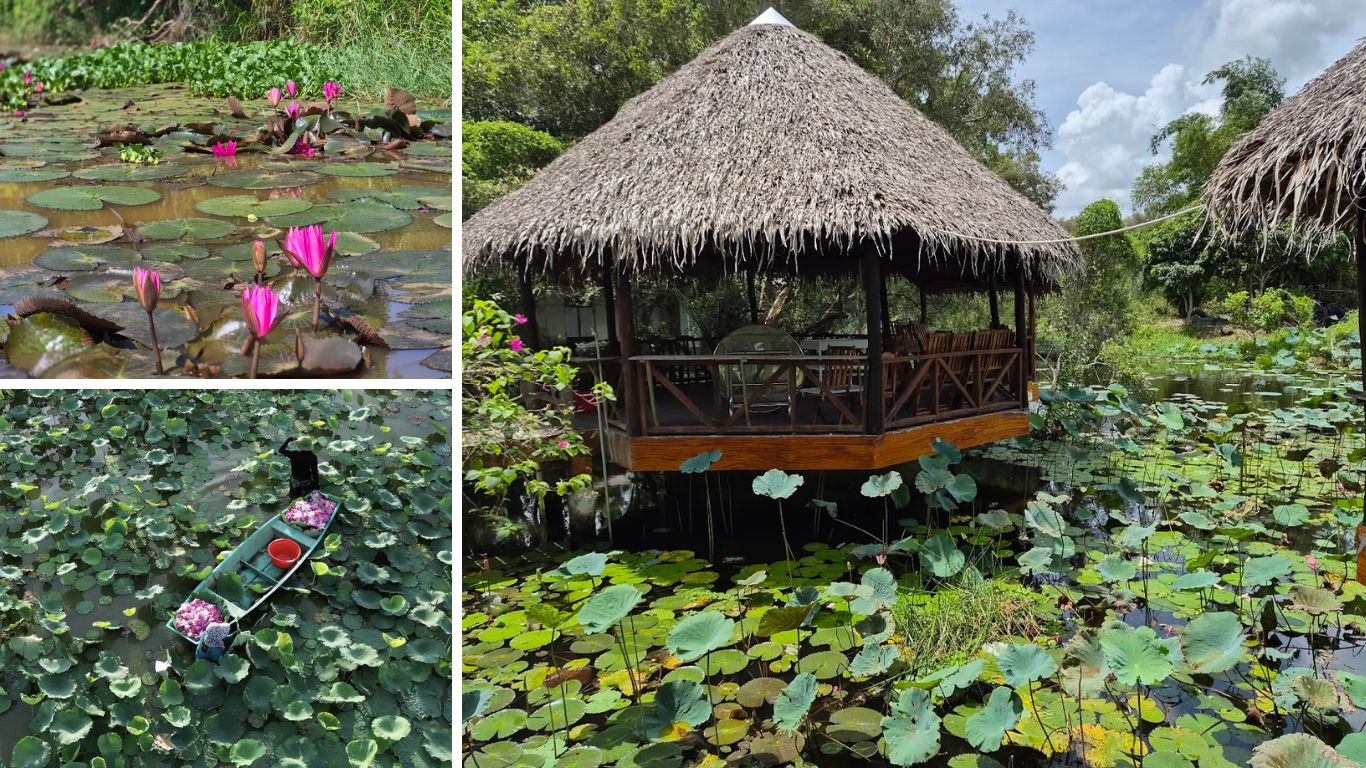
- Riverside homestays and eco-lodges: thatched huts built over the canals of Thap Muoi district, where mornings start with the scent of lotus drifting through the door
Planning Dong Thap Doesn’t Have to Be Complicated. A trip across this much ground becomes far easier with the right support on the ground. Our team at Luxury Cruise Mekong arranges private transport, handpicked eco-lodges, and knowledgeable local guides. That way, every hour in the province goes toward exploring, not logistics. Reach out anytime at resa@luxurycruisemekong.com.
Is It Worth Visiting?
Travelers chasing nightlife, shopping malls, or high-rise resorts will likely find little here. But anyone drawn to authentic nature, slow travel, and a genuine window into rural Delta life will find real depth in Dong Thap. In short, there’s far more here than a single day trip to the wetlands can show.
Budget & Costs
Planning a trip here is refreshingly affordable compared to most of Southern Vietnam’s headline destinations. Still, a few costs are worth budgeting for in advance.
- Park and site entrance fees: Tram Chim National Park, the Dong Sen eco area, and most historic sites charge modest entry fees, typically a few dollars per person
- Boat rental: local sampan rides through the lotus fields or Tram Chim’s waterways generally cost 15 to 30 USD per boat, depending on duration and season
- Accommodation: riverside homestays start as low as 15 to 20 USD a night, while boutique stays in Sa Dec or mid-range hotels in Cao Lanh sit closer to 30 to 60 USD
- Private transport: a private car with a driver from Ho Chi Minh City costs more than the bus fare. Even so, it saves hours of navigating unfamiliar roads and often includes flexible stops
- Daily estimate: a comfortable two-day, one-night trip, including transport, stay, meals, and boat rides, generally falls between 80 and 150 USD per person when arranged privately
Arranging these pieces individually is possible. That said, bundling them through a private tour operator usually works out cheaper and far less stressful, since local rates and boat availability can shift without notice.
Best Things to Do in Dong Thap
Dong Thap offers a surprising range of experiences well beyond its wetlands. And each stop below deserves real time in the itinerary.
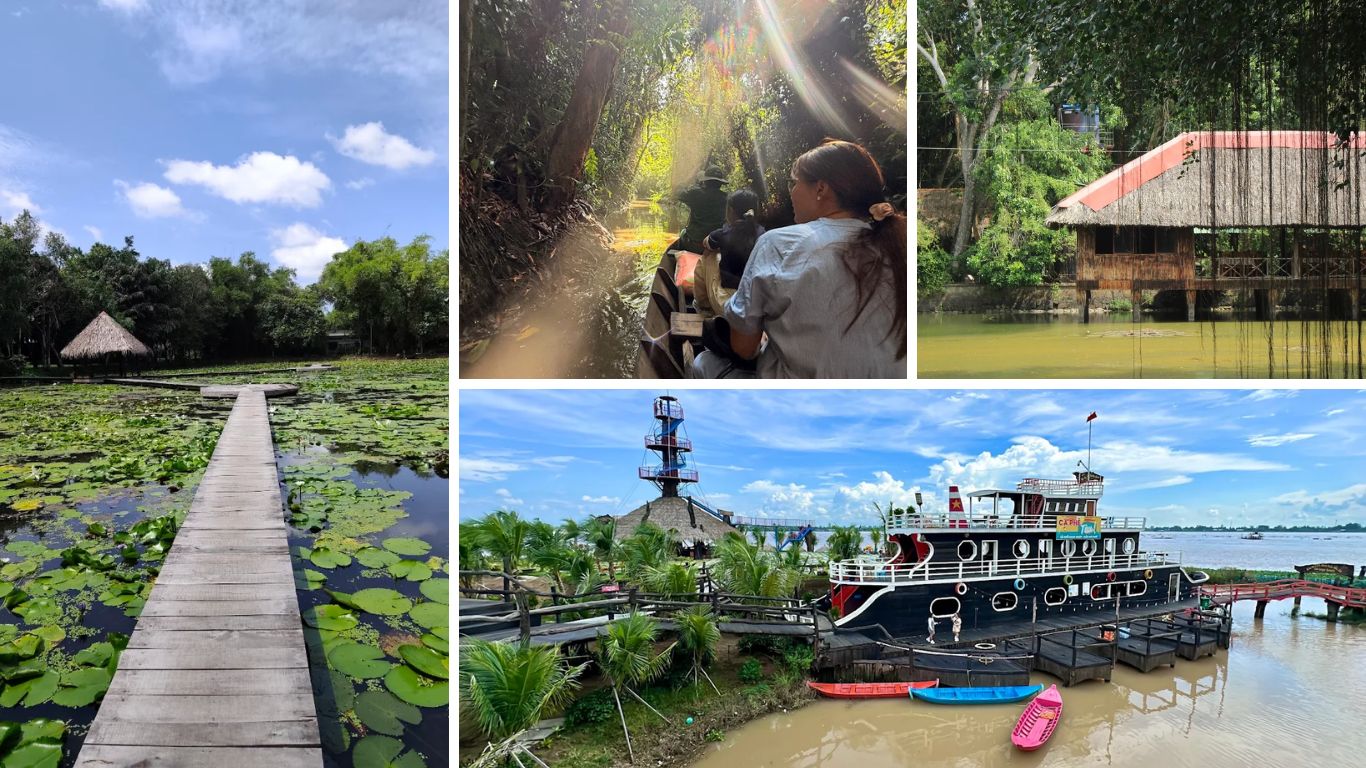
Cruise the Dong Thap Muoi Wetlands
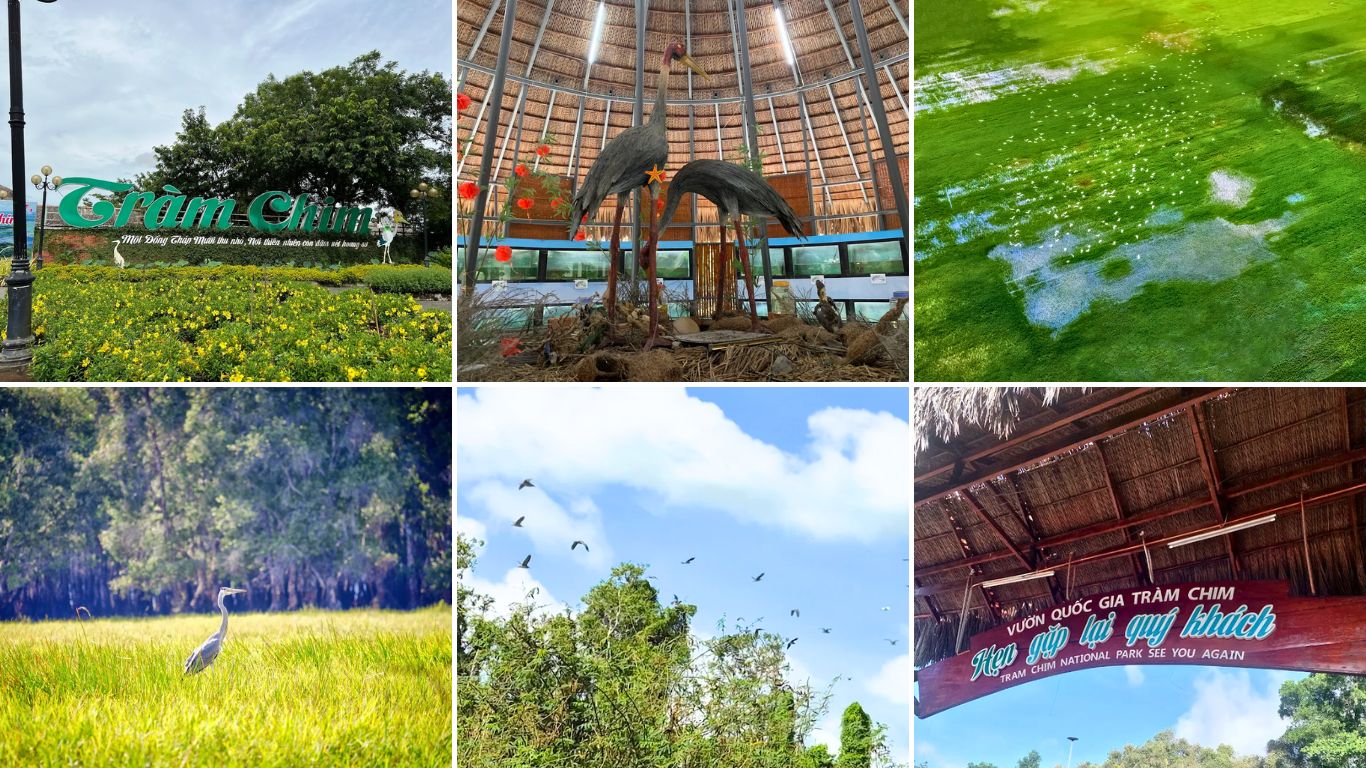
No visit to the province feels complete without time on the water here. Traditional wooden sampans, steered by locals in classic ba ba shirts and conical hats, glide effortlessly through dense fields of lotus leaves. Visitors can reach out to touch the flowers or try harvesting lotus pods alongside local farmers. Afterward, a floating pavilion offers freshly brewed lotus root tea. From here, Tram Chim National Park extends the experience further, covering more than 7,500 hectares of cajuput forest and swampland. The park is home to over 230 bird species and, on rare occasions during the dry months, the endangered Sarus Crane. That said, sightings have grown less frequent in recent years, so a crane spotting is best treated as a magical bonus rather than a guarantee. For more details on the park itself, this Tram Chim National Park guide is worth a read.
Wander Sa Dec Town
Sa Dec brings a completely different atmosphere to the province. It’s built around colonial-era mansions, ancient houses, and sprawling flower villages that supply much of the Delta’s flowers each year. Wandering its riverside streets feels like stepping into a different century. Plus, the town makes an easy, walkable stop on the way toward the wetlands or a Mekong cruise departure point.
Explore Xeo Quyt Eco-Forest
Xeo Quyt combines nature and history in a way few sites in the Delta manage. Once a wartime base hidden deep within a cajuput forest, the site now welcomes visitors by rowboat and on foot. Wooden paths wind past underground bunkers and tunnels, all shaded by a dense canopy. So it offers a quieter, more reflective stop between the province’s busier highlights.
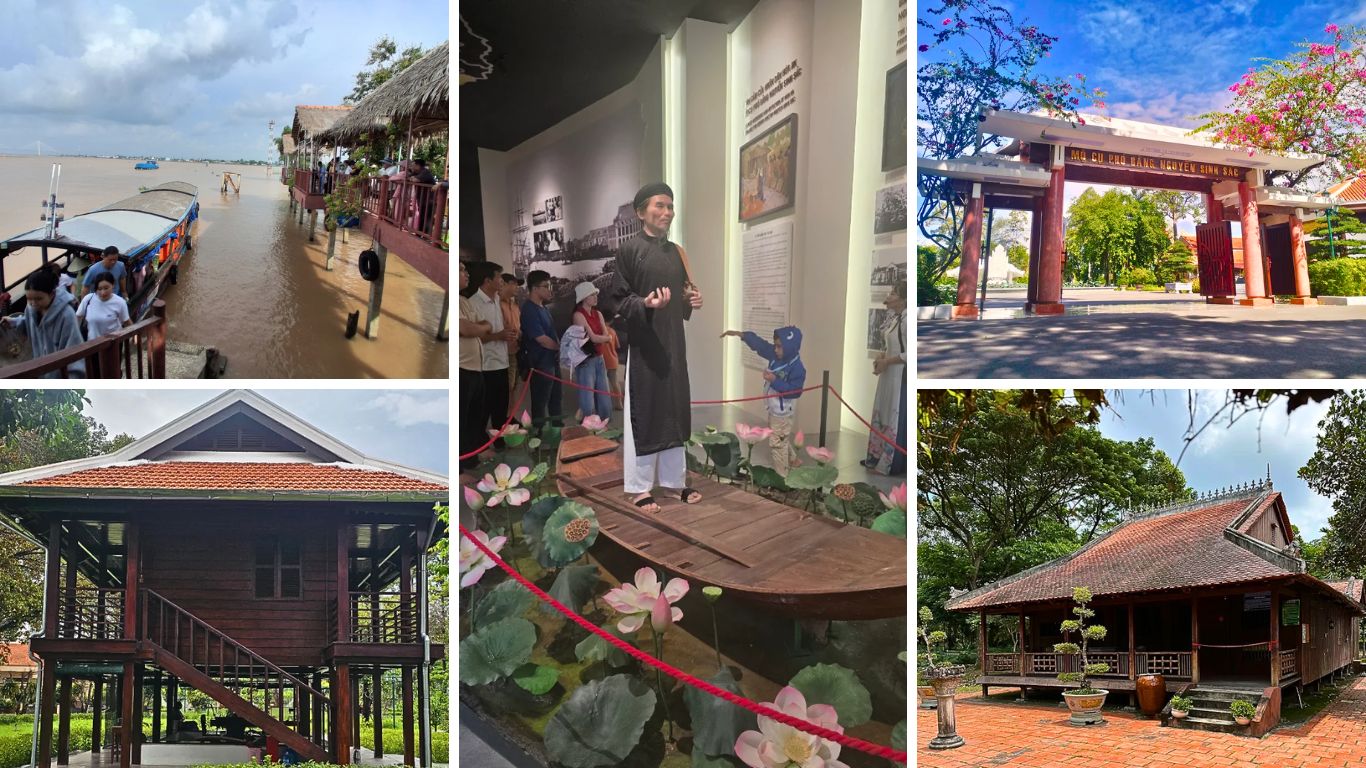
Visit the Nguyen Sinh Sac Memorial Site
Located in Cao Lanh, this memorial and tomb honor Ho Chi Minh’s father. As a result, the site draws visitors interested in Vietnam’s modern history alongside its natural landscapes. The grounds are peaceful and well-maintained, which makes it an easy addition to a Cao Lanh stopover.
Discover Go Thap Historical Site
History runs even deeper at Go Thap, home to the ancient ruins of the Oc Eo Culture dating back to the first through sixth centuries. Brick tower foundations, burial grounds, and sacred Hindu and Buddhist artifacts all sit within the site. It also remains an important spiritual place for locals, who gather here for annual festivals, praying for peace and good harvests.
Experience Life During the Flood Season
In many places, seasonal flooding spells disaster. Here, though, locals celebrate the water rising season as a blessing. That’s because the floods wash away pests and deposit nutrient rich soil across the fields. Visiting during this window means watching an entire society adapt to aquatic life: children rowing to school, fishermen casting nets for tiny linh fish, and fields carpeted in bright yellow sesbania flowers.
Taste the Orchards Around Cao Lanh
Beyond the wetlands, Cao Lanh’s mango orchards are a highlight in their own right. This is especially true during the peak harvest months, when visitors can walk the rows and sample fruit straight from the tree. It’s easy to see why Dong Thap mangoes are prized across the country.
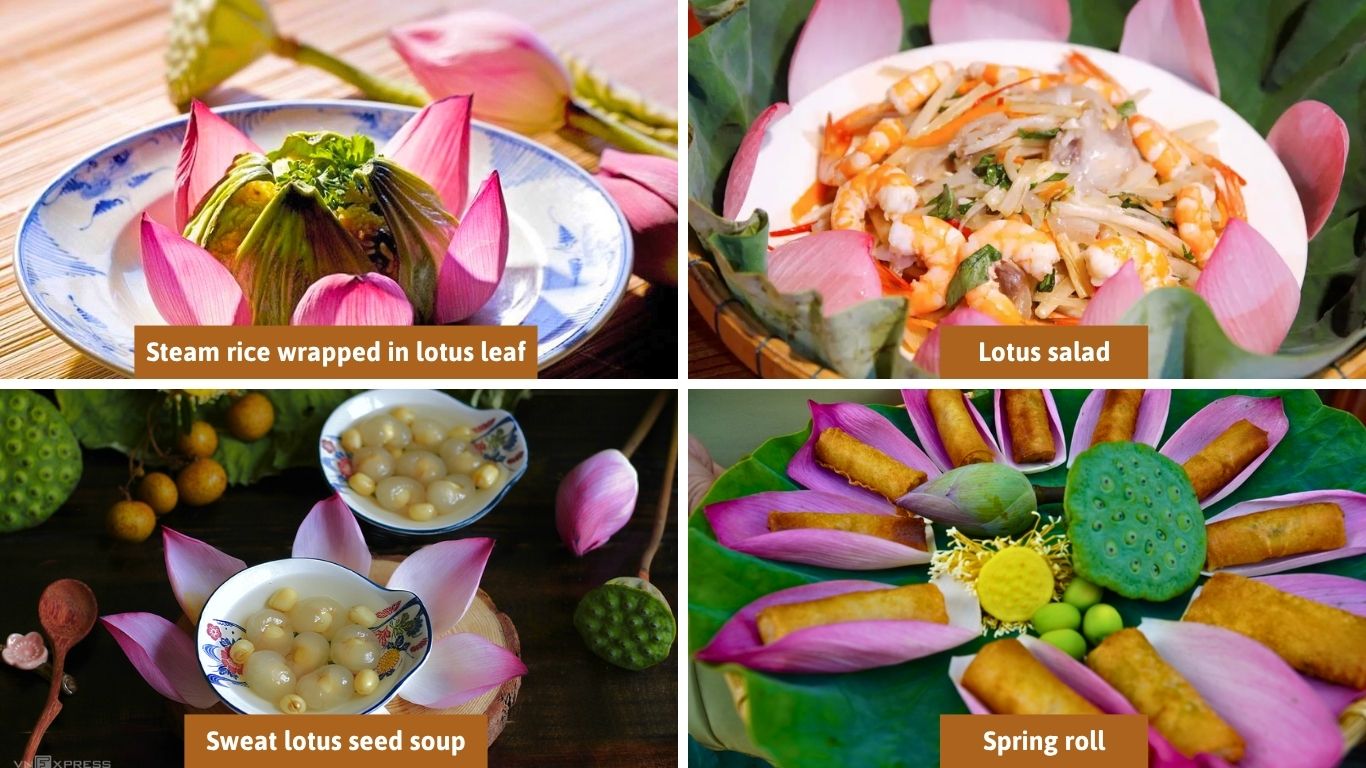
Taste Lotus-Inspired Local Specialties
Lotus is not just admired here, it is central to the table. A few dishes worth seeking out:
- Com la sen: fragrant lotus rice with seeds, carrots, and pork, steamed inside a lotus leaf
- Goi ngo sen: a crisp lotus stem salad with shrimp, pork, herbs, and lime chili dressing
- Ca loc nuong trui cuon la sen non: grilled snakehead fish wrapped in young lotus leaves
- Che hat sen: a sweet, soothing dessert soup with tender lotus seeds
What Makes Dong Thap Different from Other Mekong Delta Destinations?
Choosing between Delta provinces can feel overwhelming. So a direct comparison helps clarify what makes Dong Thap worth the detour.
| Feature | Dong Thap | Ben Tre | Can Tho | An Giang |
|---|---|---|---|---|
| Primary Identity | Wetlands, lotus fields, and river towns | Kingdom of coconuts | Bustling hub and floating markets | Sacred mountains and border culture |
| Vibe | Wild, historic, eco-focused | Rural, shaded canal lanes | Energetic, urbanized riverfront | Spiritual, diverse landscapes |
| Top Landscape | Open lakes, cajuput forests, orchards | Dense coconut orchards | Wide rivers, busy orchards | Paddy fields, limestone hills |
Dong Thap vs Ben Tre
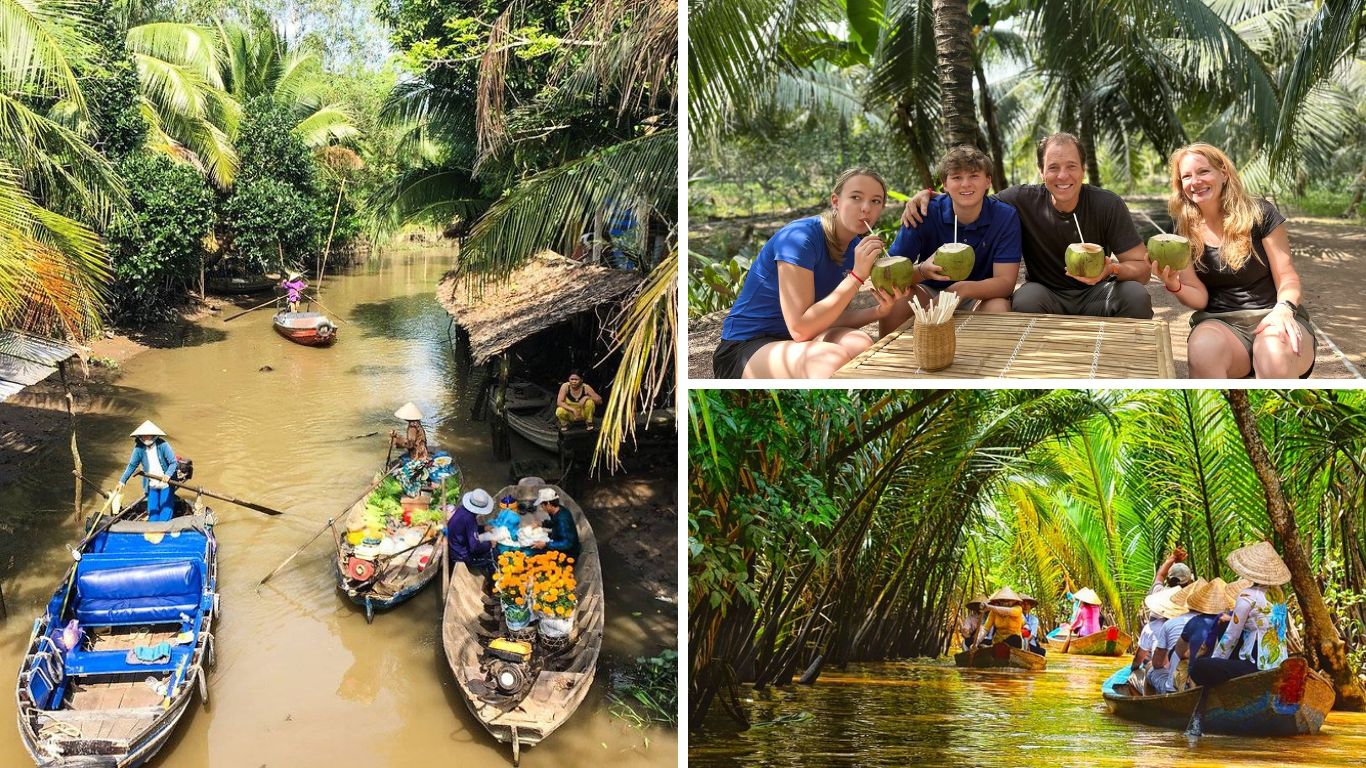
Ben Tre, covered in more depth in this Ben Tre things to do guide, is known for its shaded coconut groves and narrow, winding canals. It’s also known for backyard candy workshops and orchard visits. Dong Thap, by contrast, opens up into vast horizons where the sky meets endless plains of water and flowers. As a result, it feels considerably wilder than Ben Tre’s manicured charm.
Dong Thap vs Can Tho
Can Tho is the economic heart of the Delta, drawing crowds for its large floating markets and urban riverfront energy. This Can Tho guide rounds up its top highlights. Dong Thap, on the other hand, trades the noise of trading boats for the quiet splash of a single paddle. Here, raw wetland nature, history, and orchard life take priority over river commerce.
Dong Thap vs An Giang
An Giang sits on the Cambodian border, mixing limestone mountains, temples, and floating villages. It offers plenty of diversity, as this An Giang highlights guide shows. Still, Dong Thap remains unmatched for travelers focused specifically on pristine wetlands, flood season culture, and layered local history.
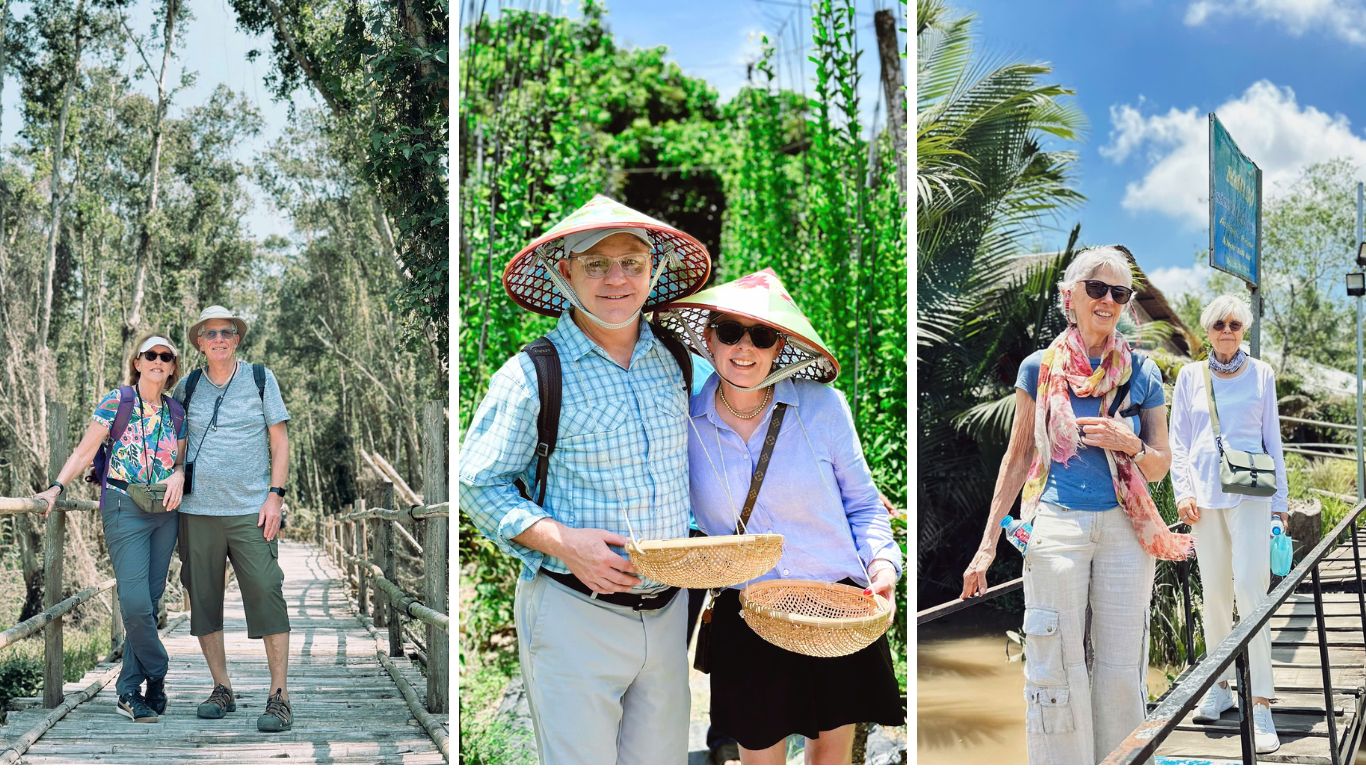
Pair Your Dong Thap Trip with a Mekong Cruise
Dong Thap’s wetlands sit inland, and their shallow, narrow waterways suit small local sampans rather than larger vessels. So a private luxury cruise will not sail directly into the lotus fields or Tram Chim itself. What the province does offer, though, is Sa Dec, one of the main embarkation towns for Mekong cruising. That makes it a natural jumping-off point after a day exploring inland.
A few routes connect smoothly:
- Bassac Mekong River Cruise: running through Cai Be, Sa Dec, and Can Tho, this is an easy one-night add-on right after a wetlands day trip
- Mango Mekong River Cruise: covering Ben Tre, Phong Nam, Mo Cay, and Sa Dec, this route suits travelers wanting a longer, more immersive Delta leg
- Song Xanh Sampan Cruise: connecting Cai Be, Sa Dec, Can Tho, and onward to Phu Quoc, ideal for those extending toward the coast afterward
- Mekong Navigator: departing from My Tho through Cai Be, Sa Dec, and Cu Lao Gieng before continuing to Phnom Penh, a strong choice for travelers combining Vietnam with Cambodia
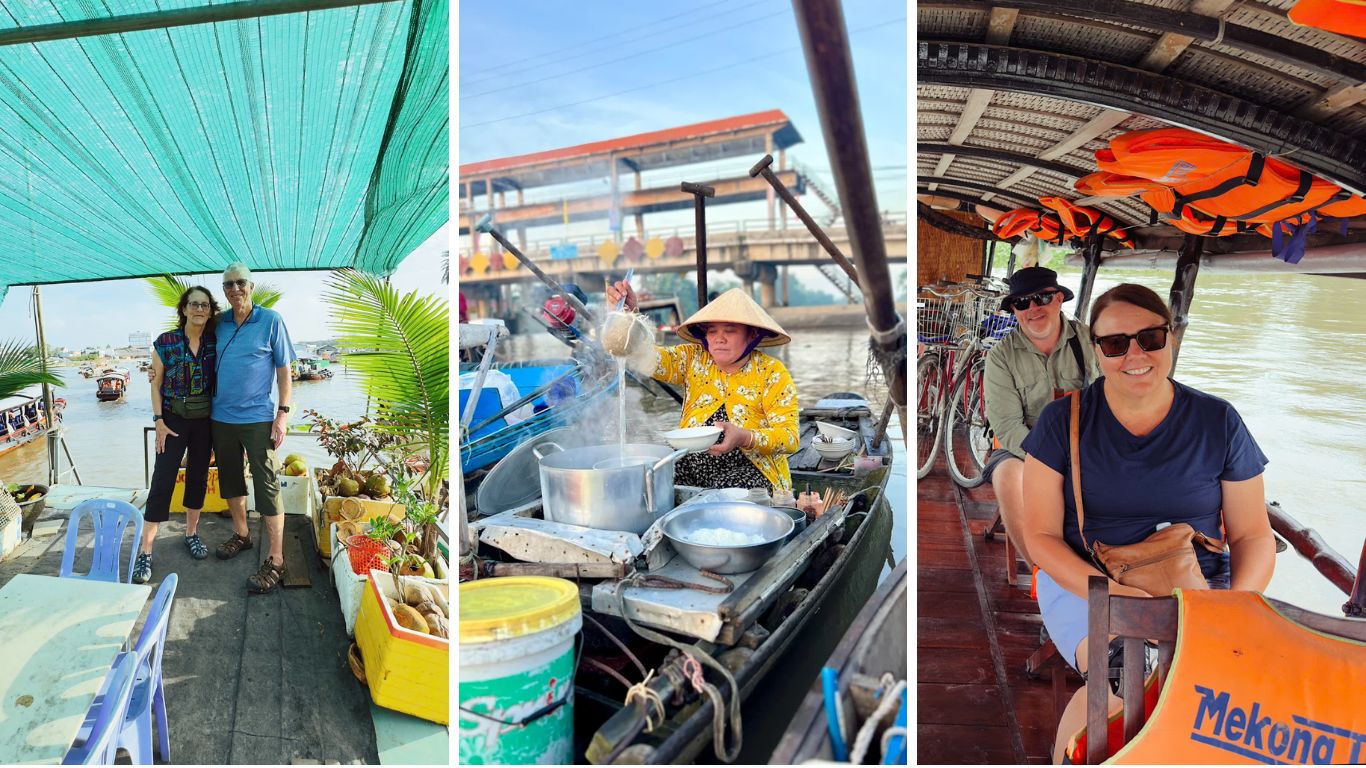
Dong Thap works best on its own terms first, explored by road or local sampan. Then, the cruise picks up the journey once back at the river in Sa Dec. The full range of current sailings, including cabin options and seasonal availability, is listed on our cruise page. From there, our team is happy to match the right sailing to whichever itinerary fits best.
Suggested Dong Thap Itineraries
Whatever time is available, a version of this trip fits. That’s true whether it’s a quick weekend escape or a full Southern Vietnam journey.
A Relaxing 2-Day Escape
This works well for a weekend out of Ho Chi Minh City. Day one covers the drive into Sa Dec, followed by a wander through its flower villages and colonial houses. From there, it continues into Thap Muoi district for a canoe ride through the Dong Sen eco-area and a lotus-leaf lunch, before an evening at a riverside homestay. Day two starts early with a Tram Chim visit, then heads back to the city, entirely by road and local boat.
Beyond Dong Thap: 3 to 4 Days
This route suits travelers who want a broader look at how the province’s landscapes and history connect. It starts with an overland day covering the wetlands, Xeo Quyt, or the Nguyen Sinh Sac site. From there, it transfers to Sa Dec, then boards the Bassac or Mango cruise to continue toward Ben Tre or Can Tho by water, blending inland nature with the classic river experience. For travelers who want this exact route built out as a ready-made package, the Authentic Mekong Delta Tour 4 Days already follows a similar path through Cao Lanh, Sa Dec, and Can Tho. That makes it easy to fold Dong Thap in with minimal adjustment. Travelers with only three days to spare, or who prefer Ben Tre’s coconut canals over the Sa Dec river crossing, will find the Glimpse of Saigon & Mekong Delta 3 Days package a lighter alternative. Our team can still extend it with a Dong Thap day trip on request.
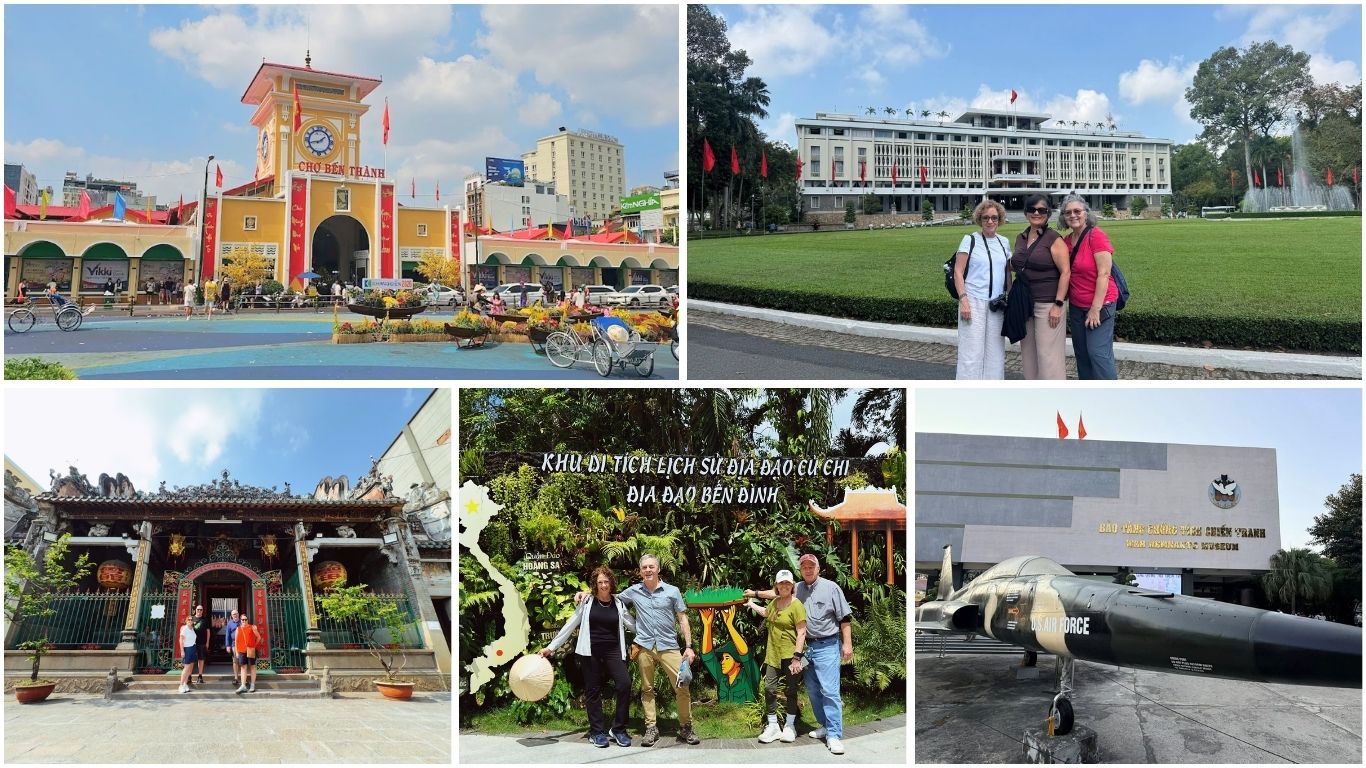
A Comprehensive Southern Vietnam Adventure: 5 to 7 Days
With a week available, the journey can weave together Ho Chi Minh City’s energy, the slow rhythm of Dong Thap’s wetlands and orchards, and a stop in Sa Dec. From there, onward cruising continues toward Chau Doc or the Cambodian border aboard the Mekong Navigator or Song Xanh. The Southern Vietnam Discovery 6 Days package offers a strong foundation, and our team can tailor it to include Dong Thap based on the season.
Practical Travel Tips for Visiting Dong Thap
A handful of small preparations make a real difference once out exploring the province.
- Pack serious mosquito repellent: the wetland environment draws mosquitoes heavily around dusk
- Wear light, breathable clothing: quick-drying, long-sleeved fabrics handle the sun better than heavier options
- Protect electronics: a waterproof dry bag keeps phones and cameras safe when stepping in and out of small boats
- Time photography well: the best light for lotus photos falls between 7 and 9 in the morning. Drone use should also be checked in advance, since restrictions apply in parts of Vietnam
- Respect the sanctuaries: keep voices low and skip camera flashes around nesting birds at Tram Chim
- Carry cash: many boat operators, orchards, and homestays do not accept cards or digital payments
- Check connectivity ahead: wifi can be limited at remote homestays, though most offer basic SIM signal
- Travel responsibly: avoid picking protected lotus and choose homestays that support local families directly
- Consider mobility needs: small boats, boardwalks, and rowboat trails may not suit travelers with limited mobility or a sensitivity to motion
Travelers planning to combine this with a floating market nearby will find this Cai Be floating market guide pairs naturally with a Sa Dec stop. On top of that, this Sa Dec market guide is worth a look before finalizing the route.
FAQs
Is Dong Thap the same as Dong Thap Muoi?
Not quite. Dong Thap Muoi is the wetland region within Dong Thap province, while Dong Thap itself also includes Sa Dec, Cao Lanh, and several historic sites beyond the wetlands.
How many days should be spent in Dong Thap?
A two day, one night itinerary covers the highlights comfortably. Meanwhile, three to four days allows time for Sa Dec, the wetlands, and at least one historic site.
Can Dong Thap be visited all year round?
Yes, though the wetlands themselves shift dramatically by season, so timing matters most for lotus fields and birdlife specifically.
Is Dong Thap suitable for families?
Very much so, with boat rides, boardwalk bridges, orchard visits, and hands-on experiences like lotus pod picking that keep children engaged.
What is the best month to see lotus flowers?
Peak blooming runs from June through August.
Can Dong Thap be combined with other Mekong Delta destinations?
Yes, its central location in the western Delta makes it easy to pair with Ben Tre, Can Tho, or a longer cruise toward Cambodia.
Is a guide necessary to explore Dong Thap?
Driving independently is possible, but a local guide helps with language, spotting rare birds, and navigating the rural backwaters and historic sites.
Can a cruise sail directly into the Dong Thap Muoi wetlands?
No, the wetlands are too shallow for cruise vessels. So they are best explored by road or small local sampan, with a cruise picking up separately from nearby Sa Dec or Cai Be.
Ready to Explore Dong Thap in Comfort?
Dong Thap rewards travelers willing to slow down and look past the wetlands alone. And the right planning makes all the difference between a rushed day trip and a trip worth remembering. From private transport and handpicked eco-lodges to pairing the province with a private Mekong cruise, our team handles the details so the journey stays effortless. Get in touch through our contact page or email resa@luxurycruisemekong.com to start building an itinerary around this corner of the Delta.