
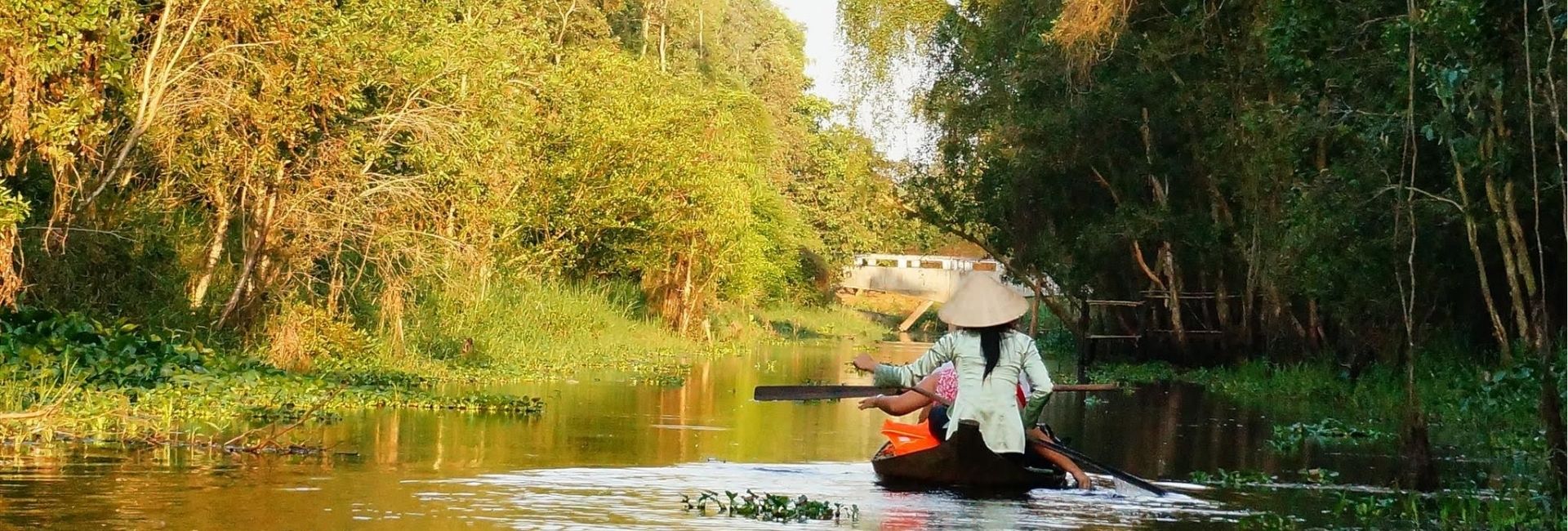
The Mekong Delta is not simply a destination you visit. It is a world you step into. Here, the river does not pass through the landscape — it is the landscape. Villages rise along canal banks, markets float at dawn, and a civilization moves at the pace of water. If you have been picturing rice paddies and crowded tour boats, set that image aside. What waits for you is far richer: layers of Vietnamese, Khmer, Cham, and French colonial culture woven across one of Southeast Asia’s most extraordinary river systems. This guide will help you decide how long to stay, where to go, and why the way you travel here matters just as much as the destination itself.
Quick Answer: How Many Days in the Mekong Delta?
If you are short on time, here is the direct answer. One day gives you a glimpse but little more. Two to three days on a land-based private itinerary lets you explore floating markets, canal villages, and riverside towns properly. For travelers who want to push deeper into the upper Delta or cross into Cambodia, four to eight days on a luxury river cruise is the experience that reframes everything. In fact, most travelers who have done it both ways will tell you the same thing: the cruise version is the one they remember.
What Makes the Mekong Delta Special?
Few places in Southeast Asia carry this much cultural weight in such a compact geography. The Delta is where Vietnamese, Khmer, Cham, and French colonial histories did not simply coexist but genuinely blended into something that belongs to no single tradition. As a result, you feel it everywhere: in the architecture of a riverside pagoda, the textile patterns of a Cham village, and the faded grandeur of a French merchant’s house on the riverbank.
A Living Culture Built on Water, Not Land
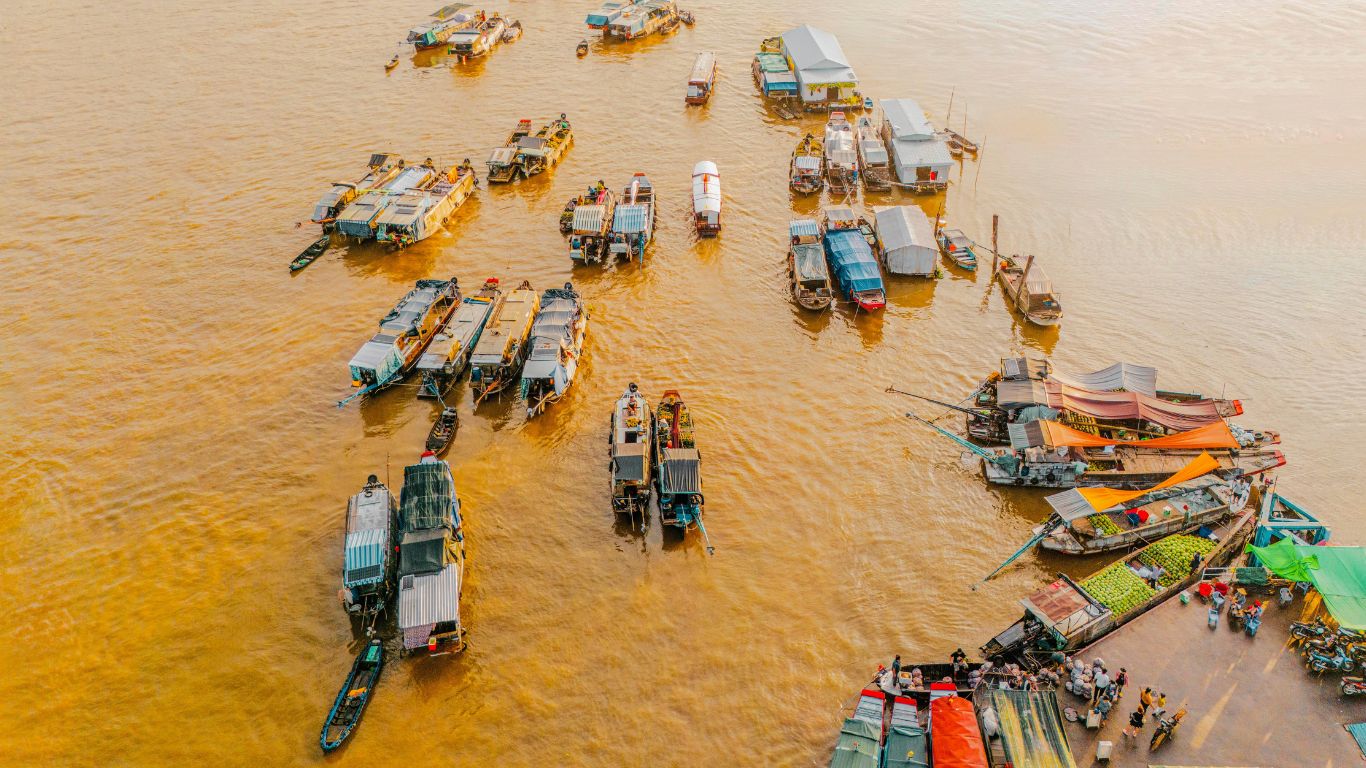
Here, the river is not a backdrop. It is the infrastructure. Canals serve as roads, boats carry the morning market from village to village, and orchards and floating homes line waterways too numerous to map. What makes this special is that none of it feels performed. Life here unfolds the way it always has, and you are simply invited to watch it, join it, and understand it from the inside.
Why the Delta Rewards Slow Travelers
The Mekong Delta cannot be rushed. The best moments arrive quietly: a sunrise over still water, a sampan slipping into a palm-shaded canal, the smell of pho from a riverside kitchen before the rest of the world wakes up. Travelers who pass through on a day trip leave with photographs. Those who stay, on a private tour or a luxury cruise, leave with something that lasts far longer. If you are thinking about combining the Delta with a broader southern Vietnam journey, our South Vietnam 7-day itinerary is a strong starting point.
When to Go — The Golden Window
Timing your visit makes an enormous difference here. Fortunately, knowing what each season actually offers helps you plan the right trip rather than just the most convenient one. For a full month-by-month breakdown, our Mekong Delta weather guide has everything you need.
Dry Season (November to April): The First Choice for Comfort
November through April is when the Delta is at its most accessible and most photogenic. Skies are clear, waterways are calm, and the floating markets are at their liveliest. Moreover, December through February offers the most comfortable temperatures on the water. Evenings are cool enough to make sundowners on deck genuinely enjoyable. For private cruises and multi-day tours, this is the window to prioritize.
Wet Season (June to October): A Different Kind of Beautiful
The wet season brings daily rain and higher river levels. However, it also brings a lushness and quiet that the dry months cannot match. The canals fill up, the greenery deepens, and crowds thin considerably. For photographers and travelers who prefer fewer tourists, this season has real appeal. The floating markets still run, cruise routes remain navigable, and the pace of river life is unchanged.
One Detail That Catches Many Travelers Off Guard
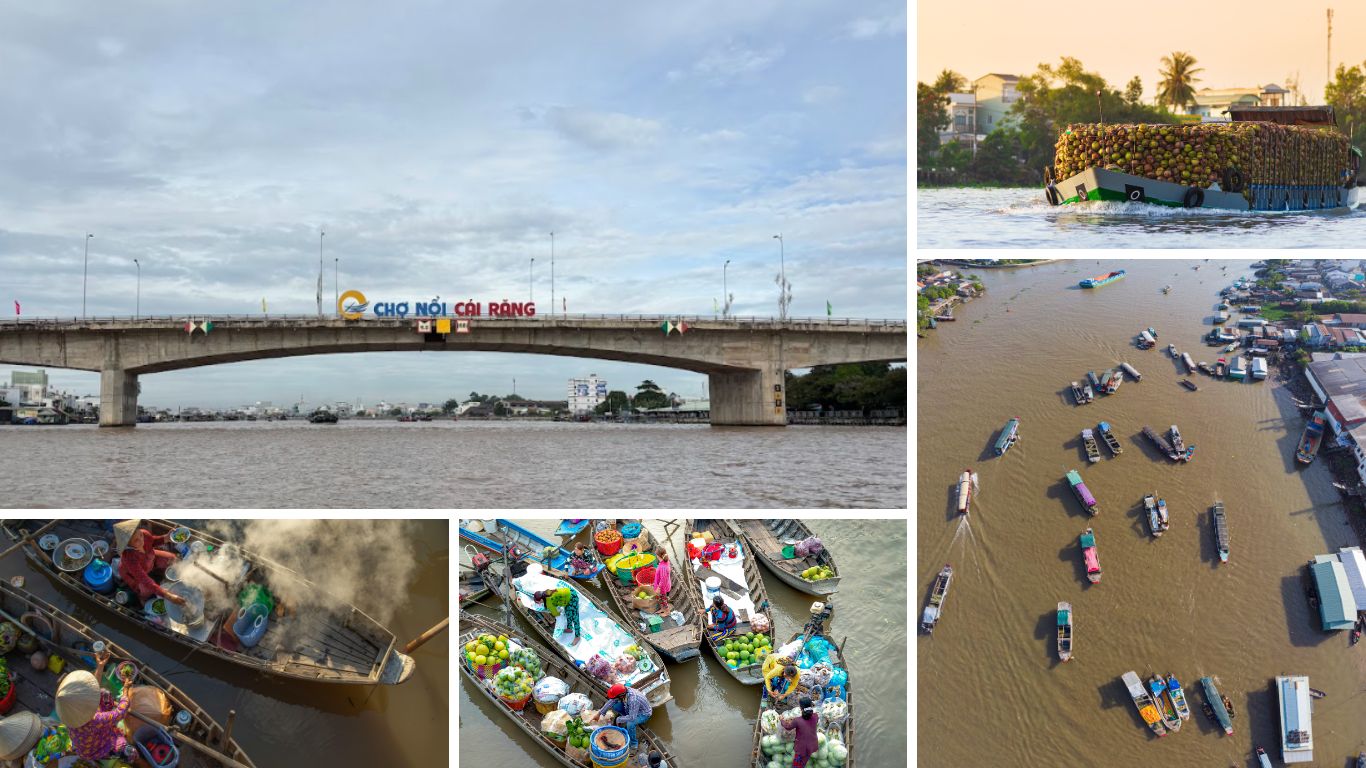
Whatever season you visit, the floating markets run on their own schedule. Cai Rang and Cai Be peak between 5 am and 7 am. By 8 am, the energy begins to fade noticeably. So when booking a private tour or cruise with us, early morning market access is built into the itinerary as a given, not listed as an optional extra.
How Many Days Do You Actually Need in the Mekong Delta?
This is the question most travelers ask first. The honest answer, though, depends entirely on what kind of experience you are after. Below is a clear breakdown so you can match your time to your expectations.
1 Day — The Teaser (My Tho and Ben Tre)
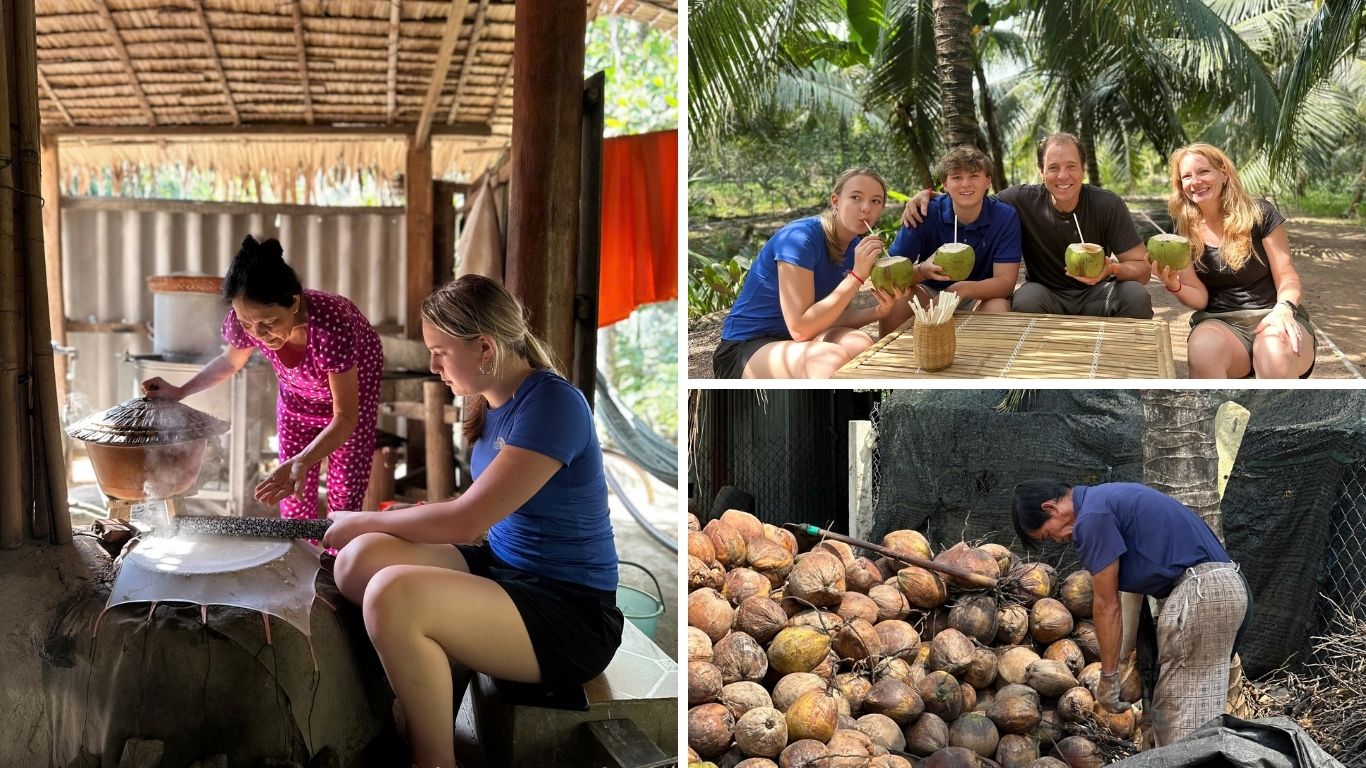
A one-day visit from Ho Chi Minh City is possible. For travelers with no flexibility, it is better than nothing. You will typically reach My Tho or Ben Tre by mid-morning, see a coconut workshop, take a short boat ride, and be back in the city by evening. It is pleasant. Nevertheless, most travelers leave feeling they have seen the packaging rather than what is inside. Treat it as a preview, not a destination.
2 to 3 Days — The Classic (Can Tho and Cai Rang Floating Market)
This is the sweet spot for land-based travel. With two to three days, you can reach Can Tho, spend a proper morning at Cai Rang by private sampan, cycle through canal-side villages, and visit local workshops at your own pace. Furthermore, staying overnight in Can Tho means waking up inside the Delta rather than racing into it. That shift in rhythm changes the entire mood of the trip. Our 2-day Mekong Delta tour covers this place in detail, while the 4-day private itinerary is worth comparing if you have more time.
4 to 5 Days — The Immersive (Can Tho to Chau Doc and the Cambodia Border)
At four to five days, the Delta opens up in ways a shorter trip cannot access. You move beyond the well-known floating markets into Chau Doc, where Cham villages, Sam Mountain, and Tra Su Cajuput Forest add an entirely different dimension. In addition, this is the point where a luxury cruise begins to make obvious, undeniable sense over a private van. No repacking every morning. No sitting in traffic. Just the river moving past your window while you plan the day ahead.
6 to 8 Days — The Full River Journey (Vietnam to Phnom Penh to Siem Reap)
This is the itinerary that travelers come back and call the best trip they have ever taken. Starting from Ho Chi Minh City, you move through the heart of the Vietnamese Delta, cross into Cambodia, and arrive in Phnom Penh by river. From there, the journey continues toward Siem Reap and the temples of Angkor. In short, it is two countries, three cultural worlds, and one river tying it all together. Our Vietnam to Cambodia Mekong cruise guide covers every leg in detail.
Mekong Delta Trip Planner: At a Glance
| Duration | Focus Area | Best For | Best Travel Style |
|---|---|---|---|
| 1 Day | My Tho, Ben Tre | Stopover travelers | Private day tour |
| 2 to 3 Days | Can Tho, Cai Rang | First-time visitors | Private guided tour |
| 4 to 5 Days | Can Tho, Chau Doc, border | Culture seekers | Luxury cruise or private tour |
| 6 to 8 Days | Full Delta to Cambodia | Immersive explorers | Luxury river cruise |
Best Places to Visit in the Mekong Delta
The Delta covers an enormous stretch of southern Vietnam and spills across the Cambodian border. As a result, knowing where to focus your time matters. Each destination below has its own rhythm and its own reason to visit. Better still, a well-planned private itinerary or cruise route can connect several of them without any of the usual travel fatigue.
Ben Tre — The Coconut Kingdom’s Hidden Waterways
Ben Tre earns its nickname within minutes of arrival. Coconut palms lean over quiet canals, and the air carries something sweet and green that is hard to describe until you have experienced it. Beyond the well-known coconut candy workshops, the real reward here is a private sampan through the mangrove-lined channels that most visitors never find. Afterward, cycling between villages with a local guide who knows which family still makes traditional rice paper by hand turns an afternoon into something genuinely memorable. For travelers interested in extending into the mangrove ecosystem nearby, our Can Gio Mangrove Forest full-day tour pairs naturally with the Ben Tre experience.
Cai Rang Floating Market, Can Tho — Before the Crowds Arrive
Cai Rang is the largest floating market in the Mekong Delta. Arriving by private sampan before sunrise puts you right in the middle of something most visitors only see from a distance. Boats loaded with dragon fruit, pineapple, and vegetables cluster in the half-light. Traders call out across the water. The smell of coffee and soup drifts from food boats running alongside. This is a working wholesale market, not a curated attraction. That is precisely what makes it extraordinary.
Sa Dec and The Lover’s House — French Colonial Romance on the River
Sa Dec is one of the Delta’s most overlooked stops. The town is best known as the setting of Marguerite Duras’s novel The Lover, and the colonial mansion at its center is still standing, still beautiful, and still heavy with atmosphere. Beyond the literary connection, Sa Dec’s flower village supplies blooms to markets across southern Vietnam. Meanwhile, the riverside itself retains a faded elegance that feels entirely removed from the modern world.
Chau Doc and Tra Su Cajuput Forest — Vietnam’s Most Underrated Dawn
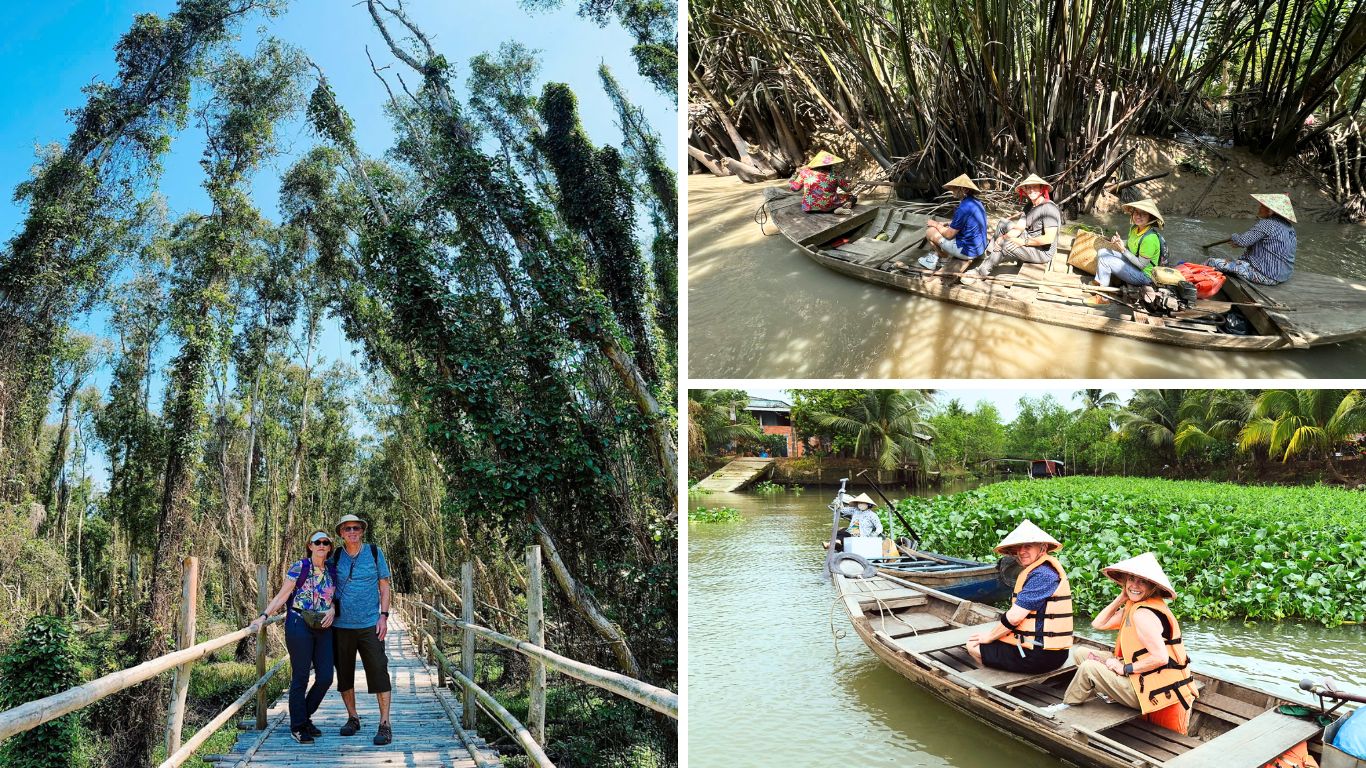
Chau Doc sits near the Cambodian border and carries a cultural complexity most travelers underestimate. The town blends Vietnamese, Khmer, and Cham influences in everything from temple architecture to street food. Beyond the town itself, however, the experience that defines Chau Doc is a dawn boat through Tra Su Cajuput Forest.
The forest is a flooded wetland of tall cajuput trees. Its surface is covered in green duckweed, birds move through the canopy above, and the silence is almost complete. The light at that hour is extraordinary. It is, simply, the kind of morning that justifies the entire trip.
Sam Mountain, Chau Doc — Spirituality at the Edge of the Delta
A short distance from Chau Doc, Sam Mountain rises abruptly from the flat Delta plain. The mountain is a pilgrimage site dotted with pagodas and shrines. Nevertheless, the reason most travelers make the climb is the view at sunset. From the upper slopes, the Delta spreads out in every direction: a vast patchwork of water, rice fields, and canals catching the last light of the day.
Phnom Penh — Arriving by River Changes Everything
Arriving in Phnom Penh by river rather than by road is one of those experiences that is difficult to explain until you have done it. The city appears gradually: first the riverbanks, then the palace towers, then the waterfront promenade as the boat slows. It is an entrance no airport or bus terminal can replicate. Our Chau Doc to Phnom Penh crossing guide covers timing, border logistics, and exactly what to expect along the way.
Siem Reap and Tonle Sap — Where the River Journey Reaches Its Crown
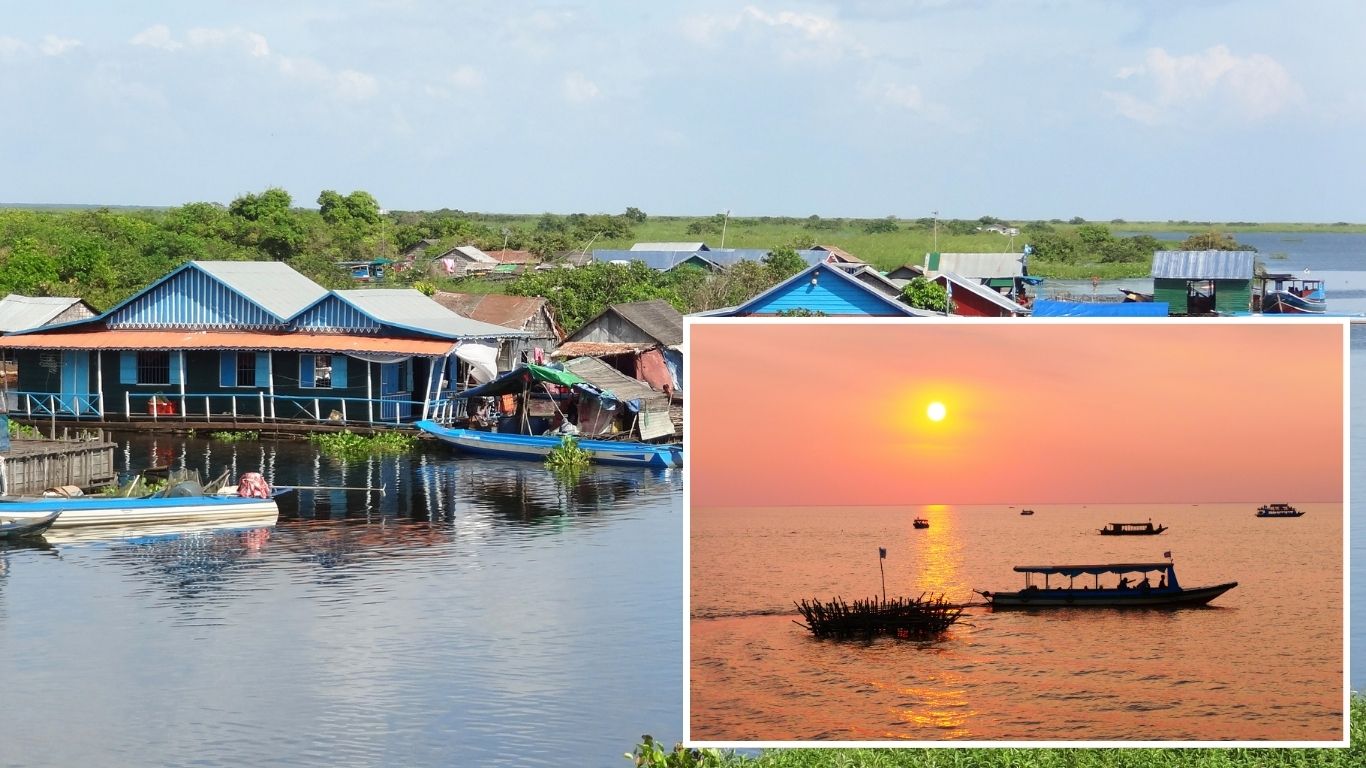
For travelers on the full six-to eight-day route, Siem Reap and the temples of Angkor are the extraordinary final chapter. Tonle Sap Lake, connected to the Mekong system, is home to floating villages where entire communities live on the water year-round. Arriving here after days on the river gives the temples a different context. You have traveled the same water system that sustained this civilization. That connection makes the stones mean something more.
Ready to stop planning and start moving? Our private Mekong cruise and tour specialists will build your itinerary around exactly how much time you have. Browse our cruise options or contact us directly, and we will take it from there.
Why a Luxury Cruise Beats Land Travel on the Mekong
Travelers who have experienced the Delta by private van and then returned to do it by cruise tend to say the same thing: the second trip felt like the real one. That is not a coincidence. In fact, the way you travel here shapes everything you experience, and the difference between land-based and river-based travel is more significant than it first appears.
- No friction travel. Your cabin is your constant. The boat moves while you sleep, so you wake up somewhere new without having repacked a single bag.
- Exclusive access. A luxury cruise, paired with smaller excursion boats for narrower channels, takes you into remote river bends and villages that roads simply do not reach.
- The onboard experience. Sundowners on deck at dusk, a spa treatment after a morning at the floating market, and a dinner that moves between Vietnamese and Khmer flavors course by course. The best vessels treat the hours between excursions as carefully as the excursions themselves.
- The emotional difference. On a bus, you pass through the Delta. On a cruise, you live inside it. That is not a small distinction.
Cruising the Mekong Delta: A Unique Way to Explore
With vessels ranging from intimate private sampans to full luxury ships covering the Vietnam-Cambodia arc, the right choice comes down to your travel style, group size, and how far you want the river to take you. Below is a quick reference across our current fleet, with direct links so you can explore each in detail.
| Cruise | Route | Style | From |
|---|---|---|---|
| Heritage Line Jahan | Saigon to Siem Reap | Luxury, heritage | $1,355/person |
| Heritage Line Jayavarman | Saigon to Siem Reap | Luxury, cultural immersion | $1,355/person |
| Mekong Princess | Ho Chi Minh City to Siem Reap | Luxury, full arc | $848/person |
| Aqua Mekong | Ho Chi Minh City to Siem Reap | Ultra luxury | $4,656/person |
| Mekong Navigator | My Tho to Phnom Penh | Luxury, Vietnam focus | $1,099/person |
| Victoria Mekong | Can Tho to Siem Reap | Deluxe, full route | $3,017/person |
| Bassac Mekong River Cruise | Cai Be to Can Tho | Deluxe, Vietnamese Delta | $208/person |
| Mekong Eyes Explorer | Saigon to Phnom Penh | Deluxe, cross-border | $212/person |
| Mekong Dragon Eyes | Cai Be to Phnom Penh via Phu Quoc | Deluxe, island extension | $269/person |
| Song Xanh Sampan | Cai Be to Phu Quoc | Private, boutique | $268/person |
| Mekong Gecko Eyes | Cai Be to Phnom Penh via Phu Quoc | Private charter | $374/person |
| Mango Mekong River Cruise | Ben Tre to Sa Dec | Private, intimate Delta | $371/person |
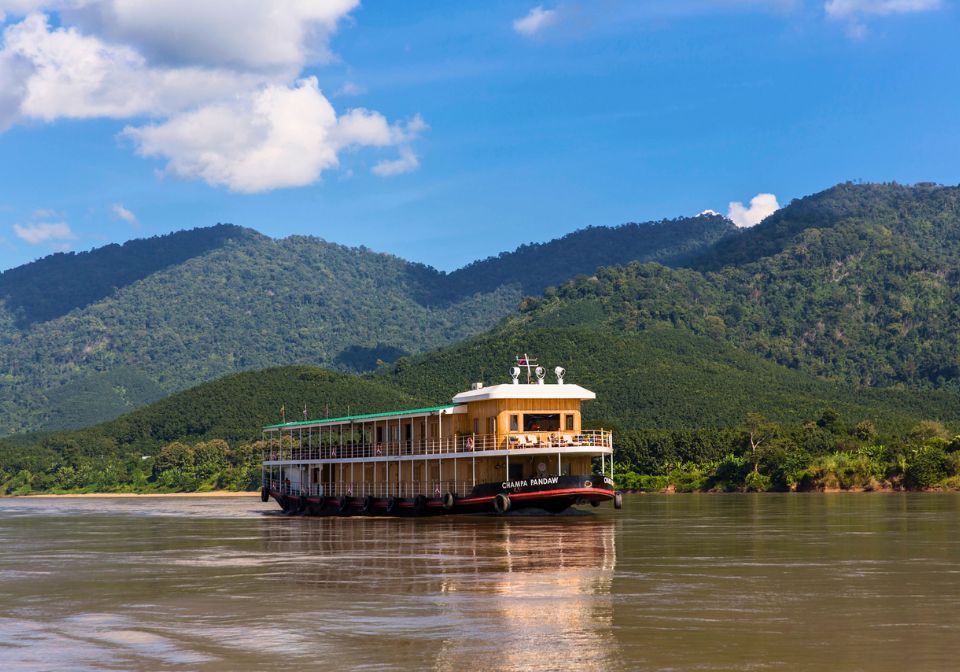
| Pandaw Cruise | Phnom Penh to Siem Reap | Luxury, Cambodia deep dive | $1,728/person |
Not sure which vessel fits your travel style? Simply reach out at resa@luxurycruisemekong.com, and we will match you to the right cruise based on your dates, group size, and what you want to feel at the end of the journey.
Practical Planning — The Logistics You Actually Need
Getting the logistics right before you arrive makes an enormous difference to how the trip unfolds. Below are the details that matter most, with honest notes on each, so nothing catches you off guard.
Getting to the Mekong Delta from Ho Chi Minh City
Most travelers begin in Ho Chi Minh City. My Tho is the closest entry point at roughly 70 kilometers from the city center, while Can Tho requires around three hours by road. For a luxury trip, a private transfer is the right choice. It removes scheduling uncertainty and lets you depart on your own timeline. If you are joining a cruise, your boarding point and transfer logistics are coordinated by our team as part of the package.
The Phnom Penh Speedboat Route — A Scenic Entry Worth Knowing
Travelers coming from Cambodia can enter the Delta by speedboat from Phnom Penh to Chau Doc. The five-hour crossing passes through a landscape that shifts gradually from Cambodian to Vietnamese in ways you would never notice by road. It is a beautiful way to enter the Delta and sets the tone for everything that follows. Our Chau Doc to Phnom Penh crossing guide covers the full logistics. Additionally, for travelers continuing to Phu Quoc, routing options are detailed in our Phu Quoc from Cambodia guide.
Crossing Into Cambodia — Visa Basics
Most nationalities can obtain a Cambodian e-visa online in advance. This is strongly recommended over arriving without one. If you are traveling on a cruise that crosses the border, the visa process is briefed and coordinated by our team before departure. As a result, nothing catches you off guard at the Vinh Xuong or Tinh Bien crossing.
What to Pack for River Travel
River travel has its own packing logic. Light, breathable clothing is essential, but so is a layer for cool evenings and air-conditioned cabins. Sun protection on the water is more intense than on land, so a wide-brimmed hat and high-SPF sunscreen are non-negotiable. In addition, insect repellent matters most in the early morning and at dusk. Waterproof bags are useful for sampan excursions, and comfortable shoes that can get wet are worth packing alongside smarter footwear for onboard dinners.
Planning a private tour rather than a cruise? Our team at Indochina Voyages specializes in tailor-made private journeys through Vietnam and across Indochina. Tell us what you have in mind, and we will build the itinerary around you.
FAQs
Is the Mekong Delta worth visiting? Without question. The Delta offers a completely different side of Vietnam: slower, greener, and more culturally layered than most travelers expect. Whether you have one day or eight, the region rewards the visit in ways that stay with you long after you leave.
What is the best month for a Mekong River cruise? November through January is the most consistently comfortable window. Skies are clear, the water is calm, and evenings on deck are genuinely pleasant. December and January are particularly popular. February through April remains excellent, though temperatures begin to climb toward the end of April.
How do you get around the Mekong Delta? The Delta combines water and land transport in roughly equal measure. Boats handle the river and canal routes, from large cruise vessels down to small sampans. On land, private transfers, bicycles, and motorbikes connect the towns and villages. The best way to experience both without logistical headaches is through a private tour or cruise that builds all the transport into the itinerary for you.
Is one day enough for the Mekong Delta? It is enough to get a sense of the place, but not enough to understand it. Most travelers who do a day trip leave wishing they had stayed longer. If you can extend to at least two nights, the experience improves dramatically and the Delta begins to reveal itself properly.
What is the difference between a luxury and deluxe cruise on the Mekong? Luxury cruises offer larger cabins, higher staff-to-guest ratios, more refined dining, and a deeper cultural program. Deluxe cruises offer solid comfort and genuine service at a more accessible price point. Both styles cover similar routes. The real difference, however, is in the quality of what happens between the stops, not just at them.
The Mekong Doesn’t Rush. Neither Should You.
The Mekong Delta gives back in direct proportion to how slowly you move through it. Whether you are planning your first two-day private tour or a full eight-day cruise from Ho Chi Minh City to Siem Reap, the decision to come here properly is already the right one.
When you are ready to move from thinking about it to actually doing it, we are here. Browse our full range of Mekong cruises, explore tailor-made private tours through Indochina Voyages, or reach out directly at resa@luxurycruisemekong.com. The river is patient. You do not have to be.