
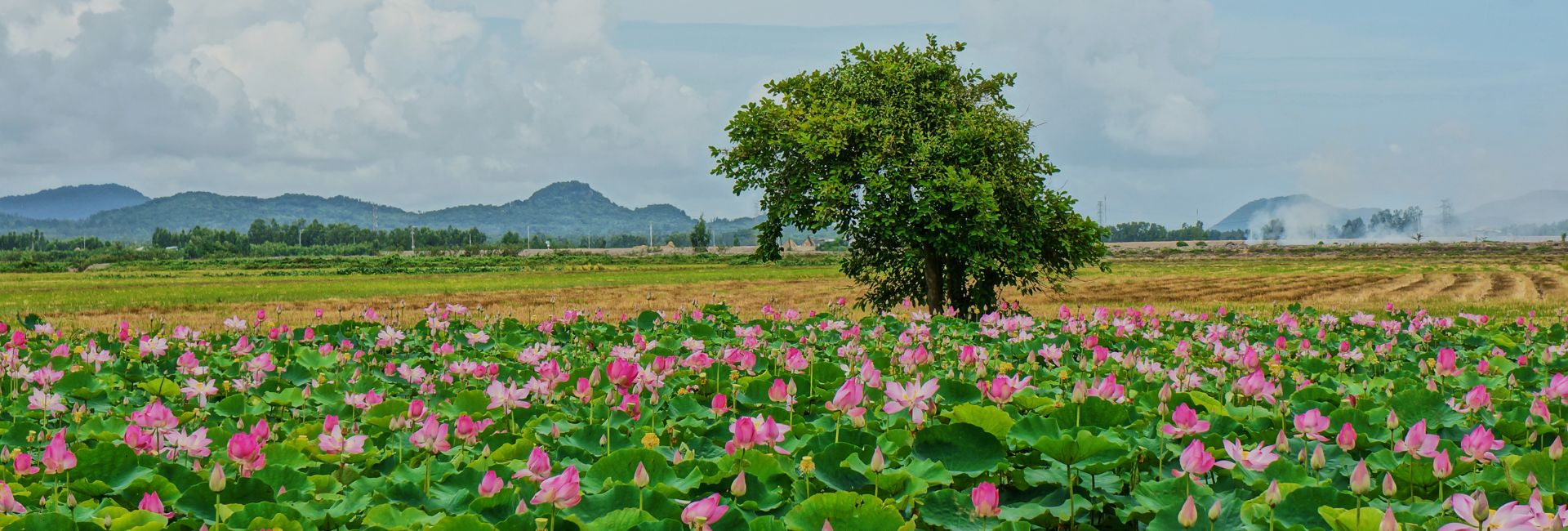
There is something quietly magical about the Mekong Delta in July. The landscape turns a shade of green so deep and vivid it almost seems unreal, the canals fill with purpose, and river life moves at a pace that feels genuinely unhurried. While other travellers are chasing dry-season sunshine elsewhere, you get to experience the Delta the way locals actually live it, surrounded by lush orchards, mist lifting off morning waterways, and floating markets that feel like they belong to another century.
July sits in the heart of the rainy season, and in the upper Delta, it also marks the beginning of the annual flood season. But do not let either of those words put you off. Rain here rarely means grey skies all day. It means short, dramatic tropical showers that cool everything down, sharpen the colours around you, and leave the rivers looking fuller and more alive than at any other time of year. If you are drawn to the Mekong Delta in July for a genuine travel experience rather than a postcard backdrop, you are already asking the right question.
What Is the Weather Like in the Mekong Delta in July?
July weather in the Mekong Delta is warm, lush, and beautifully unpredictable in the best tropical sense. Understanding what to expect helps you plan smarter rather than avoid the month altogether. For a full seasonal breakdown, our Mekong Delta weather guide covers every month in detail.
Temperature and Humidity
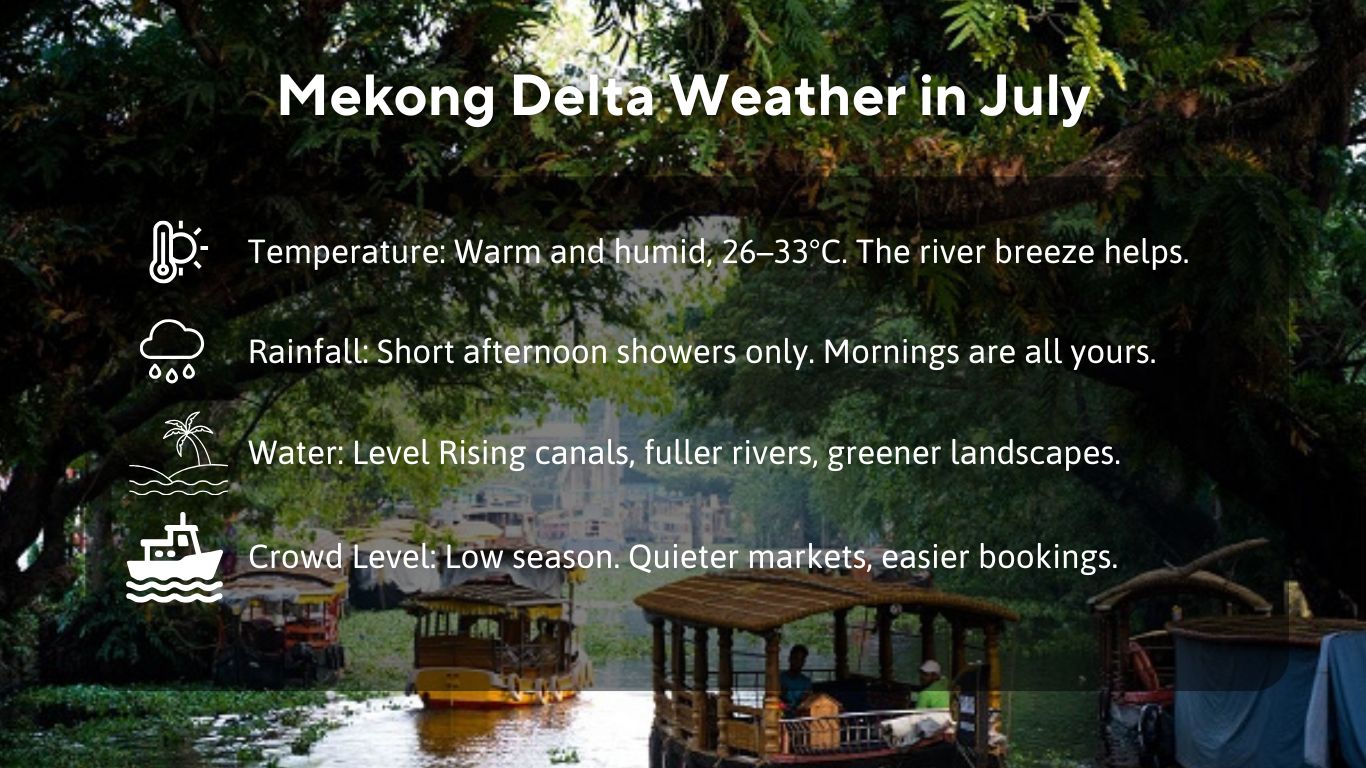
Daytime temperatures in July typically sit between 28°C and 33°C, making the Delta feel warm but not punishing, especially if you are moving by boat, where the breeze does most of the work. Evenings cool slightly but remain comfortable, usually hovering around 24°C to 26°C, perfect for sitting beside a riverside homestay with a cold drink in hand.
Humidity is noticeably high, often above 80%, so lightweight and breathable clothing is not just a suggestion but a genuine comfort decision. The air feels thick and lush rather than suffocating, and most travellers adjust within a day or two, especially when they time their activities smartly around the cooler morning hours.
Rainfall and Tropical Showers
The rainy season in the Mekong Delta follows a very recognisable rhythm. Mornings are typically clear and bright, making them the golden window for floating market visits, canal boat rides, and orchard walks. By early to mid-afternoon, clouds begin building and showers arrive with that satisfying tropical intensity before clearing again by early evening.
What this means practically is that your plans rarely need to be cancelled, just adjusted. A morning boat trip on the canals of Ben Tre or a sunrise visit to Cai Rang Floating Market in Can Tho both sit comfortably inside the dry part of the day. The afternoon shower actually becomes part of the experience, something you watch from a covered riverside café with a bowl of hu tieu rather than something you suffer through.
Water Levels and Early Flood Season
July is when the Mekong Delta begins its seasonal transformation. Water levels in the upper Delta, particularly around Chau Doc and An Giang province, start rising as floodwaters push down from the Mekong River system. Canals that looked modest in March now feel wide and purposeful. Rice paddies shimmer between channels of water. Nipa palm-lined banks reflect perfectly in the still moments between rain.
For photographers and nature lovers, this is genuinely one of the most rewarding times to visit. The landscape has a depth and drama that the dry season simply cannot offer, and the light after an afternoon shower creates a softness that feels almost cinematic.
Is July a Good Time to Visit the Mekong Delta?
Honestly, yes, but with a clear-eyed understanding of what you are choosing. July is excellent for travellers who want authenticity, lush scenery, fruit season produce, and a slower, more local pace without the crowds of peak season. It is less suited to those who need guaranteed sunshine every hour or who are expecting beach-resort-style comfort throughout.
If you come with the right mindset, July rewards you far more generously than many expect.
Why Visit the Mekong Delta in July?
The reasons to visit in July go well beyond simply finding a quieter travel window. The Delta in July has its own distinct character, one that regular visitors often say feels more real and more rewarding than the dry-season version.
The Delta Looks Exceptionally Green
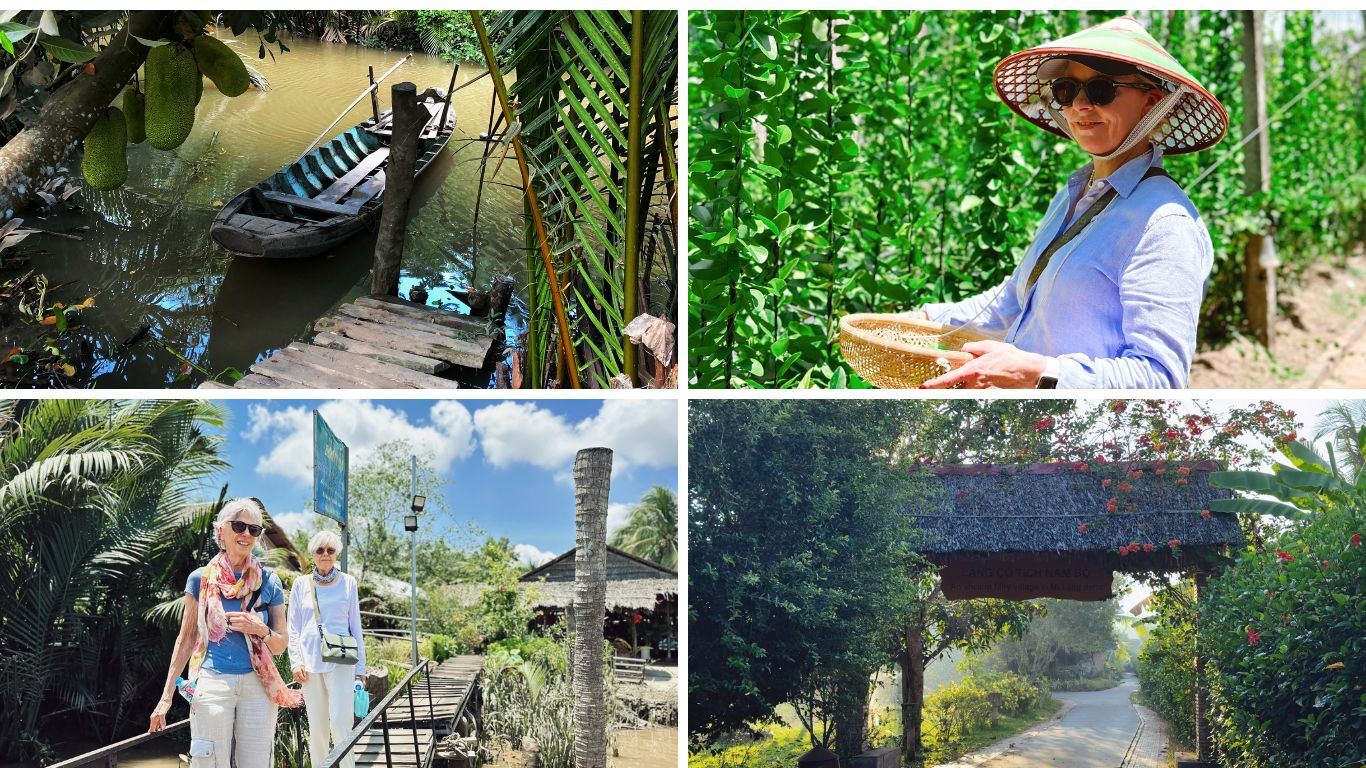
Nowhere does the Mekong Delta look more photogenic than in July. The rains bring every shade of green imaginable: rice paddies that glow almost fluorescent in the morning light, nipa palms crowding the canal edges, and fruit orchards heavy with colour. Even the waterways themselves take on a different quality, fuller and more reflective, turning every canal into a mirror for the sky above.
Compared to the dry season months when the landscape can feel more muted and dusty, July offers a visual richness that genuinely surprises first-time visitors and keeps experienced travellers coming back.
Floating Markets Feel More Authentic
The floating markets of the Mekong Delta do not slow down in July. If anything, the lower tourist volume during the rainy season means you are sharing the waterways with far more local traders and buyers than tour groups. Early mornings on the river feel genuinely alive rather than staged, and that distinction matters enormously when you are trying to understand how the Delta actually works.
The three markets worth anchoring your itinerary around are:
- Cai Rang in Can Tho, the largest and most active, is best visited just after sunrise
- Cai Be in Tien Giang, smaller and more intimate, surrounded by traditional riverside villages
- Long Xuyen in An Giang is a lesser-known option that rewards travellers willing to go slightly off the beaten path
Our guide to floating markets as the cultural gem of the Mekong Delta goes deeper into what makes each one worth the early wake-up call.
Fruit Season Is Still Excellent
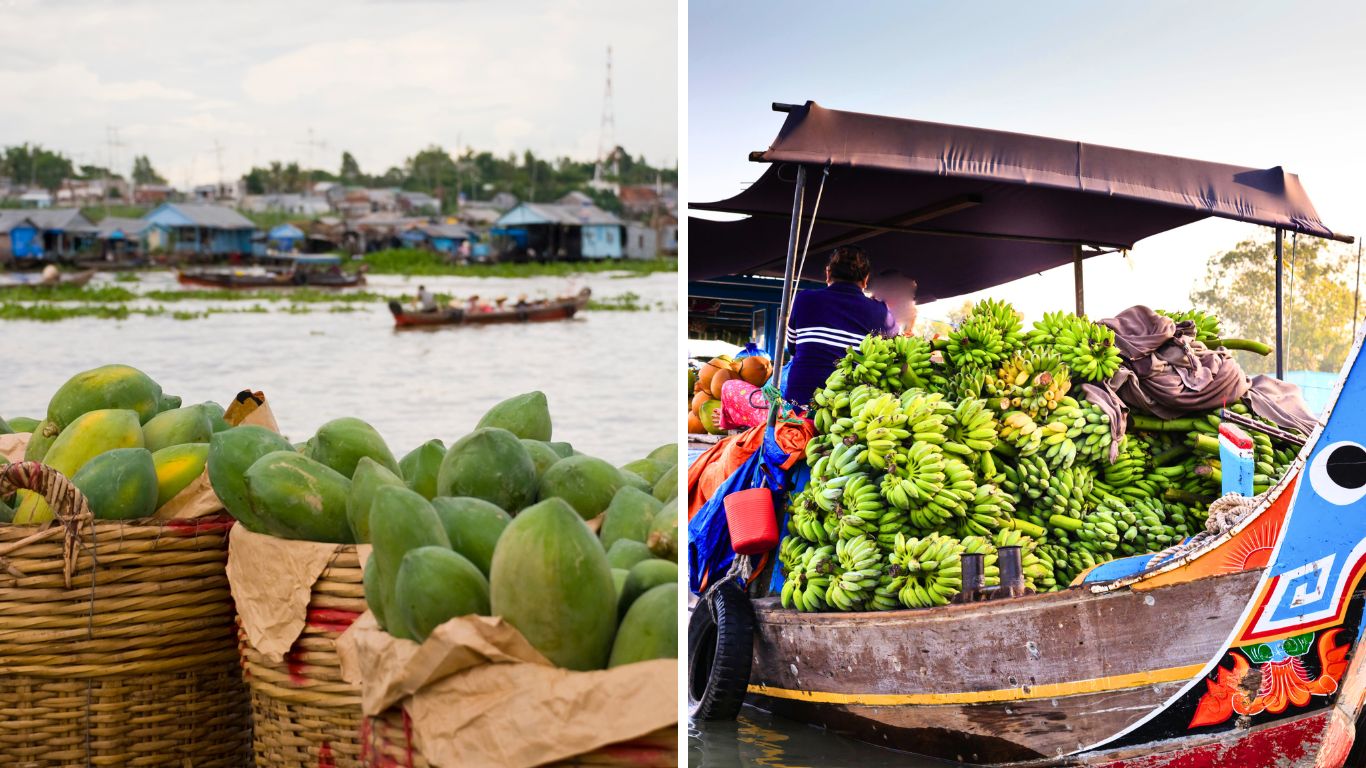
July sits squarely within the southern Vietnamese fruit season, and the orchards around Ben Tre, Cai Be, and Vinh Long are producing at full capacity. Visiting a family-run fruit garden in July means tasting:
- Rambutan, sweet and fragrant, is sold fresh off the branch
- Mangosteen, arguably the finest tropical fruit in the region at this time of year
- Durian, polarising but unmissable if you want the full Delta experience
- Longan, delicate and honey-sweet, are perfect eaten by the handful on a slow boat ride
These are not curated tasting experiences arranged for tourists. They are working orchards where you walk among the trees with the family who tends them, which makes all the difference.
Fewer International Tour Groups
December through March brings the bulk of international visitors to the Mekong Delta, which means July offers the opposite: quieter guesthouses, more attentive service, and a genuine sense of space in places that can feel crowded during peak season. For slow travellers, photographers, and anyone who finds large groups exhausting, this alone is a compelling reason to visit in July.
Rain Creates a Romantic River Atmosphere
There is a mood to the Mekong Delta in July that is genuinely hard to replicate at any other time of year. Mist sitting on the water at dawn. The smell of rain approaching across a wide canal. Sunset light breaking through clouds after an afternoon shower and turning the river gold. These are the kinds of moments that stay with travellers long after they return home, and they belong entirely to the wet season.
Best Places to Visit in the Mekong Delta in July
The Mekong Delta is vast, and not every corner feels the same in July. Some destinations genuinely shine during the wet season, while others are worth combining for a fuller picture of the region. For a broader sense of what the Delta offers year-round, our Mekong Delta travel guide is a useful companion to keep open alongside this one.
Can Tho: Best for Floating Markets and Local Life
Can Tho is the natural starting point for most Mekong Delta visits, and July does nothing to diminish its appeal. The Cai Rang Floating Market is at its most atmospheric in the early morning hours before the rain arrives, and a private boat arranged through a local guide gets you out among the traders rather than watching from a distance. If you are still working out logistics, our guide on how to reach Can Tho covers every practical option from Ho Chi Minh City and beyond.
Beyond the market, Can Tho’s riverside cafés and local food scene make it a genuinely comfortable base. Mornings on the water, afternoons sheltering from brief showers with a bowl of bun ca or banh mi, and evenings walking the riverside promenade. That is a perfectly balanced July day in Can Tho.
Ben Tre: Best for Coconut Groves and Quiet Canals
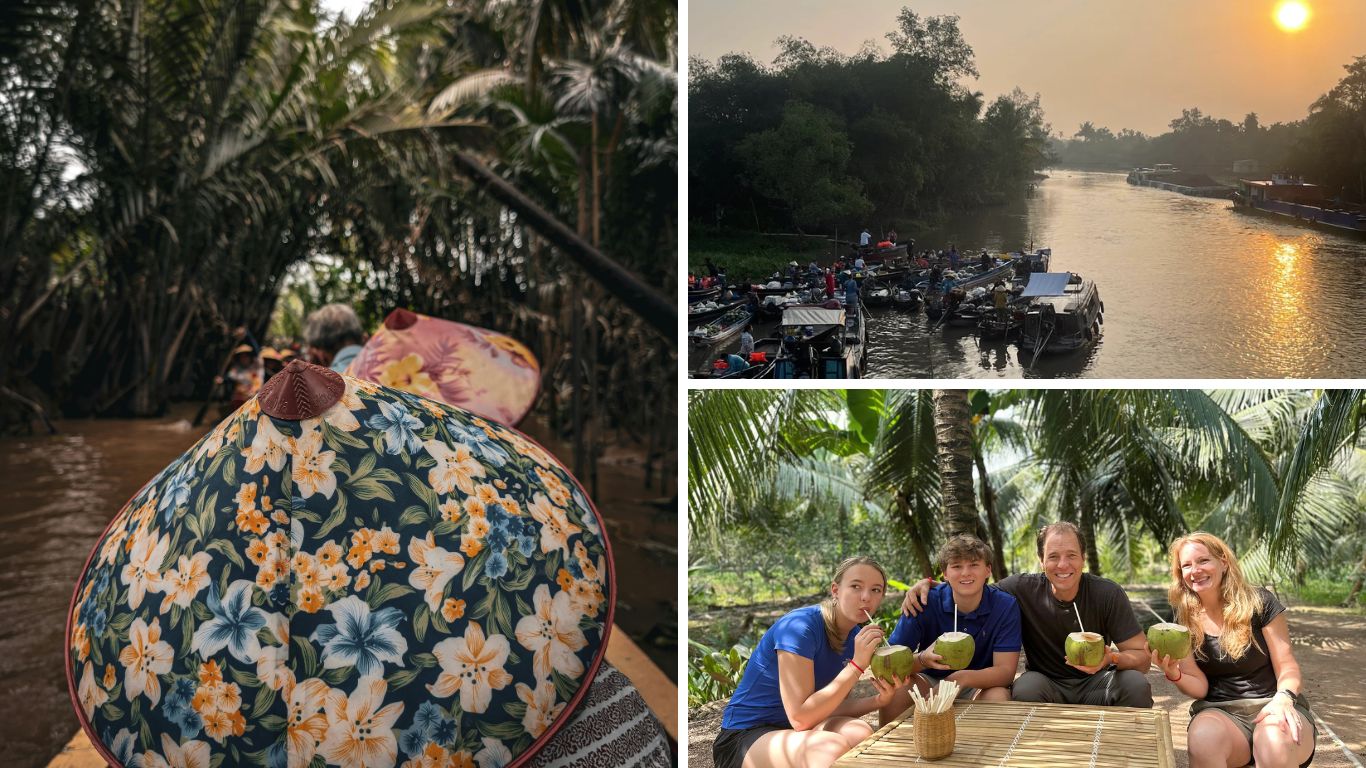
Ben Tre moves at a pace that suits the July mood perfectly. Small sampan rides through narrow canals shaded by coconut palms feel almost meditative, and the villages here are accessible enough to explore by bicycle without needing to cover serious distances. Our guide to the best things to do in Ben Tre maps out exactly how to spend your time here, whether you have one day or two.
The rain, when it arrives, simply adds to the sense of enclosure and calm that makes Ben Tre so appealing. This is a destination that rewards travellers willing to slow down, which is exactly the right approach for a July visit.
Chau Doc: Best for Flood Season Landscapes
Of all the destinations in the Mekong Delta, Chau Doc arguably benefits most from a July visit. The early floodwaters rising around An Giang province create wide, reflective landscapes that feel unlike anywhere else in Vietnam, with floating fish farms rising and falling with the river and a sky that seems bigger here than anywhere else in the Delta. If you are travelling from Ho Chi Minh City, our Ho Chi Minh City to Chau Doc route guide walks through your best transport and timing options.
Chau Doc also serves as the best gateway to Tra Su Cajuput Forest, which becomes one of the most extraordinary natural experiences in southern Vietnam during the wet season.
Cai Be: Best for Orchard Experiences
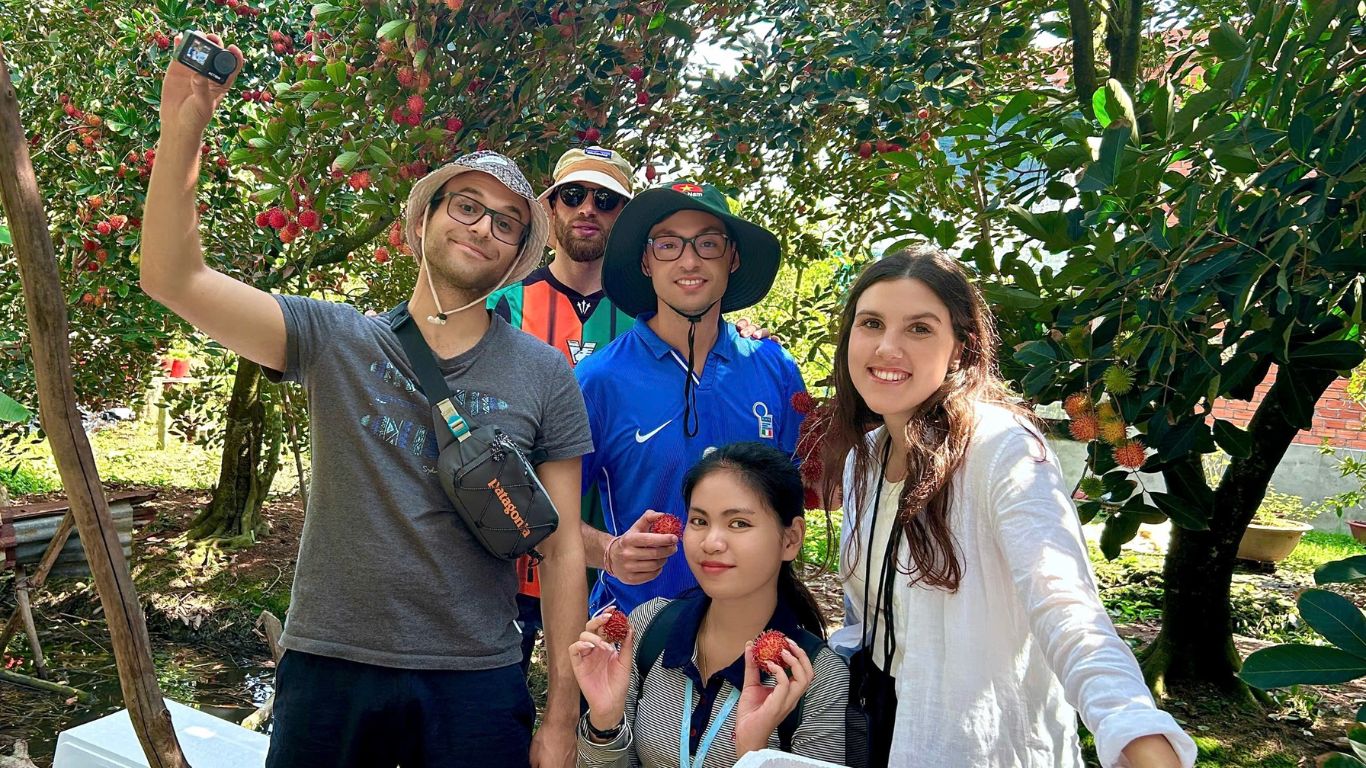
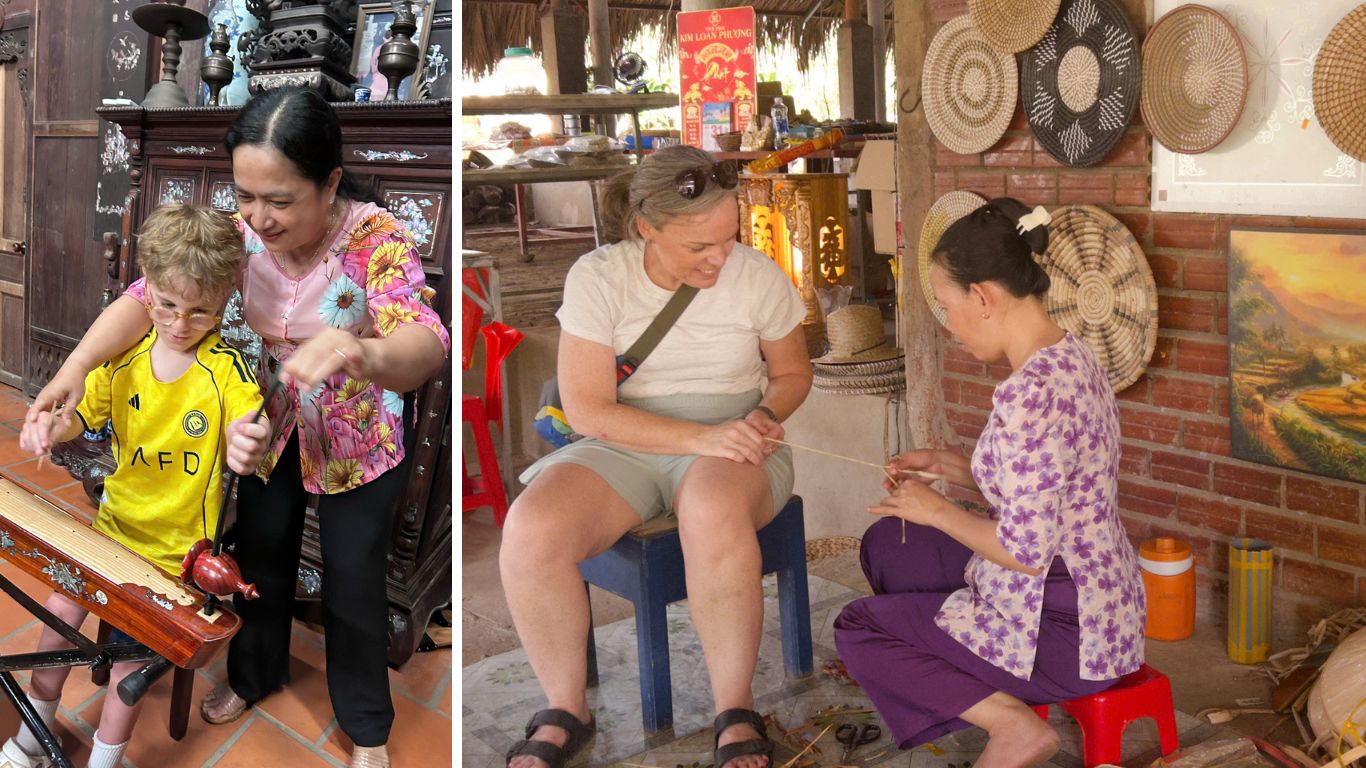
Cai Be sits at the heart of the Delta’s fruit-growing country, and July is when the gardens here are at their most generous. Family-run orchards welcome visitors for tasting sessions that feel genuinely spontaneous rather than rehearsed, and the riverside villages around Cai Be still produce traditional goods like rice paper, coconut candy, and hand-woven products using methods that have not changed in generations.
Combining Cai Be with an overnight stay or a night aboard a Mekong river cruise turns an orchard visit into a much richer journey through the waterway culture of the Delta.
Tra Su Cajuput Forest: Most Beautiful During Wet Months
Tra Su is one of those places that rewards patience and timing, and July offers both. Higher water levels allow boats to glide through the flooded forest, beneath trees draped in green and above a carpet of floating duckweed that turns the water an almost unreal shade of emerald. Birdlife is noticeably more active during the wet season, and the combination of sound, colour, and stillness inside the forest feels unlike anywhere else in Vietnam.
Planning a visit to Tra Su or Chau Doc? Our team arranges private full-day and overnight tours that include Tra Su boat experiences, flood season photography stops, and comfortable local accommodation. Explore our cruise and tour options or reach out directly at resa@luxurycruisemekong.com to build your itinerary.
Soc Trang and Bac Lieu: The Cultural Side of the Delta
For travellers willing to venture further south, Soc Trang and Bac Lieu offer a dimension of the Mekong Delta that most visitors miss entirely. The Khmer heritage here is visible in the architecture, the food, and the community life around the temples, giving the Delta a cultural texture that extends well beyond the Vietnamese river traditions most tours focus on. July’s quieter tourist season makes these destinations even more accessible and unhurried.
Best Things to Do in the Mekong Delta in July
The wet season opens up experiences in the Mekong Delta that are either unavailable or far less rewarding in the dry months. These are the activities worth building your itinerary around.
Visit Tropical Fruit Orchards
Orchard visits in July are not just tastings but proper immersive experiences at family-run gardens where the fruit has genuinely just been harvested. Walking among the trees, asking questions, and eating rambutan or mangosteen straight from the branch with the family who grew it is one of the most grounding and enjoyable things you can do in the Delta at this time of year.
Take an Early Morning Floating Market Boat Trip
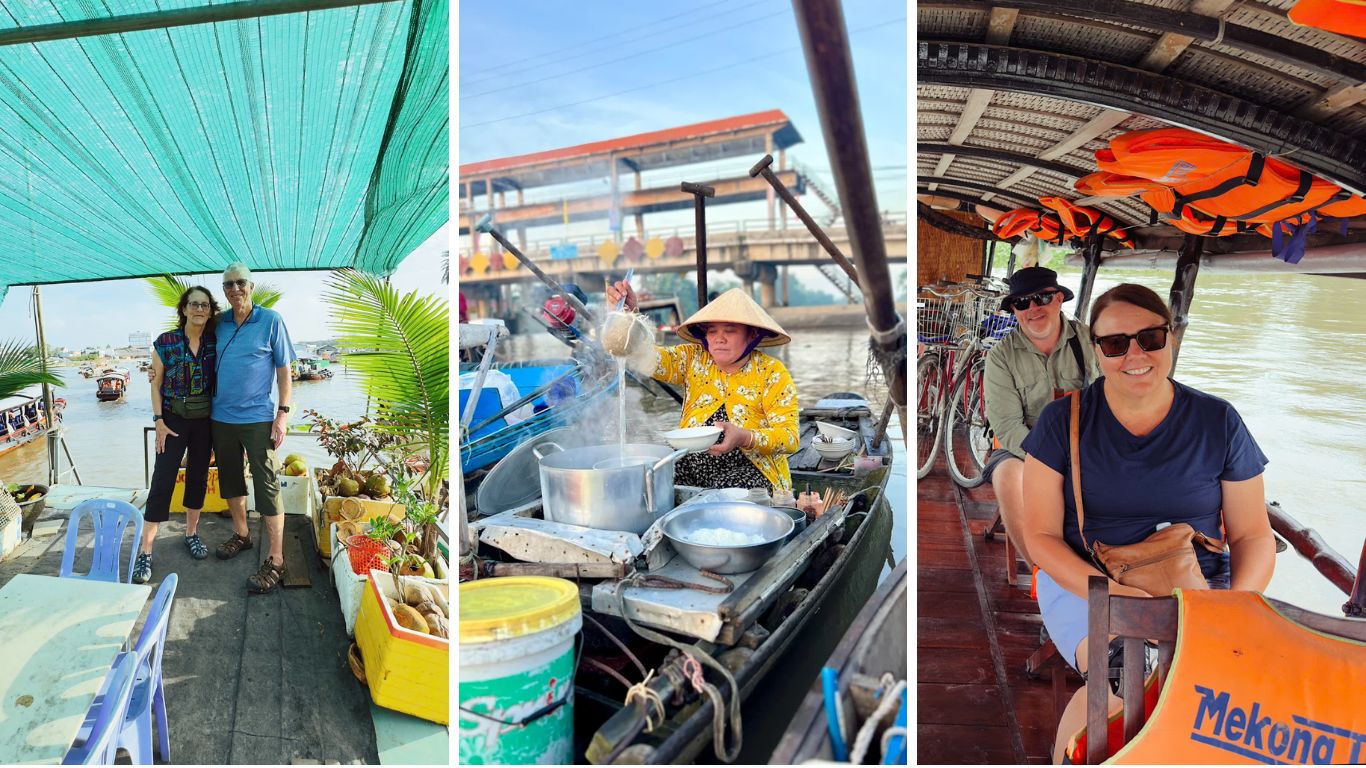
Morning is the non-negotiable window for floating market visits in July. Between roughly 5:30 am and 8:00 am, the markets are at their most active, and the weather is at its most cooperative. A private boat arranged in advance allows you to move at your own pace, stop where the action is most interesting, and avoid the rush of larger group tours that typically arrive mid-morning. For everything you need to know before you go, our guide to Can Tho’s floating markets covers the key details on timing, access, and what to expect on the water.
Explore Small Canals by Sampan
The narrower waterways of the Mekong Delta are at their fullest and most beautiful in July. A sampan ride through the back canals of Ben Tre or the smaller channels around Can Tho feels completely different from the wider river experience, quieter, more enclosed, and more intimate. The paddling is slow, the scenery changes every few metres, and the whole experience carries a quality of stillness that is rare and genuinely restorative.
Stay at a Riverside Homestay
One night at a riverside homestay changes your understanding of the Mekong Delta entirely. Waking before dawn to hear the river come alive, joining your host family in the kitchen for a breakfast made from ingredients grown or caught that morning, and sitting on the porch as the evening rain arrives across the water. These are experiences that no day trip can replicate, and July evenings are particularly atmospheric for this kind of slow, connected travel.
Looking for handpicked homestays or private accommodation along the Mekong? Our team selects properties that offer genuine local character alongside the comfort you need. Get in touch here, and we will arrange everything for your July visit.
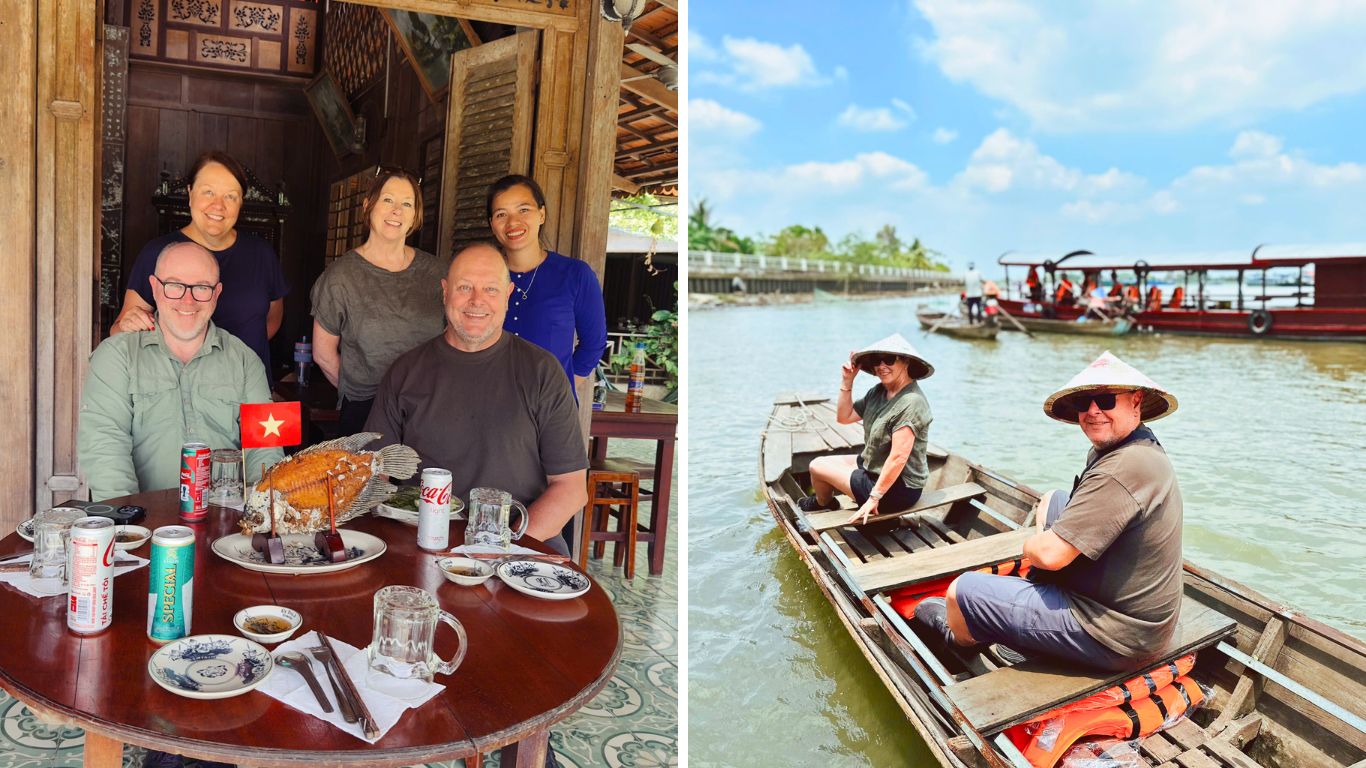
Photograph the Delta During Rainy Season
The Mekong Delta in July is a photographer’s subject in a way that the dry season rarely matches. Soft diffused light on overcast mornings eliminates harsh shadows. The minutes after a rain shower produce mirror-flat canal reflections and extraordinary cloud formations. Colours everywhere, from the green of the paddies to the painted hulls of wooden boats, are simply more saturated and alive. Bring a waterproof cover for your gear and keep your camera accessible all day.
Try Seasonal Mekong Dishes
July is an excellent month to eat your way through the Delta’s seasonal food culture. Look for:
- Elephant ear fish (ca tai tuong), served whole and crispy, eaten wrapped in rice paper with herbs
- Hu tieu, the Delta’s signature noodle soup, is best eaten at a riverside stall in the early morning
- Fresh river fish prepared with turmeric, lemongrass, and galangal that grows wild along the canal banks
- Tropical fruit desserts made with the season’s finest mangosteen, longan, and jackfruit
What to Wear and Pack for the Mekong Delta in July
Packing for July in the Mekong Delta is less about style and more about staying comfortable, dry, and protected across a day that moves through multiple conditions.
Lightweight and Breathable Clothing
Quick-dry fabrics are genuinely worth seeking out for this trip. Cotton feels comfortable for the first hour but holds moisture badly in high humidity, while synthetic blends or linen-cotton mixes dry quickly after a shower and breathe well in the heat. Light colours reflect rather than absorb heat, and loose fits allow air circulation that keeps you comfortable on boat rides and orchard walks alike. For footwear, sandals with grip or lightweight trainers work better than flip-flops on wet wooden jetties and slippery riverbanks.
Rain Protection Essentials
A compact rain jacket or a good-quality poncho is the single most important addition to your July packing list. Beyond that, a small waterproof bag or dry bag liner for your main daypack protects electronics, documents, and anything you genuinely cannot afford to get wet. A compact umbrella handles the shorter walks between sheltered spots without taking up meaningful space in your bag.
Sun and Mosquito Protection
Even on overcast July days, UV levels in southern Vietnam remain high, so sunscreen applied to exposed skin is still necessary. Mosquito repellent matters more in the evening, particularly during riverside homestays or visits to Tra Su Forest, where insects become more active near the water after dusk. A DEET-based or picaridin repellent applied before sunset makes a noticeable difference to your evening comfort.
Camera Protection Tips
Humidity above 80% can affect camera equipment over time, particularly lenses. A waterproof cover for your camera body is worth carrying at all times, and a small silica gel pack inside your camera bag overnight helps manage moisture accumulation. Lens cloths become essential when the air itself feels damp.
Travel Tips for Visiting the Mekong Delta in July
Getting the most from a July visit is less about avoiding the weather and more about working with it thoughtfully.
Start Activities Early in the Morning
The single most effective travel habit in July is shifting everything earlier. Floating markets, canal boat rides, orchard visits, and cycling routes all feel significantly better before 9:00 am, when the air is cooler, the light is beautiful, and the chance of rain is at its lowest. Building your days around early starts and afternoon rest creates a rhythm that aligns perfectly with local life.
Allow Flexibility in Your Schedule
Tropical weather moves on its own timetable, and the most enjoyable July trips are those planned with a loose grip. If a boat departure shifts by thirty minutes due to rain, that is not a problem but rather an invitation to sit longer over a Vietnamese coffee and watch the river. Choosing a private tour rather than a fixed group schedule gives you exactly this kind of adaptable rhythm.
Choose the Right Type of Tour
Not every Mekong tour suits July equally. Consider what you actually want from the experience before booking:
- Day trips from Ho Chi Minh City work for time-pressed travellers but sacrifice depth and atmosphere
- Overnight cruises give you the full arc of the Delta day, from dawn markets to evening riverside, and genuinely transform the experience
- Homestays combined with private guides suit travellers who want cultural immersion over sightseeing
- Deeper regional explorations through Chau Doc and the upper Delta reveal the flood season landscape at its most dramatic
Our suggested 4-day Mekong Delta itinerary is a strong starting point if you want a practical framework to build from.
Roads and Boats Can Be Slippery
July rain makes wooden jetties, riverside paths, and even some rural roads noticeably slippery. Comfortable shoes with grip are more practical than sandals for walking sections, and stepping on and off boats is best done slowly and deliberately. Local guides are attentive about this and will always assist, but being aware of the conditions helps everyone move more confidently.
July Is Better for Slow Travel Than Rushed Sightseeing
The Mekong Delta in July rewards presence over efficiency. Trying to cover six destinations in three days during the wet season creates unnecessary stress and rarely produces the moments that make the trip memorable. Two destinations explored deeply, with time to sit, eat, wander, and simply watch the river, will leave a far stronger impression than a hurried checklist.
Suggested Mekong Delta Tours for July
The right itinerary in July makes all the difference between a trip that feels rushed and one that feels genuinely immersive. Here are four routes our team particularly recommends for this time of year.
A Relaxed 2 to 3 Day Escape Through Ben Tre and Can Tho
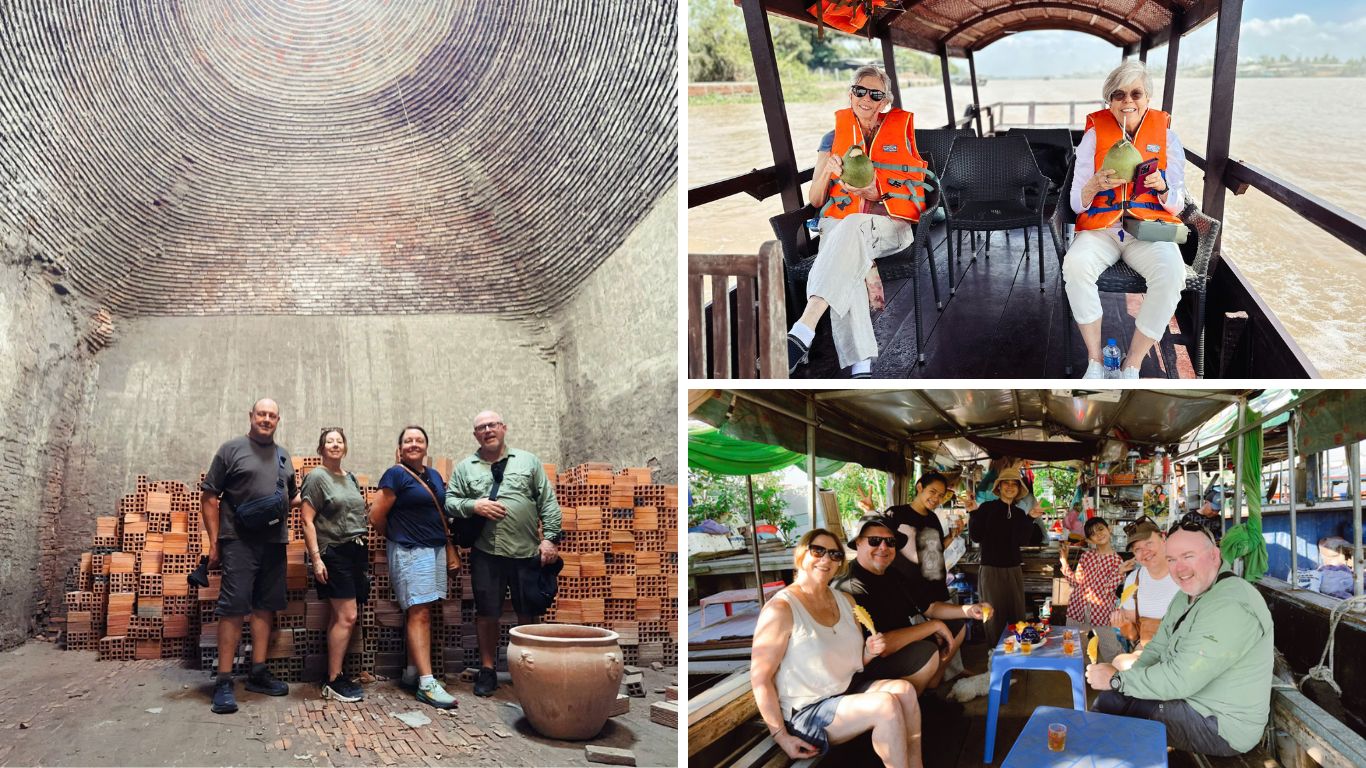
This is the ideal starting point for first-time visitors to the Delta who want a genuine taste of floating market culture, canal life, and local food without covering too much ground. You begin in Can Tho with an early morning private boat to Cai Rang Floating Market, spend the morning exploring the riverside neighbourhood, then continue by private transfer to Ben Tre for an afternoon sampan ride through the coconut canal network. The second day allows time for an orchard visit, a cycling route through a quiet village, and a long lunch with a local family before returning at your own pace.
Our team arranges this as a fully private experience, with accommodation selected for riverside character and local warmth. Browse our Ben Tre and Can Tho tour options to find the right fit for your dates.
Discover Flood Season Landscapes Around Chau Doc and Tra Su
For travellers drawn to nature, photography, and the less-visited corners of the Delta, the journey toward Chau Doc and Tra Su Cajuput Forest in July is quietly extraordinary. The floodwaters rising around An Giang province create wide, reflective landscapes that feel unlike anywhere else in Vietnam, and a boat through Tra Su during the wet season, with its emerald duckweed and active birdlife, is one of the most visually memorable experiences in the entire country.
This route works beautifully as a standalone two-day nature focus or as part of a longer journey onward. For travellers continuing across the border, our guide to the boat trip from Chau Doc to Phnom Penh explains exactly how that connection works. Explore our southern Delta tour options here or write to our team at resa@luxurycruisemekong.com to build a custom itinerary.
A Deeper Mekong Journey Combined with Cambodia
For travellers with more time and a genuine appetite for slow regional travel, combining the Vietnamese Mekong Delta with a river journey into Cambodia creates an experience that neither country alone can offer. The transition from the Delta’s intricate canal network to the wider, wilder Mekong upstream is gradual and fascinating, and the border crossing by boat remains one of the most atmospheric entry points into Cambodia.
Our guides to the best cruises between Vietnam and Cambodia and the Vietnam to Cambodia Mekong cruise cover the route in detail, including what to expect at each stage of the journey. July, when the river is fuller and the scenery is at its most dramatic, is one of the finest times to make this crossing.
Here are the cruises our team recommends for this route:
| Cruise | Route | Price From | Type |
|---|---|---|---|
| Mekong Princess | Ho Chi Minh City – Ben Tre – Can Tho – Phnom Penh – Siem Reap | $1,029/person | Luxury |
| Mekong Navigator | My Tho – Cai Be – Sa Dec – Border Crossing – Phnom Penh | $1,099/person | Luxury |
| Heritage Line Jayavarman | Saigon – Cai Be – Sa Dec – Chau Doc – Phnom Penh – Siem Reap | $1,355/person | Luxury |
| Heritage Line Jahan | Saigon – Cai Be – Tan Chau – Phnom Penh – Tonle Lake – Siem Reap | $1,355/person | Luxury |
| Mekong Eyes Explorer | Saigon – Cai Be – Can Tho – Phu Quoc – Phnom Penh | $212/person | Deluxe |
| Mekong Gecko Eyes | Cai Be – Sa Dec – Can Tho – Phu Quoc – Phnom Penh | $374/person | Private & Charter |
| Victoria Mekong | Can Tho – Long Xuyen – Tan Chau – Phnom Penh – Siem Reap | $3,017/person | Deluxe |
Luxury Mekong River Cruises During Green Season
Experienced travellers who have visited the Mekong Delta before often find that July, counterintuitively, is their preferred time to return by cruise. The scenery is greener and more dramatic than at any other point in the year, the skies produce the kind of cloud formations that make every photograph look considered, and the atmosphere on board feels quieter and more intimate without the peak-season crowds.
A luxury cruise in July is not about perfect weather. It is about experiencing the Mekong at its most alive, from a vantage point that is both comfortable and immersive. Browse our luxury Mekong cruise departures here and let our team help you find the right option for your dates.
Is the Mekong Delta Worth Visiting in July?
Without hesitation, yes. The Mekong Delta in July is not the destination you choose when you want reliable sunshine and postcard-perfect skies. It is the destination you choose when you want to experience a place that is genuinely, unmistakably alive.
The fruit orchards are producing their finest harvest. The canals are full and reflective. The floating markets operate without the performance quality that peak-season crowds tend to create. The villages feel like villages rather than attractions, and the locals you meet are living their actual lives rather than adjusting to the presence of tour groups. For travellers who measure the success of a trip by the quality of what they felt and understood rather than the number of things they checked off, July in the Mekong Delta is deeply satisfying.
It is also, practically speaking, a smarter time to visit. Accommodation is easier to secure, private tours are more flexible, and the overall cost of a well-organised trip is more competitive than in the December to March high season. You get more of the Delta for less effort and less expense, and what you get is arguably the truest version of it.
The Delta at its most alive, its most green, and its most genuine is waiting in July. All it asks is that you arrive ready to move at its pace.
Ready to plan your July visit? Our team at Luxury Cruise Mekong specialises in private Mekong Delta tours, river cruises, and fully tailored itineraries for every travel style. Start planning here or write to us at resa@luxurycruisemekong.com and we will take care of everything from transfers to accommodation to expert local guiding.
FAQs
Does it rain all day in the Mekong Delta in July? No. Showers typically arrive in short afternoon bursts, leaving mornings clear and perfect for sightseeing.
Is July flood season in the Mekong Delta? It marks the beginning, particularly around Chau Doc and An Giang. Peak flooding comes in September and October, so July gives you the scenery without the disruption.
Are floating markets open during July? Yes, fully. Cai Rang, Cai Be, and Long Xuyen operate normally, with early morning being the best window year-round.
Is July too hot for sightseeing? It is warm but very manageable, especially with early starts. Most boat trips and orchard visits wrap up well before the midday heat peaks.
What fruits are in season in July? Rambutan, mangosteen, durian, longan, and jackfruit are all at their best, particularly around Ben Tre and Cai Be.
Should I stay overnight in the Mekong Delta? Strongly recommended. Dawn and dusk are the Delta’s most atmospheric moments, and both are lost on a day trip.
Is July suitable for families or older travellers? Yes, with private transport and a relaxed pace. Early starts and afternoon rest periods make the heat easy to manage.
Which part of the Mekong Delta is best in July? Can Tho for markets, Ben Tre for quiet canals and orchards, and Chau Doc for flood season landscapes. All three combine well across four to five days.